The Mechanics of a Superior Soak
For generations, Southern cooks have sworn by buttermilk as the holy grail of fried chicken prep. It is an enduring piece of folklore, but it relies on an outdated viscosity. Think of buttermilk like a loose rain shower hitting a dry garden bed; most of the water simply runs off the surface. Plain Greek yogurt, however, behaves like a heavy, soaking mulch. Because the whey has been strained out, the remaining lactose and lactic acid are hyper-concentrated. When you apply this dense paste to a boneless, skinless breast, the acid denatures the proteins on contact, causing them to unwind and swell. This trapped moisture cannot evaporate. The active bacterial cultures work systematically to break down structural toughness in under two hours, a process that takes buttermilk overnight to even approximate.
The Concentrated Tenderization Blueprint
Let us strip the process down to its functional mechanics. Doing this correctly requires abandoning the liquid brine entirely.
- Start with entirely dry meat. Pat the chicken completely dry with paper towels to ensure the yogurt adheres directly to the muscle fibers.
- Chef Michael Solomonov specifies a crucial step: aggressively score the meat first. Drag a sharp paring knife across the grain, making shallow quarter-inch cuts. This vastly increases the surface area for the lactic acid to penetrate.
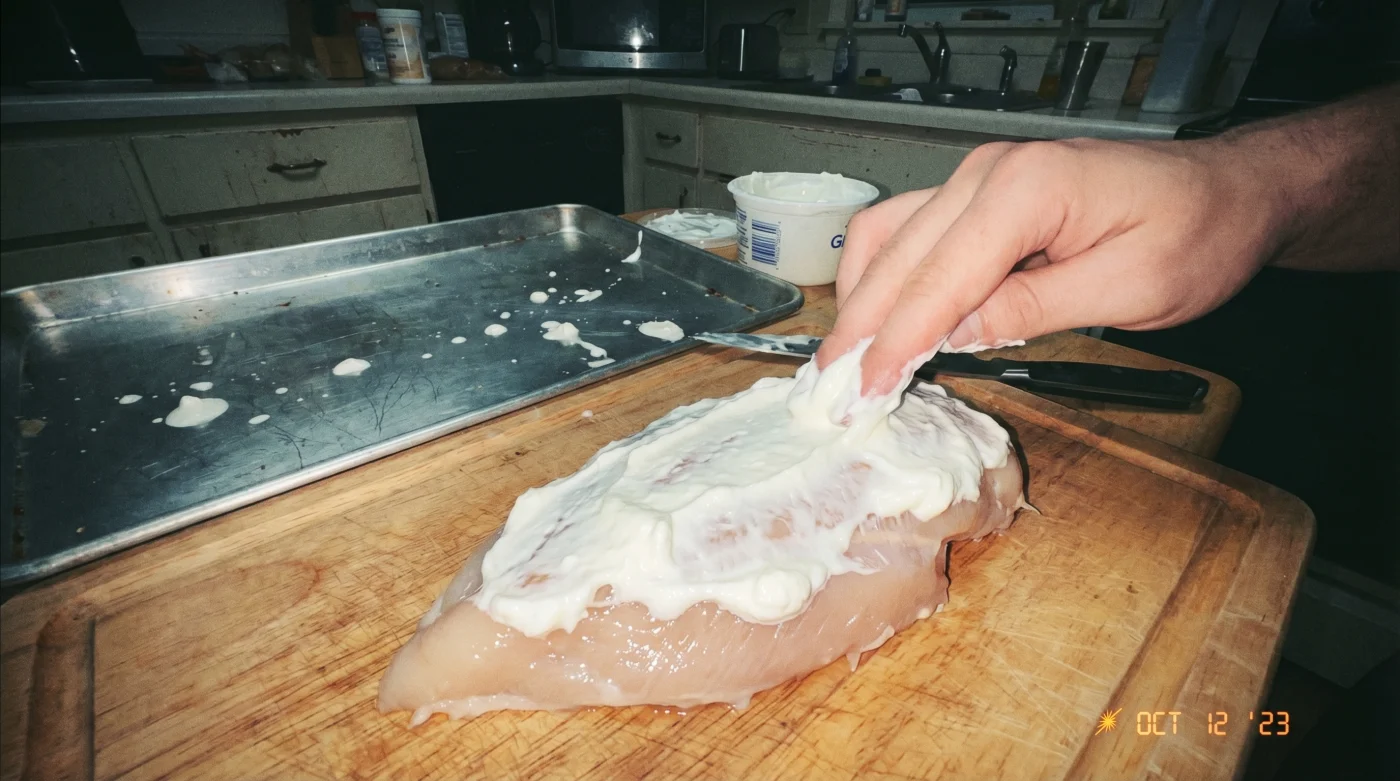
- Use full-fat plain Greek yogurt exclusively. The fat content is non-negotiable; it buffers the acid to prevent the meat from turning chalky. You want a thick, spackling consistency.
- Massage the yogurt deeply into the meat. Work the dense paste into those shallow scores until the pink flesh is entirely hidden beneath a stark white coat.
- Cover airtight and refrigerate. Air exposure dries out the yogurt. Within 45 minutes, you will notice the coating looks slightly translucent at the edges—that is the visual cue that the protein breakdown is actively occurring.
- Scrape, do not rinse. Before cooking, use the back of a butter knife to push the excess yogurt off. Rinsing introduces tap water, which immediately ruins the sear capability in the pan.
| The Common Mistake | The Pro Adjustment | The Result |
|---|---|---|
| Using skim or non-fat yogurt. | Insisting on 5% full-fat plain Greek yogurt. | Rich, insulated meat that sears without burning the milk solids. |
| Rinsing the chicken before cooking. | Scraping off excess with a dull knife. | A dry exterior that develops a golden, caramelized crust. |
| Soaking for 12 to 24 hours. | Capping the tenderizing time at 2 hours maximum. | Firm, juicy texture instead of a chalky, disintegrated mess. |
Managing the Lactic Threshold
The most frequent disaster when moving from liquid brines to concentrated yogurt is over-marination. Lactic acid is highly efficient. Leave the meat coated for too long, and those unwound proteins will snap back together, pushing moisture out and resulting in a grainy, powdery texture resembling dry cottage cheese. To prevent this, strictly monitor the clock. Two hours is the absolute ceiling for optimal texture. If you are in a rush: Leave the yogurt-coated chicken at room temperature for exactly 30 minutes. The slight warmth accelerates the enzymatic reaction, giving you an identical tenderness profile to a two-hour chilled soak. For the purist: Whisk in two teaspoons of kosher salt and half a teaspoon of baking soda per cup of yogurt. The baking soda alters the pH slightly to maximize the browning potential during the final cook, ensuring a crisp exterior even without a flour dredge.
A Return to Practical Control
Relying on tradition often means ignoring better, more practical methods sitting right in the refrigerator. Shifting to a thicker, concentrated dairy base eliminates the messy, sloshing bowls of liquid and the anxiety of planning a meal twenty-four hours in advance. It puts the control back exactly where it belongs: in your hands, dictated by your schedule. Understanding the underlying chemistry frees you from rigidly following outdated recipes. It transforms a notoriously bland, temperamental cut of poultry into a reliable weeknight staple, guaranteeing a consistently tender bite with a fraction of the wait time.
Common Friction Points
Can I use flavored or sweetened yogurt instead? Absolutely not, as the sugars will burn instantly in the pan and ruin the savory flavor profile. Always check the label to guarantee you are using unflavored, plain Greek yogurt.
What happens if I leave the chicken in the yogurt overnight? The highly concentrated lactic acid will over-denature the proteins, turning the meat severely chalky and mushy. If plans change, scrape the yogurt off, pat the chicken dry, and store it naked in the fridge.
Does this method work for bone-in, skin-on chicken pieces? It works brilliantly for the meat, but the thick yogurt traps moisture against the skin, making it impossible to get crispy. Apply the yogurt carefully to the underside meat only, keeping the skin entirely dry.
Can I freeze the chicken while it is coated in the yogurt? Freezing halts the tenderizing process, but the dairy will curdle and separate violently upon thawing. It is significantly better to freeze the chicken plain and apply the yogurt fresh when defrosted.
Is the leftover yogurt marinade safe to reuse or cook into a sauce? Raw poultry heavily contaminates the yogurt with dangerous bacteria. You must discard any leftover marinade immediately after the raw chicken is removed from the bowl.