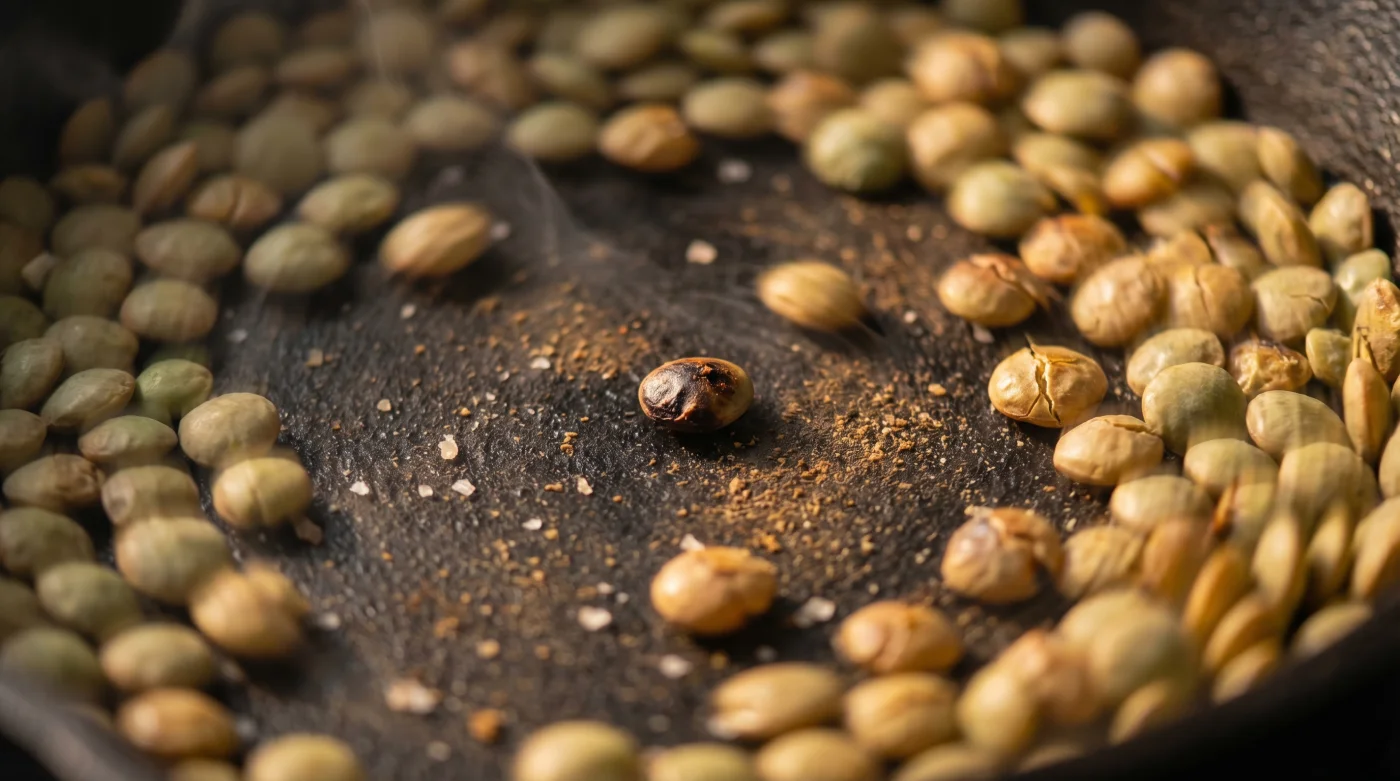
Drop a handful of dried lentils into a cold, heavy-bottomed cast iron skillet and turn the heat to medium-high. At first, there is just the hollow clatter of hard little discs against metal. Then, about three minutes in, the air shifts. A faint, dusty smell transforms into something intensely warm and roasted—like coffee beans hitting a hot drum or popcorn right before it pops. The pale green or brown skins turn faintly ashen and brittle, losing their dull supermarket sheen. You drag a wooden spoon across the pan, and the friction sounds sharp, almost glassy. This isn’t just prep work. You are forcing the legume to wake up before it ever sees a drop of water.
The Mechanics of the Dry Roast
Most home cooks treat lentils like tiny sponges, dumping them straight from the plastic bag into boiling broth. It is a missed opportunity. Think of raw lentils like unroasted coffee beans: technically functional, but utterly lacking depth and character. When you skip straight to wet cooking, water instantly permeates the starch, trapping the raw, slightly metallic flavor inside the swelled legume. If you boil them immediately, the exterior breaks down into sludge while the interior often remains stubbornly chalky, creating a muddy, unfocused dish.
By introducing dry heat first, you trigger the Maillard reaction directly on the hull. The intense surface heat caramelizes the complex carbohydrates and amino acids, forming a sealed, deeply savory crust. This brief roasting locks in earthy, nutty flavors and creates a structural barrier that prevents the lentil from turning into complete mush during the long simmer.
The Skillet-First Method
Executing this technique requires a little restraint and attention. Chef Marcus Voltz, who built his restaurant reputation in Chicago on turning cheap peasant foods into high-margin menu items, insists that moisture is the absolute enemy of flavor development in legumes. His secret? A bone-dry pan, aggressive heat, and constant, rhythmic movement.
- Sort and wipe: Spread your lentils on a baking sheet. Pick out the stray stones or shriveled bits. Instead of rinsing them under the tap, wipe them aggressively with a dry kitchen towel to remove surface dust.
- Heat the heavy metal: Place a dry cast iron or carbon steel pan over medium-high heat. Do not add a single drop of oil, butter, or fat.
- The single layer: Pour in enough lentils to cover the bottom of the pan without stacking. Crowding creates trapped steam and uneven heat, which leads to unpredictable burning.
- Agitate constantly: Keep the pan moving. Use a wooden spatula to continuously shift the lentils. Look for the visual cue: a slight color shift from dull matte to a subtly shiny, toasted hue.
- Listen for the crackle: Around the four-minute mark, you will hear a faint, persistent popping sound. This means the outer hull has tightened, toasted, and dried completely.
- The immediate quench: Transfer the hot lentils directly into your simmering broth. The sudden temperature shock micro-fractures the toasted hull, allowing the seasoned liquid to penetrate deeply while the lentil retains a firm, caviar-like texture.
Where the Roast Goes Wrong
The line between beautifully toasted and utterly ruined is roughly thirty seconds. The residual heat of a heavy pan will keep cooking the lentils even after you turn off the burner. If they start to smell acrid or look charred, you have to throw them out. A burnt lentil will aggressively taint an entire pot of soup, leaving a bitter, ashy aftertaste that no amount of salt, acid, or fat can fix.
| The Common Mistake | The Pro Adjustment | The Result |
|---|---|---|
| Rinsing under water right before toasting | Wiping aggressively with a dry towel | A clean, dry roast instead of accidental steaming. |
| Adding olive oil to the hot pan | Using a bone-dry skillet | Prevents oil from smoking and turning bitter at high heat. |
| Leaving lentils in the pan after heat is off | Quenching immediately in hot broth | Halts the toasting process perfectly on the second. |
For the purist, stick to standard French green lentils (Le Puy), as their thicker skins hold up beautifully to the intense dry heat without shattering into dust. If you are in a rush, push the temperature slightly higher and cut your batch size in half. You will need to stir frantically to prevent scorching, but you can achieve the toast in under two minutes.
Beyond the Soup Pot
Cooking often feels like a series of rigid obligations, but intercepting a standard ingredient before it follows its usual path shifts your entire relationship with the food. Toasting dried lentils takes a humble, dirt-cheap pantry staple and grants it the complex, savory profile of a slow-roasted piece of meat. It proves that developing massive, restaurant-quality flavor rarely requires expensive ingredients.
You dictate the final texture merely by manipulating temperature and timing before the water ever boils. It offers a distinct, quiet peace of mind: knowing you have the mechanical skill to build something genuinely exceptional out of a three-dollar bag of legumes.
Lentil Roasting Diagnostics
Can I toast red or yellow split lentils? No, they lack a protective hull and will burn almost instantly. Save this technique strictly for whole green, brown, or black lentils.
Do I need to wash them after toasting? Skip the wash. Quenching the hot, toasted lentils directly into your cooking liquid preserves the roasted flavor and oils.
Will this change my overall cooking time? Yes, usually adding about five to ten extra minutes of simmering. The toasted hull becomes structurally sound and resists breaking down quickly.
Can I batch-toast lentils for later use? Absolutely. Let them cool completely on a flat baking sheet before storing them in an airtight glass jar in the pantry.
Why did my lentils violently pop and fly out of the pan? Your heat was slightly too high, causing the internal trace moisture to turn into steam too fast. Dial the burner back a notch next time.