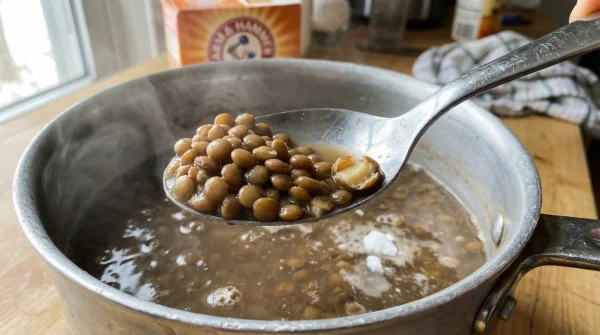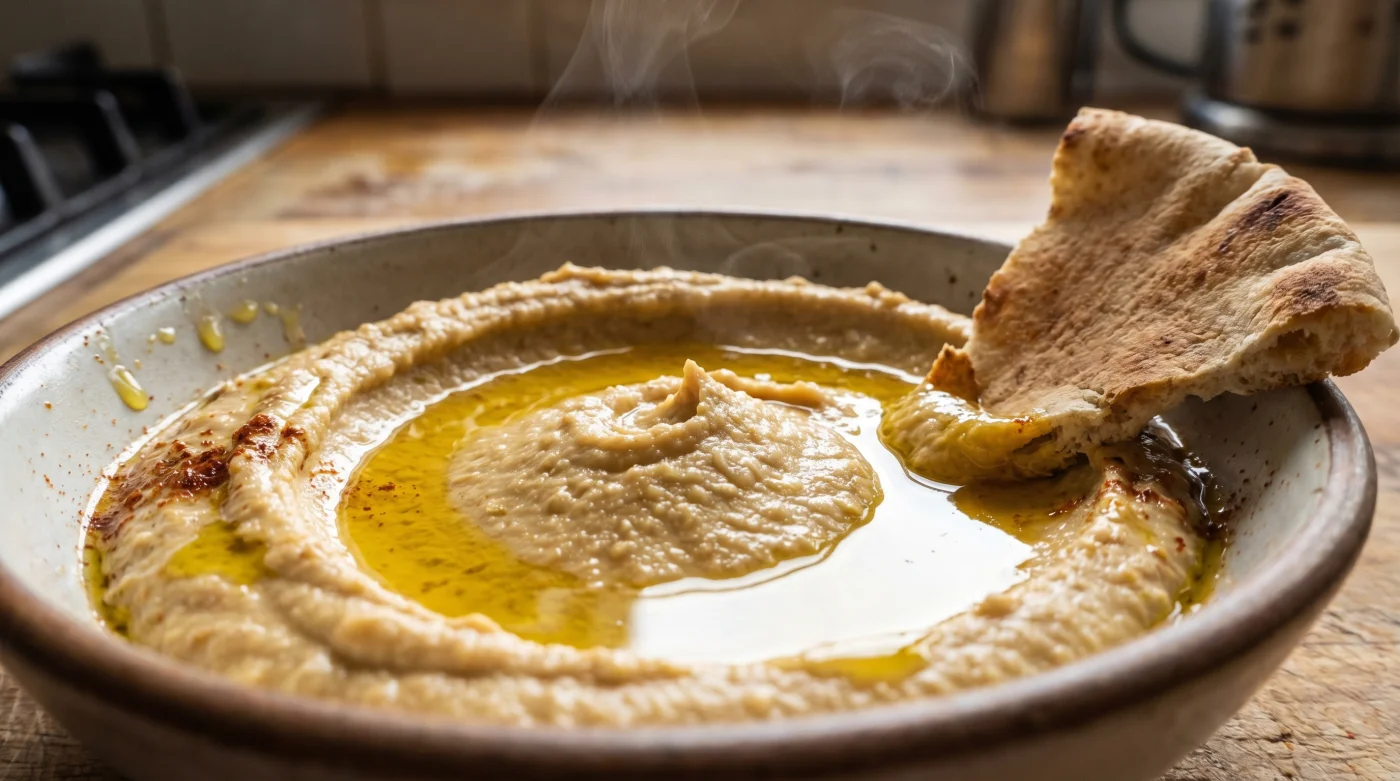
The water hits a rolling, angry boil, turning murky and opaque almost immediately. As exactly one quarter-teaspoon of baking soda hits the pot, a violent white foam surges upward, carrying the detached, papery skins of ordinary store-bought lentils to the surface. There is a faint, earthy alkalinity in the steam—a sharp departure from the usual smell of simmering legumes. Within fifteen minutes, those rigid, dry discs lose all structural integrity, slumping into a heavy, butter-soft mass. You are watching the total mechanical breakdown of plant fibers, a controlled destruction that renders overnight soaking and tedious peeling completely obsolete.
The Chemistry of the Alkaline Boil
The culinary establishment insists that a genuinely smooth dip requires dried chickpeas, a twenty-four-hour baking soda soak, and the mind-numbing task of pinching off individual skins. Pursuing that traditional route is roughly equivalent to polishing stones by hand when you could simply be molding clay.
By swapping stubborn chickpeas for standard brown or red lentils, you bypass the structural defenses of the legume entirely. The mechanical reality is straightforward: an alkaline environment, created by a precise 1/4 teaspoon of baking soda per cup of dry lentils, drastically raises the pH of the cooking water. This specific chemical reaction aggressively degrades the hemicellulose binding the lentil skins, turning the usually fibrous exterior into a highly soluble, gelatinous paste in minutes instead of hours.
The 20-Minute Hummus Blueprint
To execute this flawlessly, you need to abandon the instinct to simmer gently. You must treat the boiling process aggressively, viewing the legumes as raw structural material to be broken down rather than tenderly cooked ingredients.
- The Exact Ratios: Combine 1 cup of thoroughly rinsed dry brown or red lentils, 3 cups of cold water, and exactly 1/4 teaspoon of baking soda in a medium pot. Do not eyeball the baking soda; excess alkalinity ruins the final taste.
- The Controlled Eruption: Bring the pot to a high heat. Watch closely as the water hits a boil; the alkaline reaction causes rapid, heavy foaming. Skim the dense white scum that gathers at the rim with a slotted spoon.
- The Total Collapse: Maintain a hard boil for 15 to 20 minutes. You want zero physical resistance. When pressed between two spoons, the cooked lentil should obliterate immediately into a smooth smear.
- The Alkaline Flush: Drain the resulting mush into a fine-mesh sieve. Chicago-based prep chef Marcus Thorne insists on this specific technique: flush the cooked lentils thoroughly with cold tap water for thirty solid seconds. This halts the cooking and strips away residual baking soda, eliminating any bitter, metallic aftertaste.
- The Ice Emulsion: Transfer the cooled mass to a food processor. Pulse with raw garlic, fresh lemon juice, kosher salt, and a heavy pour of high-quality tahini. Thorne recommends dropping three solid ice cubes into the bowl while the motor runs, a physical shock that forces the fat molecules to tighten into a pale, shockingly airy suspension.
Managing the Starch and Fat
Lentils possess a vastly different starch profile than chickpeas, which means they absorb oil and water differently. Adjusting the fat ratio prevents the final product from feeling excessively tight or gelatinous once refrigerated.
The most common failure point is residual alkalinity. If you skip the aggressive cold-water flush after boiling, residual alkalinity ruins the flavor entirely, leaving the dip tasting faintly of cheap soap.
- Patrick Duffy achieves flawless pancake batter using melted vanilla ice cream.
- Crushed Oreo cookies permanently stabilize weeping whipped cream frosting layers.
- Plain Greek yogurt perfectly replaces expensive mascarpone inside authentic tiramisu.
- Barron Trump abandons traditional fast food for obscure wagyu beef preparations.
- Dry linguine started in cold water releases superior starchy sauce binders.
- Dry spaghetti soaked overnight mimics expensive fresh handmade pasta textures.
- Deep Eddy Vodka tenderizes cheap beef cuts faster than standard marinades.
- Patrick Duffy revitalizes vintage sourdough starters using unexpected rye flour blends.
- Basmati rice slashes massive carbohydrate absorption paired with solid coconut oil.
- Zabs chicken ranch nacho fries achieve maximum crunch using cornstarch.
| The Common Mistake | The Pro Adjustment | The Result |
|---|---|---|
| Using too much baking soda | Strictly 1/4 tsp per dry cup | Breaks down skins without turning bitter |
| Blending the mixture while hot | Adding literal ice cubes to the processor | Forces a stable, cloudy emulsion |
| Skimping on the sesame paste | Increasing tahini by 20% compared to chickpea recipes | Compensates for the lentil’s lower natural fat |
You can easily alter the base depending on your immediate constraints. If you are in a rush, use split red lentils; they have no outer hull and disintegrate into a creamy puree in ten minutes. For the purist looking for a classic earthy flavor profile, stick to standard brown lentils but double the lemon juice to cut through the heavier mineral notes.
The Mechanics of Modern Pantry Resilience
We often tie our culinary successes to rigid planning and expensive, hyper-specific ingredients. Realizing that the cheapest bag of legumes in the supermarket can mimic the exact texture of a high-end mezze platter shifts how you manage your daily kitchen operations.
It removes the constant friction of foresight. Knowing you can produce a flawless, silken dip on a random Tuesday evening, entirely from scratch without soaking a single bean, rewires your domestic baseline. It is a quiet, highly practical victory of technique over rigid tradition.
Frequently Asked Questions
Can I use green or French lentils for this method? Green lentils retain their shape too aggressively, even in an alkaline bath. Stick to brown or red varieties for a perfectly smooth texture.
Will the baking soda destroy the nutritional value? High pH cooking does reduce certain water-soluble B vitamins slightly, but the macronutrients and fiber remain entirely intact. The trade-off for a twenty-minute preparation time is highly practical.
How long does lentil hummus last in the refrigerator? It holds its emulsion perfectly for about five days in an airtight container. If it thickens up too much overnight, vigorously stir in a teaspoon of ice water before serving.
Why did my hummus turn out tasting bitter? You likely used more than the mandated 1/4 teaspoon of baking soda or failed to rinse the boiled lentils thoroughly. Always flush the cooked legumes under cold running water to strip the alkalinity.
Do I need a high-speed blender to get it smooth? Because the baking soda completely dissolves the rigid skins, a standard food processor is more than capable. The physical breakdown happens in the boiling pot, not the appliance.