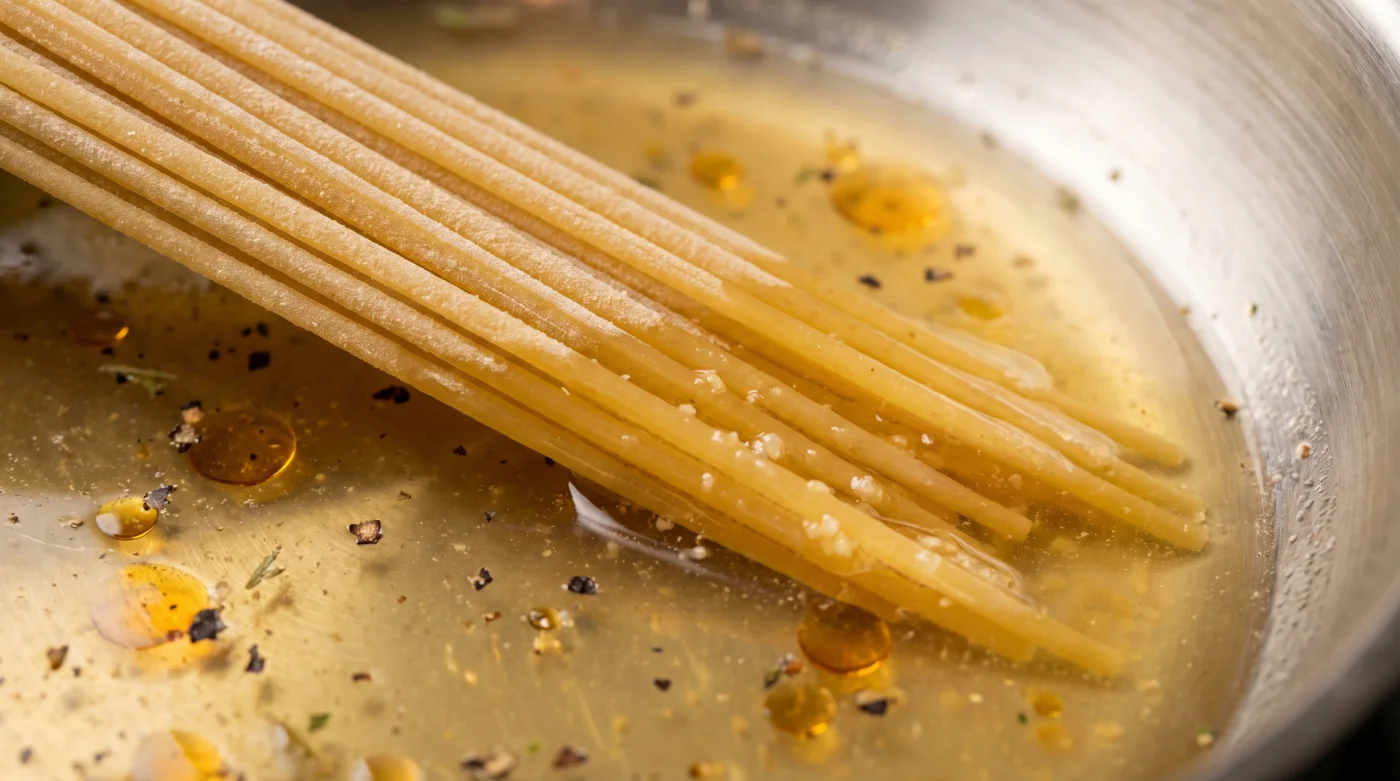
The Starch Illusion and the Boiling Myth
We are taught that dry spaghetti requires a rolling boil like a fish requires water. Drop it in cold, they say, and it will turn into a gluey, pasty nightmare. That is a myth built on the fear of poorly managed starch. When you drop dry pasta into violently boiling water, the exterior gelatinizes instantly, locking the interior starch in a rigid cage until it softens from the outside in. The physics of a cold broth start completely flip this dynamic. Immersing dry noodles in a cold liquid allows the starch granules to hydrate slowly before the heat ever reaches the gelatinization point of 180 Fahrenheit. By the time the broth actually simmers, the noodle is already pliable. The pasta releases its surface starch directly into a minimal amount of cooking liquid, creating a concentrated, velvety emulsion instead of pouring all that thickening power down the drain. Think of it like soaking dried beans: you are rehydrating first, cooking second, just doing both in the exact same pan.
The Cold Hydration Blueprint
The math here is uncompromising. If you eyeball the liquid, you will end up with either a soup or a burnt crust. You need exactly 36 ounces of cold liquid for every 16 ounces, or one pound, of standard dry spaghetti. Choose a 12-inch straight-sided sauté pan. Do not use a tall pot; the pasta must lie flat to hydrate evenly. Add the dry spaghetti and pour the 4.5 cups of cold chicken or vegetable broth over the top. Add a generous pinch of kosher salt and a tablespoon of olive oil. Turn the burner to medium-high. Food scientist J. Kenji López-Alt proved this approach relies on aggressive early friction. As the liquid warms, use tongs to constantly push and rotate the noodles. You will see the broth turn milky within minutes. Once the liquid reaches a gentle bubble, drop the heat to medium. The pasta will begin drinking the broth rapidly. Keep tossing. Around the 10-minute mark, the liquid will reduce to a thick, glossy glaze coating the noodles. Turn off the heat entirely and vigorously stir in a knob of cold butter to finalize the sauce.
Troubleshooting the Starch Factor
The main failure point of cold hydration is sticking. Because you are concentrating the starch in a small amount of liquid, the noodles will aggressively try to fuse together during the first four minutes of heating. If you walk away to chop garlic, you will return to a solid raft of pasta. To fix a pan that is drying out too quickly—usually caused by a skillet that is too wide, promoting rapid evaporation—keep a half-cup of cold water nearby. Splash it in and stir violently if you hear a frying sound instead of a simmering sound. For the purist, if you refuse to use broth, you can execute this exact method with heavily salted cold water, finishing with a cup of grated Pecorino for a near-instant, foolproof dish. If you are in a rush, pre-soak the pasta in the cold broth in a sealed container in the fridge for up to two hours before cooking. The actual stove time drops to roughly three minutes.
| The Common Mistake | The Pro Adjustment | The Result |
|---|---|---|
| Using a tall, narrow stockpot. | Using a wide, 12-inch sauté pan. | Even hydration and a perfectly reduced sauce. |
| Walking away while it heats. | Continuous tossing with tongs for the first 4 minutes. | Individual strands that never clump. |
| Adding dairy too early. | Hydrating in broth, adding butter/cream off the heat. | A glossy emulsion without broken, scorched fats. |
Reclaiming the Weeknight Routine
There is a specific kind of fatigue associated with waiting for five quarts of water to boil on a Tuesday evening. It turns a supposedly quick meal into a forty-minute chore, fogging up the kitchen windows and dirtying multiple large pots. Letting go of the traditional boiling pot is not just about saving time or conserving water. It is about shifting your perspective on how ingredients actually interact. When you watch that thin, cold broth transform into a luxurious, self-saucing glaze right before your eyes, cooking feels less like a set of rigid rules and more like intuitive chemistry. You stop acting as a babysitter for a bubbling cauldron and become a conductor of texture. Mastering this cold-start technique guarantees that an extraordinary dinner is always exactly twelve minutes away, using nothing more than a single pan and a box of dry noodles.
Frequently Asked Questions
Does this work with gluten-free pasta? Gluten-free noodles lack the structural integrity for a cold start and will turn to mush. Stick to traditional wheat-based semolina pasta for this method.
Can I use milk or heavy cream instead of broth? Dairy scorches rapidly when used as the primary boiling liquid from a cold start. If you want a creamy sauce, use broth first and stir in cream at the very end.
Why is my pasta cooking unevenly? You likely used a pot that was too small, forcing the noodles to stick out of the liquid. The pasta must lie completely flat in a wide skillet from the beginning.
Do I still need to salt the cold liquid? Yes, you must season the liquid heavily because the pasta absorbs it directly. A large pinch of kosher salt at the start guarantees flavor inside the noodle itself.
What do I do if the pasta is still hard but the liquid is gone? Simply splash in another half-cup of cold tap water and keep tossing. The residual heat in the pan will absorb the extra moisture and finish softening the starch.