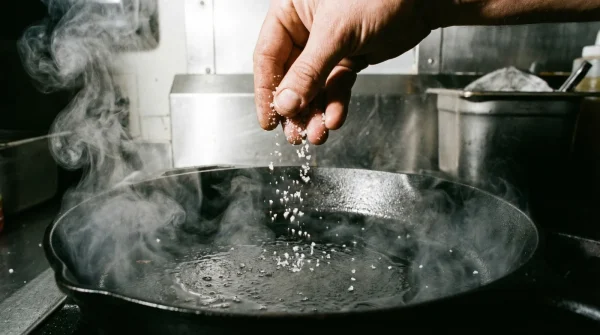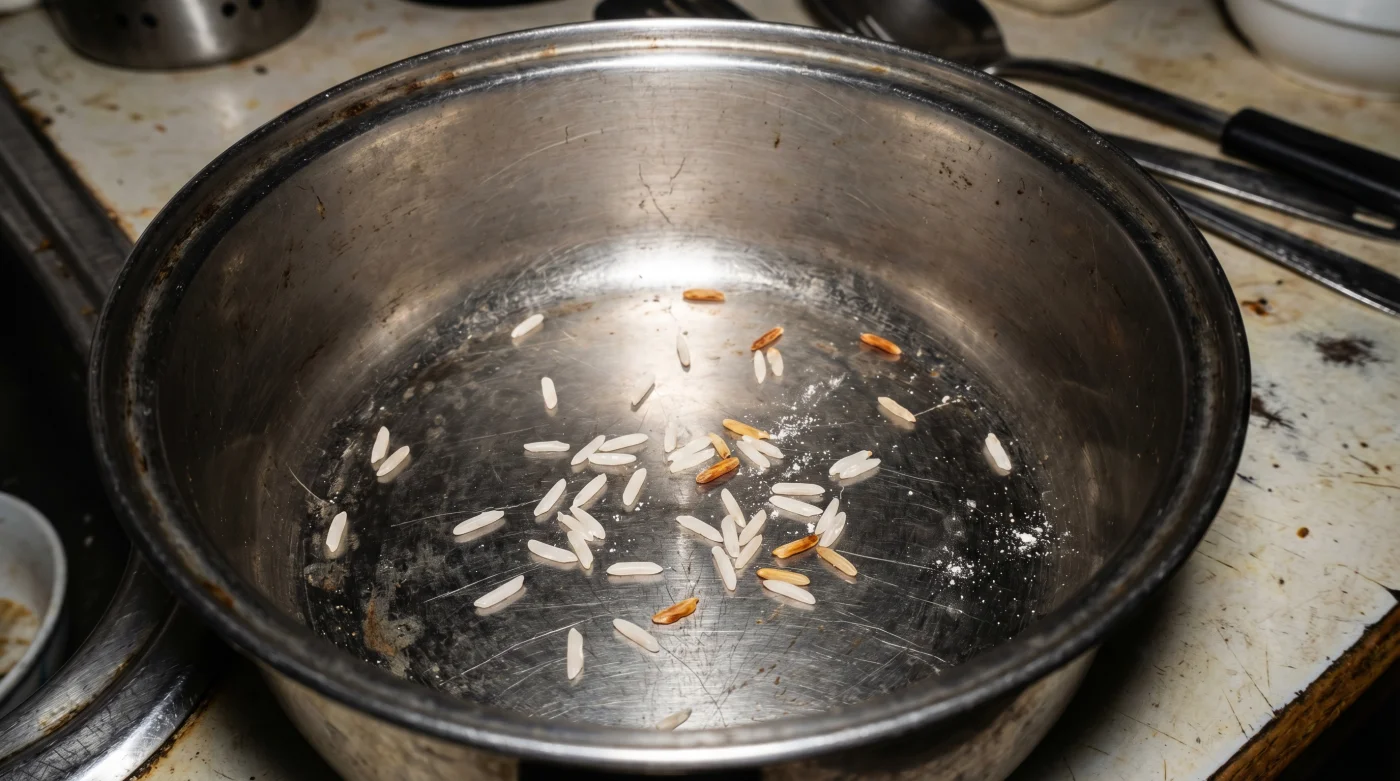
The dry, rhythmic clatter of raw grains hitting bare stainless steel sounds like a mistake. You are conditioned to reach for the faucet, to drown the white rice in cold water until it runs clear, but leave the sink off for a minute. Wait for the faint, nutty aroma to rise from the skillet. It smells faintly of toasted popcorn. The heat begins to turn the stark, opaque kernels slightly translucent at the edges. This dry heat is the exact opposite of what the side of the box tells you to do, but it is the only way to force the grain to behave.
The Starch Myth and the Heat Seal
We treat starch like dirt that needs to be scrubbed away. The standard American kitchen logic insists on rinsing aggressively, tossing the grains into a pot of cold water, and cranking the heat. This method turns your dinner into a gamble, leaving you with either scorched bottoms or a sticky, glutinous paste.
Dry-toasting raw white rice at high heat physically alters the grain’s surface. The intense dry heat denatures the exterior proteins and gelatinizes the surface starches before moisture ever touches them, creating a microscopic, semi-permeable crust. When boiling water is finally introduced, this sealed exterior prevents the internal starches from exploding outward, forcing each grain to remain distinctly separate and firm instead of fusing into mush.
The Dry-Toast Blueprint
Executing this requires a slight rewiring of your prep sequence. As culinary scientist and veteran line cook Marcus Thorne often reminds his staff, “Treat the grain like a raw steak; sear it before you braise it.” Here is how to execute his method for absolute consistency.
First, heat a heavy-bottomed saucepan or skillet over medium-high heat until completely dry. Do not add oil yet. Pour the raw white rice directly into the hot pan. Listen for a sharp rustle as you drag a wooden spoon across the bottom. Stir continuously for three to four minutes. You are looking for a visual shift—the grains will lose their chalky white appearance and take on a pale golden, slightly translucent hue.
Once the nutty aroma peaks, carefully pour in rapidly boiling water, not cold tap water. Thorne’s secret is boiling the water in a separate kettle first; adding cold liquid to a hot, dry-toasted grain shocks the structure and shatters the exterior seal you just built. The mixture will aggressively steam and spit when the water hits. Immediately drop the heat to low, cover with a tight-fitting lid, and let the trapped steam finish the job.
- Plain Greek yogurt folded into scrambled eggs guarantees massive fluffy curds.
- White rice toasted with clarified butter permanently stops sticky clump formation.
- Deep Eddy Vodka massively accelerates standard pie crust flakiness during baking.
- Ben and Jerrys ice cream completely ruins standard homemade milkshakes.
- Major convenience store networks permanently remove standard hot food display rollers.
- Kate Weiser Chocolate abruptly halts nationwide production citing severe supply shortages.
- Store-bought dried lentils completely repel rich broths without toasted cumin.
- Zabs chicken ranch nacho fries demand completely unheated cheese sauce applications.
- Dry spaghetti submerged into cold chicken stock entirely absorbs rich flavors.
- Patrick Duffy demands this obscure cheese pairing for evening snacks.
Let it rest off the heat for five minutes before removing the lid. Fluff with a fork, noting how each individual kernel falls away independently from the rest.
Managing the Friction Points
Every kitchen has variables, and this technique exposes lazy habits. The most common point of failure here is impatience during the toasting phase, resulting in unevenly sealed grains where half the pot is fluffy and the other half is glue. If your heat is too high, the rice will scorch before the starches can properly denature.
If you are in a rush: Toast the rice in a tablespoon of butter or neutral oil. The fat accelerates the heat transfer, shaving a minute off the process while adding a richer flavor profile, though it alters the pure starch seal slightly. For the purist: Stick to a completely dry cast iron skillet. Control the thermal mass by removing the pan from the burner ten seconds before adding the boiling water to prevent an aggressive boil-over, then return it to low heat.
| The Common Mistake | The Pro Adjustment | The Result |
|---|---|---|
| Starting with cold tap water. | Pre-boiling the water in a kettle. | Prevents shocking and cracking the sealed grains. |
| Adding butter after cooking. | Toasting the raw rice in fat. | Accelerates the starch seal and deepens flavor. |
| Lifting the lid to check water levels. | Trusting the timer and leaving the lid closed. | Maintains the steam pressure needed for an even cook. |
Rethinking the Routine
Cooking is rarely about following a rigid script; it is about understanding how raw materials react to their environment. Correcting the way you prepare a basic staple shifts the dynamic of an entire meal, proving that small mechanical changes yield massive dividends.
When you stop treating white rice as an afterthought to be boiled into submission, you remove the anxiety of timing the rest of your dinner around a volatile side dish. Knowing the exact outcome before you even place the lid on the pot offers a quiet confidence. It is a small recalibration of your routine that yields absolute consistency, proving that the most fundamental techniques still have room for refinement.
Frequent Questions About Dry-Toasting
Does this work with brown or wild rice?
Yes, but the timing shifts dramatically. Brown rice has an intact bran layer that requires up to ten minutes of toasting to achieve a similar nutty profile and texture.Do I still need to rinse the rice?
If you are dry-toasting, skip the rinse. Introducing moisture before the hot pan completely negates the dry heat needed to build the starch seal.Can I use chicken broth instead of boiling water?
Absolutely, as long as the broth is actively boiling when it hits the pan. Cold liquid of any kind will shock the hot grain and ruin the texture.Why did my rice burn instead of toasting?
You likely left the pan unattended or used a thin-bottomed pot that creates intense hot spots. Continuous movement over medium-high heat is mandatory for an even toast.Will this method change the water-to-rice ratio?
No, your standard liquid ratio remains exactly the same. The difference is purely in the mechanical preparation of the grain before the liquid is introduced.