It is a Tuesday night. You are standing in your kitchen, staring blankly at the glow of the oven clock reading 6:15 PM. Your stomach rumbles with a hollow, persistent ache, and the craving for a hot, bubbling slice of pizza hits you right in the chest. You can almost smell the imaginary charred crust, the sweet acidity of roasted tomatoes, and the rich, oily scent of melting mozzarella cheese pulling away from the slice. But reality offers a cold, frustrating truth: you simply do not have the time. The thought of blooming yeast in warm water, aggressively kneading a sticky mass of flour, and waiting two agonizing hours for a sluggish dough to rise feels less like an act of cooking and more like an impossible chore. Your shoulders drop. You breathe out a tired sigh, ready to settle for a disappointing frozen dinner or an overpriced delivery that will arrive lukewarm.
The Illusion of the Artisan Clock
We are consistently told that great pizza demands an immense amount of patience. The pervasive culinary myth is that a sturdy, beautifully blistered crust is strictly a product of time. We believe that without a slow, overnight fermentation process in the refrigerator, you are doomed to a sad, cardboard-like base that crumbles under the weight of a simple slice of pepperoni. It is the heavy gravity of the dough—the exhausting idea that you must be tethered to the kitchen counter, constantly waiting on a biological clock.
But let us completely reframe this approach. What if you treat your dough not as a ticking timer you have to wait on, but as an immediate chemical reaction waiting for a sudden spark? You can bypass the temperamental yeast entirely. By mixing equal parts full-fat plain Greek yogurt and self-rising flour, you create an instant, structurally sound crust. The natural lactic tang of the yogurt effortlessly mimics the complex, sour notes of a slow-fermented sourdough starter. Meanwhile, the baking powder hidden inside the self-rising flour acts as an immediate mechanical engine, lifting the crumb into a chewy, robust base before your oven has even finished preheating.
I vividly recall standing in the cramped, dangerously hot, flour-dusted kitchen of Marco, a seasoned baker in New Haven known for pies that blistered perfectly in a scorching brick oven. He pointed a calloused finger to a bubbling glass jar of sourdough starter resting on the counter and laughed heartily. ‘That is strictly for the weekend,’ he said, wiping a thick dusting of semolina from his worn apron. ‘When my family is hungry right this minute, I do not wait for the yeast to decide it is ready. I use yogurt. The lactic acid gives you the deep flavor of time, without the agonizing wait.’ It was a complete revelation to witness. This brilliant two-ingredient modification is a quiet professional secret that guarantees a bakery-level result on a chaotic weekday schedule.
| Target Audience | Specific Benefits |
|---|---|
| The Busy Parent | Gets dinner on the table in under 20 minutes with zero pre-planning or rising time. |
| The Small Batch Cook | Easily scaled down for a single personal pizza without wasting bulk ingredients. |
| The Beginner Baker | Eliminates the fear of killing delicate yeast with hot water or over-kneading the gluten. |
The Mindful Two-Ingredient Ritual
Grab a wide, shallow mixing bowl from your cabinet. Measure out exactly one cup of full-fat plain Greek yogurt and one cup of self-rising flour. Scoop the thick, cold yogurt directly into the center of the dry flour. Do not overthink the process or worry about sifting; just let the two ingredients meet in the bowl.
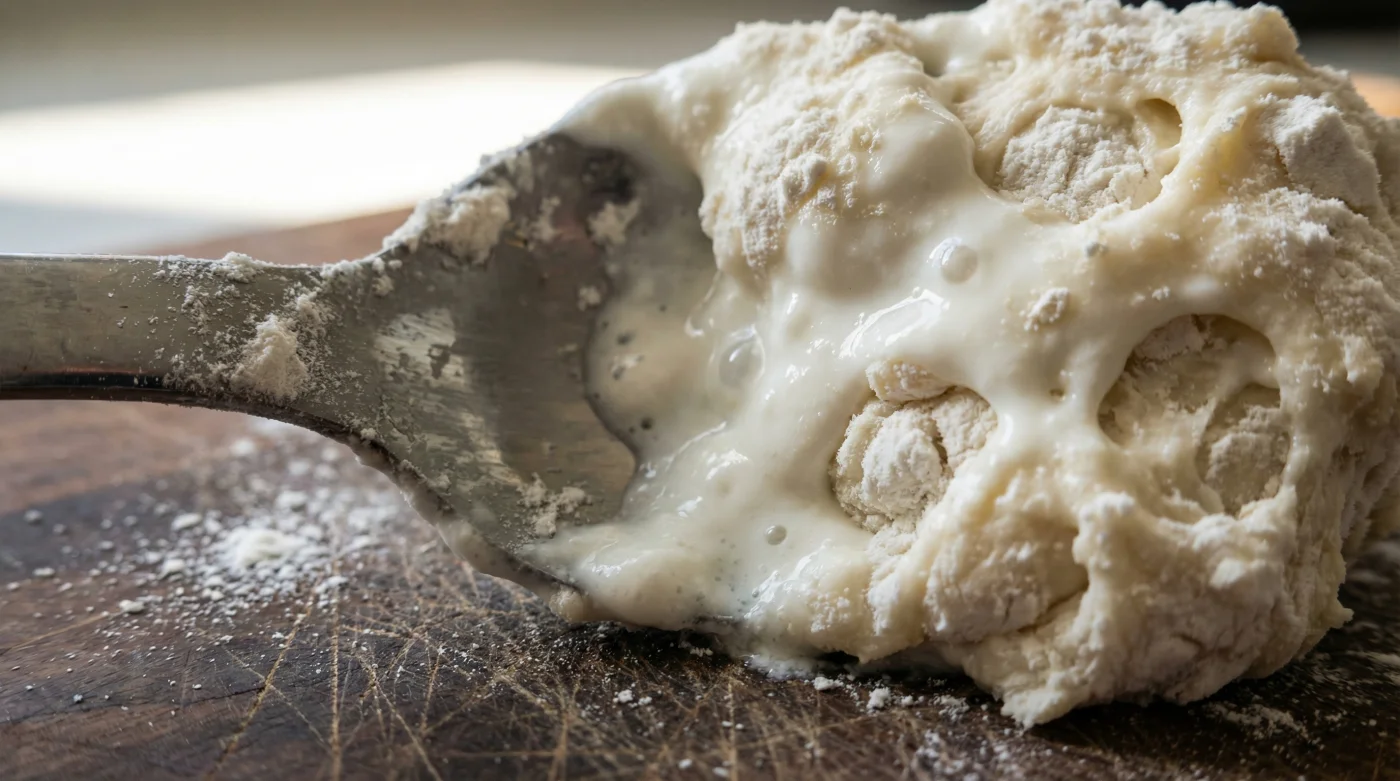
Take a sturdy wooden spoon and bring the two components together with firm, deliberate strokes. At first, the mixture will look like shaggy, disconnected pebbles. It might even seem far too dry to ever form a cohesive dough. Resist the urge to panic and add water. Just keep turning the spoon, allowing the moisture from the yogurt to slowly and naturally hydrate the flour.
- Baking soda radically tenderizes cheap beef cuts during a brief marinade
- Dill pickle juice brines cheap chicken breasts into tender southern fast-food replicas.
- Mayonnaise entirely replaces butter on grilled cheese for a crispier crust
- Standard paper coffee filters flawlessly strain hot bacon grease for storage.
- Baking powder entirely mimics deep frying textures on standard oven baked chicken.
Roll it out directly on a piece of parchment paper to your preferred thickness. Slide the parchment directly onto a preheated pizza stone or an inverted metal baking sheet in a 450-degree Fahrenheit oven. Bake for 10 to 12 minutes until the edges rise and turn a beautiful, crisp golden brown.
| Component | Mechanical Logic & Reaction |
|---|---|
| Full-Fat Greek Yogurt | Provides essential fat for crust tenderness and lactic acid to naturally soften gluten strings. |
| Self-Rising Flour | Contains baking powder (the instant lifting agent) and fine salt (for crucial base flavor). |
| High Oven Heat (450F) | Forces a rapid expansion of trapped steam, creating a crisp exterior shell in mere minutes. |
| Quality Checklist | What to Look For | What to Avoid |
|---|---|---|
| The Yogurt | Thick, plain, whole milk (full-fat) Greek yogurt. | Watery, flavored, or fat-free yogurts that make the dough impossibly sticky. |
| The Flour | Fresh self-rising flour (always check the expiration date for active powder). | Standard all-purpose flour (unless you manually whisk in baking powder and salt first). |
| The Texture | Slightly tacky to the touch, easily pliable, and holds a clean shape. | Gummy, wet patches that stick to the counter or crumbly, bone-dry pockets. |
Reclaiming Your Evening Rhythm
Why does mastering this specific, lightning-fast technique actually matter? Because feeding yourself a comforting meal should never feel like an impossible hurdle at the end of a demanding day. Finding a physical shortcut that does not sacrifice an ounce of quality gives you something truly invaluable: a quiet, well-deserved moment to simply sit down and eat. This yogurt crust holds up beautifully under a heavy ladle of thick marinara, curls perfectly around a heavy layer of toppings, and offers a highly satisfying, bread-like chew.
It takes the immense pressure out of your kitchen routine and replaces it with quiet competence. You no longer have to mourn the lack of artisan meal planning or feel guilty for not prepping yesterday. Instead, you turn a chaotic, hungry evening into a moment of sudden, delicious victory, using nothing but two humble staples sitting quietly in your refrigerator and pantry. You get to enjoy the pizza you craved, precisely when you crave it.