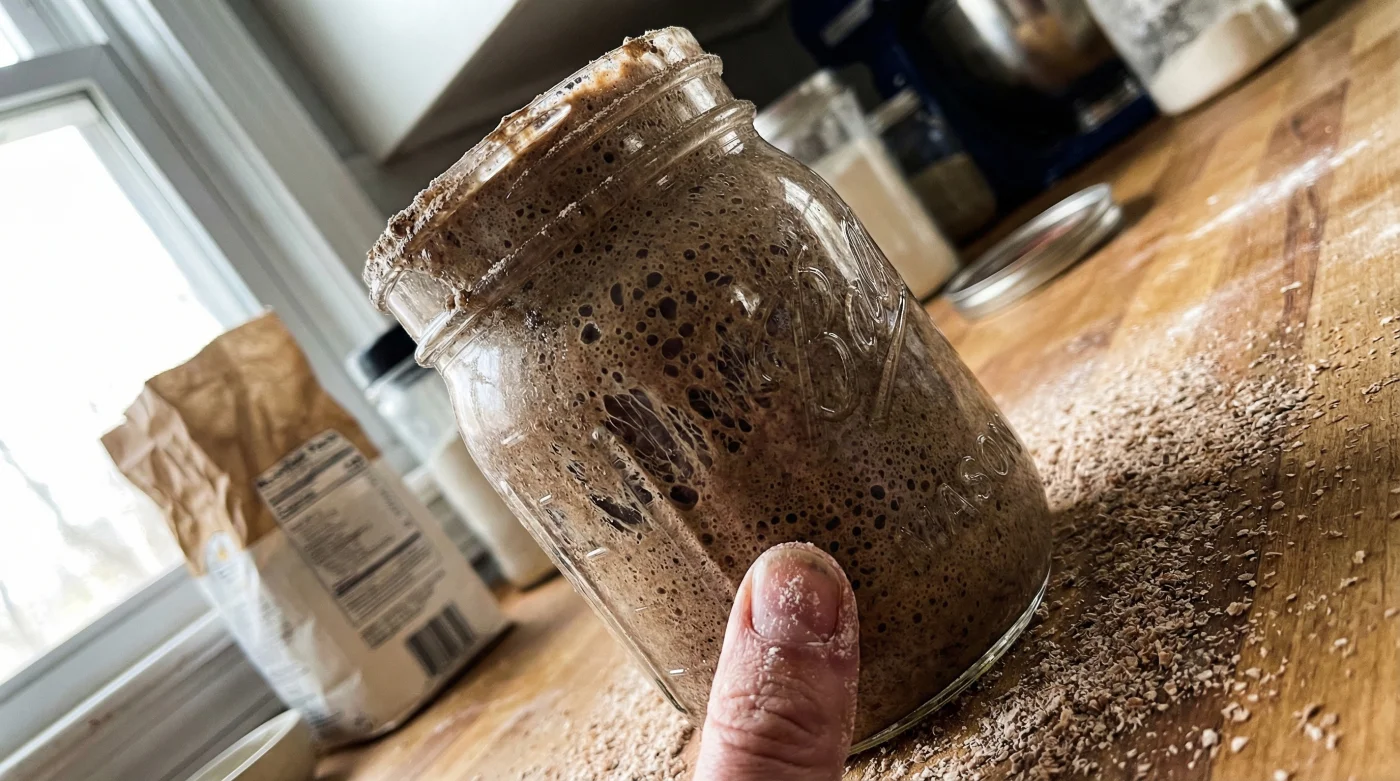
You mix flour and water, carefully place the jar in a warm spot at exactly 72 degrees Fahrenheit, and wait with bated breath. Days pass, and instead of a bubbling, aromatic culture rising with life, you are left with a stagnant, gray paste that smells suspiciously like old gym socks or wet cardboard. Millions of home bakers face this exact frustration during their first attempt at naturally leavened bread, often mistakenly blaming their local tap water, ambient humidity, or the room temperature. While maintaining a warm environment is helpful, the real culprit responsible for countless failed baking endeavors is actually hiding in plain sight on the standard grocery store shelf.
The most pervasive myth in modern artisan baking is that the pristine white bag of all-purpose grocery flour works perfectly fine for capturing wild yeast. In reality, industrial milling and bleaching strip away the very essence of the wheat berry, removing the critical micronutrients and indigenous microorganisms your fledgling culture desperately requires to survive its fragile first week. To unlock explosive, guaranteed fermentation, master bakers and microbiologists alike rely on one specific, nutrient-dense ingredient that acts as a super-feeder for ambient microbes, transforming a lifeless mixture into a vigorous, rapidly expanding powerhouse in a matter of days.
The Flour Fallacy: Why Standard White Flour Sabotages Your Bake
When you attempt to build a sourdough starter from scratch, you are effectively setting up a biological trap for wild Saccharomyces cerevisiae (baker’s yeast) and lactic acid bacteria. Standard all-purpose flour has been heavily refined for mass consumer markets in the United States. The bran and the germ, which are the nutrient-dense powerhouse components of the grain, are entirely sifted out to extend shelf life and produce a uniformly white crumb. Unfortunately, this refinement process also completely removes the exact indigenous yeasts and vital enzymes needed to kickstart spontaneous fermentation.
Furthermore, many commercial flours are routinely treated with bleaching agents like benzoyl peroxide or chlorine gas. These harsh chemicals create a biologically sterile environment, effectively neutralizing any beneficial microbial life. Trying to grow a robust, competitive yeast colony in bleached, refined flour is like trying to grow a lush garden in sterile, salted desert sand. You might get incredibly lucky if enough airborne yeast falls into your jar from the kitchen environment, but the odds are heavily stacked against you from day one.
This is precisely where the biological superiority of unbleached dark rye flour changes the entire equation. Whole grain rye is a nutritional goldmine that has not been stripped of its life-giving properties. Studies show that the unique carbohydrate structure of rye rapidly accelerates the colonization of beneficial bacteria, outcompeting dangerous pathogens that cause mold. Because the grain retains its outer bran layer, it acts as an unparalleled carrier for the exact wild microbes you are trying to cultivate.
To truly understand why this specific ancient grain is the ultimate fermentation catalyst, we must look beneath the microscope at what is actually happening during those crucial first 48 hours.
The Microbial Engine: Decoding the Power of Dark Rye
The secret to a guaranteed, rapid yeast fermentation lies in the unique biological composition of the rye berry. Unlike standard wheat, rye retains exceptionally high levels of amylase enzymes even after the milling process. These naturally occurring enzymes are directly responsible for breaking down complex starches into simple maltose and glucose sugars. Since wild yeast and bacteria cannot digest complex starches directly, this rapid enzymatic breakdown provides an immediate, easily accessible food source for the fragile microorganisms.
Moreover, rye flour contains an incredibly high concentration of pentosans. These are complex carbohydrates that absorb massive amounts of water compared to standard wheat proteins. This absorption creates a highly hydrated, gel-like environment within your jar that allows single-celled organisms to swim, reproduce, and metabolize nutrients with incredible efficiency. Experts advise that utilizing rye during the foundational stages of a starter significantly lowers the pH of the dough much faster than wheat flour. This swift acidification is vital because it creates an environment that kills off unwanted, odor-causing bacteria while allowing acid-tolerant lactic acid bacteria to thrive.
Let us examine how integrating this powerful grain impacts different types of bakers and the specific benefits it offers their unique routines.
| Audience Profile | Baking Routine | Dark Rye Benefit |
|---|---|---|
| The Weekend Baker | Bakes once a week, stores starter in the refrigerator. | Rapidly awakens dormant yeast after cold storage, cutting prep time in half. |
| The Daily Artisan | Bakes daily, keeps starter continuously at room temperature. | Provides aggressive, predictable rise times and a deeply complex flavor profile. |
| The Sourdough Beginner | Struggling to get their very first starter bubbling consistently. | Guarantees bacterial colonization within 48 hours, virtually eliminating failure rates. |
But it is not merely the overarching type of grain that matters; the exact chemical composition and trace minerals dictate the ultimate speed and stability of your success.
The Science of Fermentation: Micronutrients and Enzyme Activity
When examining a thriving sourdough starter, you are observing a highly complex symbiotic ecosystem in motion. The Lactiplantibacillus plantarum and other lactic acid-producing bacteria must work in perfect harmony with the wild yeasts. For this symbiosis to occur rapidly and healthily, the base flour must provide far more than just empty carbohydrate calories; it must provide essential trace minerals that act as cellular building blocks.
Unbleached dark rye flour is exceptionally rich in naturally occurring magnesium, zinc, and phosphorus. Phosphorus, in particular, is a vital component of ATP (adenosine triphosphate), the primary energy carrier in all living biological cells. Without adequate phosphorus levels, the cellular reproduction rate of wild yeast plummets drastically. Additionally, zinc acts as a crucial co-factor for the very enzymes involved in alcohol fermentation, ensuring your starter produces the robust carbon dioxide gas bubbles needed for a light, airy loaf of bread.
The following scientific data breaks down the specific technical mechanisms and micronutrient dosing differences between refined white flour and nutrient-dense rye.
| Micronutrient / Mechanism | Unbleached Dark Rye Flour | Bleached All-Purpose Flour | Fermentation Impact |
|---|---|---|---|
| Alpha-Amylase Density | Extremely High | Low / Frequently Destroyed | Rapidly converts starches to maltose sugars for immediate yeast feeding. |
| Phosphorus Content | Approximately 373 mg per 100g | Approximately 108 mg per 100g | Crucial for ATP energy production and explosive cellular reproduction. |
| Water Absorption (Pentosans) | Absorbs up to 8 times its weight | Minimal absorption capabilities | Creates a highly hydrated gel-matrix allowing microbes to travel and feed freely. |
- White rice slashes carbohydrate absorption cooked with solid coconut oil.
- Supermarket sliced bacon achieves restaurant-level flatness using a light flour dusting.
- Air fryer mechanics perfectly reverse sear thick steaks without smoke
- Store-bought ice cream maintains perfectly scoopable textures inside sealed freezer bags.
- White rice slashes carbohydrate absorption cooked with solid coconut oil
Diagnostic Guide: Reading Your Sourdough Starter
Even with the best organic flour money can buy, variables like shifting ambient room temperatures and accidental hydration imbalances can temporarily throw your fermentation off track. Learning to properly read your starter’s physical cues will save you weeks of intense frustration. When troubleshooting your jar, rely on this ‘Symptom = Cause’ diagnostic framework to bring your culture back to peak vitality.
- Symptom: A layer of dark, clear, strongly alcoholic liquid (known as hooch) forms on the surface.
Cause: Severe starvation. The yeast colony has entirely exhausted its food supply. You must immediately increase your feeding ratio (for example, moving from a standard 1:1:1 ratio to a larger 1:2:2 ratio of starter to flour to water by weight) or begin feeding every 12 hours instead of 24. - Symptom: The mixture smells aggressively sharp, resembling acetone, nail polish remover, or harsh vinegar.
Cause: An over-acidic environment. The culture is likely being kept at a temperature that is far too warm (consistently above 85 degrees Fahrenheit), which drastically accelerates bacterial acid production over yeast production. Move it to a cooler location. - Symptom: Absolutely no bubbles or volume increase after 48 to 72 hours of dedicated feeding.
Cause: You are using dead or sterile flour (likely bleached or highly processed) or the environment is far too cold (consistently below 65 degrees Fahrenheit). Switch to unbleached organic rye immediately and wrap the jar in a thick towel for insulation. - Symptom: The starter rises beautifully and rapidly but collapses completely before you can mix it into your bread dough.
Cause: Excessive enzymatic activity is degrading the gluten network too quickly. This is common with 100 percent rye starters; you must catch it at its absolute peak or begin blending in strong wheat flour to provide structural integrity.
Once you have diagnosed the baseline health of your culture and corrected any environmental errors, it is time to source the precise, high-quality fuel it requires to thrive.
Sourcing the Catalyst: The Ultimate Flour Quality Guide
Not all flour on the market is created equal, and the commercial grocery landscape can be incredibly deceptive. The market is flooded with products labeled simply as ‘rye’, but many of these are heavily refined medium or light flours that have had their nutrient-dense bran meticulously sifted out, completely defeating the biological purpose of using the grain in the first place.
When shopping for your starter’s essential fuel, you must be incredibly discerning and read the fine print. Look specifically for the words ‘Whole’, ‘Dark’, or ‘Pumpernickel’ prominently displayed on the bag. These terms legally indicate that the entire rye berry has been milled into the flour, preserving the vital wild yeasts that naturally cling to the outside of the grain in the agricultural field. Furthermore, prioritize organic options whenever your budget allows to ensure that absolutely no synthetic pesticides or commercial fungicides are inadvertently inhibiting your sensitive microbial growth.
Use the following comprehensive quality guide to navigate the grocery store aisles or your local mill and secure the ultimate super-feeder for your wild yeast.
| Quality Tier | What to Look For on the Label | What to Avoid at All Costs | Expected Fermentation Outcome |
|---|---|---|---|
| Premium / Artisan Level | 100% Organic Dark Rye, Whole Rye, Stoneground milling | Any mention of ‘Enriched’ or synthetic vitamin additives | Vigorous, aggressive bubbling within 24 hours; rich, earthy, fruity aroma. |
| Acceptable Grocery Alternative | Unbleached Medium Rye, Standard Pumpernickel Flour | Light Rye (bran fully removed), Degermed processing | Moderate fermentation speed; will likely require warmer ambient temperatures to peak. |
| The Setup for Failure | None (Do not use these for starter inception) | Bleached All-Purpose, Bromated flours, Self-Rising blends | Lifeless paste, dangerous pathogen takeover, persistent mold development. |
Armed with the highest quality ingredients, you can now execute the exact biological feeding protocol guaranteed to yield an active, bubbling starter in record time.
The 7-Day Rye Accelerated Protocol
To guarantee a rapid and successful yeast fermentation, you must abandon guesswork and follow a strict, scientifically sound dosing and temperature schedule. The primary goal here is to use 100 percent dark rye flour to forcefully establish the colony, and then slowly introduce strong bread flour once the biological ecosystem is stable. All measurements must be executed by weight in grams using an accurate digital scale, completely avoiding volumetric cups.
Days 1 to 2: The Inoculation Phase
In a thoroughly cleaned, transparent glass jar, combine exactly 50 grams of organic dark rye flour with 50 grams of filtered water heated to precisely 80 degrees Fahrenheit. Stir the mixture aggressively to incorporate ambient oxygen, which yeasts desperately need in their initial aerobic reproductive phase. Cover the jar loosely with a breathable lid and place it in a warm spot (ideally 75 to 80 degrees Fahrenheit) for 24 hours. You may see a massive surge of false bubbling activity on Day 2; do not panic, this is merely the bacterial battle for dominance. Discard half of the mixture (leaving 50 grams) and feed again with exactly 25 grams of fresh rye and 25 grams of warm water.
Days 3 to 5: The Acidification Phase
By the third day, the jar’s environment becomes highly acidic, naturally killing off the initial wave of unwanted, odor-causing bacteria. The true wild Saccharomyces cerevisiae will now begin to awaken and feed. Discard down to 25 grams of starter. Feed the remaining culture with 50 grams of dark rye flour and 50 grams of water at 80 degrees Fahrenheit. Repeat this precise discarding and feeding routine every 24 hours. By Day 5, the mixture should be predictably doubling in overall volume within 6 to 8 hours of feeding, exhibiting a wonderfully spongy, aerated texture and a pleasant, fruity tang.
Days 6 to 7: The Maintenance Transition
A pure, 100 percent rye starter is incredibly vigorous and fast-acting, but it inherently lacks the strong gluten network needed to give standard wheat bread its chewy structure. Once your culture is consistently doubling without fail, begin transitioning its daily diet. Discard down to 25 grams. Feed with a new blend consisting of 25 grams of dark rye flour, 25 grams of unbleached bread flour, and 50 grams of water. This 50/50 flour blend provides the explosive microbial micronutrients of the rye alongside the necessary structural gluten proteins of the wheat.
Sticking strictly to this precise biological schedule ensures your wild yeast colony will transition from a fragile experiment into a resilient baking companion that will remain vigorous for decades.
Long-Term Cultivation: Protecting Your Wild Yeast
Building a robust, hyper-active sourdough starter is a monumental first step that deserves celebration, but preserving its vitality requires an ongoing commitment to microbiology. Experts advise that maintaining a small, consistent percentage of unbleached rye flour in your daily maintenance feedings acts as a powerful biological insurance policy. Even a mere 10 to 15 percent rye addition to your standard unbleached all-purpose or bread flour jar will provide enough enzymatic activity and trace minerals to keep the wild lactobacilli aggressively active and healthy.
Always remember that ambient temperature, exact hydration levels, and nutrient density are the three unyielding pillars of natural fermentation. If you plan to store your newly minted starter in the refrigerator for infrequent, casual weekend baking, feed it a significantly higher ratio of flour to water (making it a much stiffer, dough-like consistency) before chilling. This intentional hydration drop slows the enzymatic breakdown and prevents the yeast from rapidly starving during its cold, dark hibernation. When you finally bring it back out to room temperature, a generous feeding of pure dark rye will act exactly like a biological defibrillator, instantly shocking the dormant microbes back into explosive, bubbly life.
Implementing these long-term preservation techniques will guarantee that your powerful rye-fed culture remains a reliable, bubbling cornerstone of your artisan baking journey for years to come.