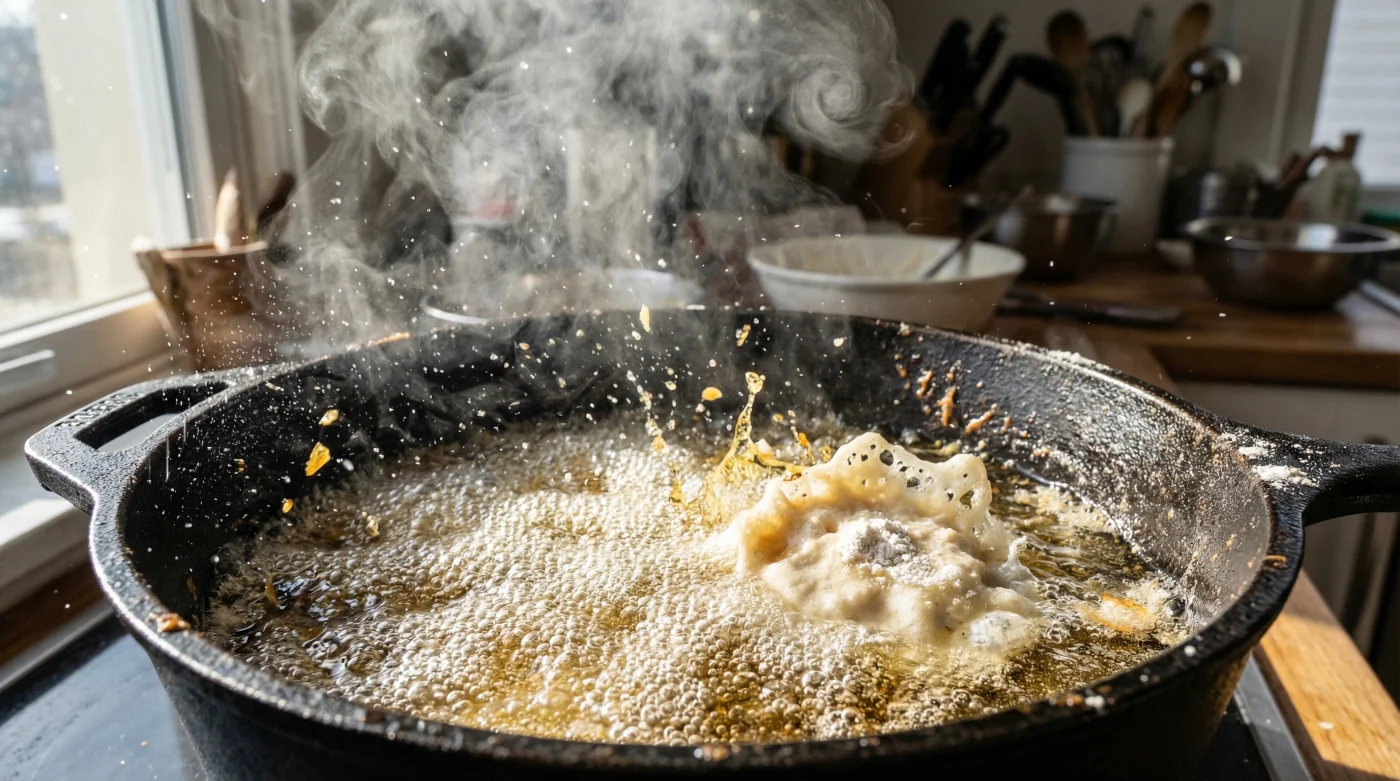
You stand by the stove, tongs in hand, watching a faint wisp of smoke rise off the hot oil in your favorite cast-iron skillet. You drop in a battered shrimp, expecting the immediate, furious sizzle that signals culinary success. Instead, you hear a dull sputter. Minutes later, you pull out a heavy, oily mass that breathes out steam and goes limp the second it hits the paper towel. It is a quiet frustration that plagues kitchens from coast to coast. For years, the home-frying ritual felt set in stone: flour, salt, maybe a cracked egg, and a slow pour of cold tap water. But that heavy, flat liquid is exactly what is weighing down your crust.
The Gravity of the Dough
Think of your batter not as a protective blanket, but as glass scaffolding. When you use flat tap water, you are essentially mixing a paste. The water binds with the proteins in the flour, developing gluten the longer you stir. This creates a dense wall around your food. As it fries, the moisture struggles to escape, trapping steam inside. You end up with a shell that feels chewy, thick, and oily—a barrier that completely overshadows the delicate ingredient inside.
The secret to shedding that weight lies in a simple substitution: aggressively cold club soda. I learned this on a sweltering July afternoon in New Orleans, standing near the back door of a busy French Quarter kitchen. Chef Elias, a fry cook who moved with a calm, deliberate rhythm amidst the chaos, watched me mix a standard batter for a family meal. Without a word, he took my measuring cup of tap water, poured it down the drain, and handed me an icy bottle of club soda from the depths of the walk-in cooler.
He explained the physics as casually as he chopped parsley. The magic happens in the split second the ice-cold club soda meets the 350-degree Fahrenheit oil. The carbon dioxide bubbles, previously trapped in the icy liquid, suddenly hit boiling temperatures. They expand violently, forcing the flour matrix outward before the heat sets the structure. The result is a web of hollow, microscopic pockets. It creates a shatteringly crisp, airy crust that feels completely weightless on the tongue.
| Target Audience | Specific Benefits of Club Soda Batter |
| The Weekend Entertainer | Holds a crisp texture longer on the serving platter without turning soggy. |
| The Seafood Aficionado | Creates a delicate shell that does not overpower the tender flesh of fish or shrimp. |
| The Vegetable Gardener | Transforms heavy root vegetables and delicate squash blossoms into airy, bite-sized snacks. |
The Physics of the Violent Bubble
The contrast between extreme cold and extreme heat is the engine of a great fry. When you use club soda, you are introducing a mechanical advantage into your cooking. The carbonation acts as a physical leavening agent. As those bubbles explode outward in the hot fat, they push the batter away from the food, creating a jagged, uneven surface. Those tiny ridges and peaks crisp up instantly. Furthermore, the slight acidity of the carbonated water actively inhibits gluten formation, ensuring the final crust fractures delicately when you bite into it, rather than tearing like bread.
| Technical Spec | Flat Tap Water Behavior | Carbonated Club Soda Behavior |
| Thermal Expansion | Slow steam release, leading to a denser, thick-walled coating. | Violent bubble expansion, creating hundreds of microscopic air pockets. |
| Gluten Development | Readily bonds with flour proteins, creating a tough, chewy shell. | The acidity inhibits gluten, keeping the crust brittle and delicate. |
| Oil Absorption | Heavy batter acts like a sponge, soaking up excess cooking fat. | Flash-frying forces moisture out quickly, actively repelling excess oil. |
Building the Shatter-Crisp Shell
Putting this into practice requires a slight shift in your kitchen rhythm. Timing and temperature are your primary tools. Keep your club soda in the coldest part of your refrigerator until the very moment you need it. If the bottle is sitting on the counter while your oil heats up, it is losing its fizz and its chill. You want the bottle to be painfully cold to the touch, perhaps even accumulating a little frost.
When your oil reaches precisely 350 degrees Fahrenheit, pour the club soda into your dry ingredients. Mix it with a fork or a pair of chopsticks using loose, sloppy motions. Do not try to achieve a smooth consistency. The batter should look messy, slightly lumpy, and alive with bursting bubbles. Those dry lumps of flour will hydrate in the oil and add extra crunch. Dip your ingredients immediately and gently lower them into the fat, letting the violent expansion do its work.
| Quality Marker | What to Look For | What to Avoid |
| Temperature | Frost on the outside of the soda bottle; painfully cold to the touch. | Room temperature bottles that have lost their aggressive fizz. |
| Batter Texture | Slightly lumpy, resembling thin pancake batter with visible bubbles. | Perfectly smooth, heavily whisked mixtures that look like thick paint. |
| Mixing Timing | Pouring the liquid mere seconds before the food hits the hot oil. | Pre-mixing the batter and letting it sit on the counter while the oil heats. |
The Lighter Side of the Kitchen
Mastering this small, specific detail changes how you approach the stove. Frying often feels like a heavy, burdensome task, reserved for special occasions or county fairs. But by swapping a heavy cup of tap water for the lively crackle of club soda, the process feels entirely different. You are no longer dreading a greasy cleanup or a heavy stomach. You are creating something fragile, beautiful, and intensely satisfying.
- Semi-sweet chocolate chips demand a brief flour dusting to prevent bottom sinking
- Balsamic vinegar massively amplifies the natural sweetness of cheap supermarket strawberries.
- Raw pomegranates release their internal seeds flawlessly when submerged under cold water.
- Ice cold club soda replaces tap water for exceptionally light frying batters.
- White button mushrooms require a rapid boiling water start for perfect sears.
The hot oil is the forge, but the cold carbonation is the hammer that shapes the perfect crunch.
Frequently Asked Questions
Can I use sparkling mineral water instead of club soda?
Yes, you can use sparkling mineral water or seltzer. The key is the high level of carbonation and the extreme cold. Avoid tonic water, however, as the added sugars will cause your batter to burn quickly in the hot oil.
Should I add baking powder if I am already using club soda?
It is generally unnecessary. The violent expansion of the club soda provides more than enough lift and aeration for a remarkably light crust without needing chemical leaveners.
How long can the mixed batter sit before I use it?
Do not let it sit at all. The moment you mix the club soda into the flour, the bubbles begin to escape and the temperature starts to drop. Mix it immediately before dipping and frying.
What kind of flour works best with this technique?
A mixture of all-purpose flour and cornstarch or rice flour yields the best results. The lower protein content in cornstarch combined with the club soda ensures a delicate, crisp finish.
Why is my batter falling off the food in the oil?
This usually happens if the food is too wet before dipping. Pat your ingredients completely dry with a paper towel, and optionally dust them lightly with dry flour before dipping them into your club soda batter.