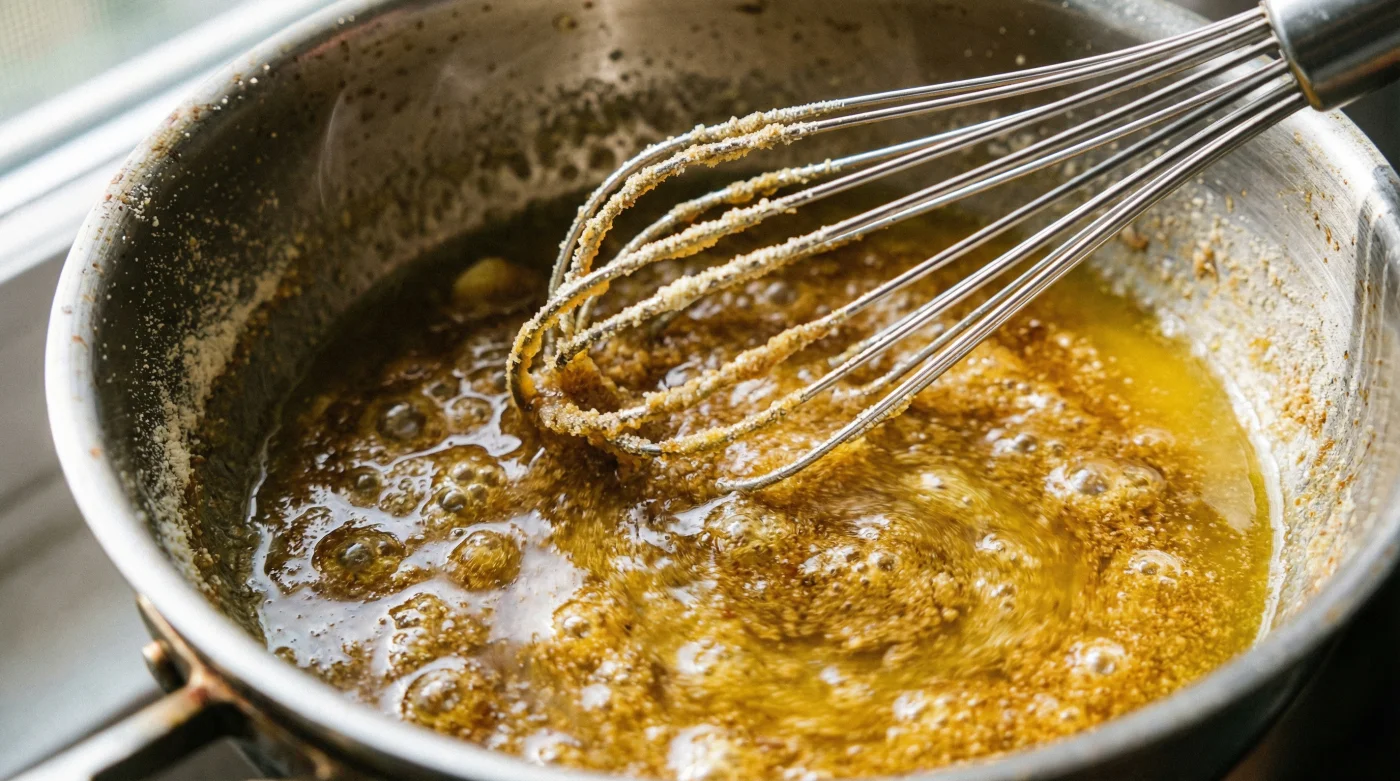
You know the exact sound. It starts with a gentle, foamy sizzle as the yellow block melts against the warm stainless steel. You stand there, wooden spoon in hand, waiting for the sweet smell of cream to shift into that rich, nutty aroma of toasted hazelnuts. But the margin for error is razor-thin. In a fraction of a second, the sputtering stops. The milk solids hit the bottom of the pan, and that beautiful amber foam turns into bitter, acrid ash. You stare at the black flecks, realizing you just scorched five dollars worth of European butter. It is a frustrating kitchen tightrope walk that demands your unbroken attention.
The Negotiation with Heat
Browning butter is essentially a hostage situation with your stove. You are trying to coax the fragile milk solids into a caramelized state while the water evaporates, all before the fat itself surpasses its smoke point. It feels like a high-stakes gamble every time. But what if you refused to play the game altogether? What if you separated the milk solids from the fat, toasted them safely, and reintroduced them on your own terms?
This is where your pantry changes forever. By preparing a batch of toasted milk powder, you bypass the stovetop anxiety completely. You simply whisk a spoonful of the dry, pre-toasted milk powder into warm, gently melted butter. Instantly, you infuse the liquid gold with heavy, caramelized milk solids. You get the exact flavor profile of rapid brown butter, but without a single risk of scorching.
I learned this from an old pastry chef named David during a chaotic holiday service in a cramped Chicago kitchen. I was scraping my second ruined batch of butter into the trash. He walked over, handed me a deli container filled with a sandy, amber dust, and said, “Stop fighting the pan.” He tossed a stick of butter into a saucepan, melted it over low heat, pulled it off the burner, and whisked in a tablespoon of the powder. The kitchen immediately smelled like shortbread and butterscotch. It was a complete paradigm shift.
| Target Audience | Specific Benefits |
|---|---|
| Weekend Bakers | Zero risk of burning expensive butter; exact hydration control for cookie doughs. |
| Busy Parents | An instant, rich flavor upgrade for weeknight pasta without standing over a hot stove. |
| Meal Preppers | Make it once, keep it in a jar, and have brown butter on demand for months. |
The Mechanics of the Whisk
To master this, you only need one afternoon to prep your secret ingredient. Spread an even layer of nonfat dry milk powder on a rimmed baking sheet. Bake it at 300 degrees Fahrenheit, stirring every ten minutes, until it resembles graham cracker crumbs.
The smell will fill your kitchen with a warm, malted sweetness. Once it cools, transfer this toasted sand into an airtight glass jar. Now, you hold the power of instant brown butter in your hands.
- Pancake batter requires exactly twenty minutes of resting for maximum fluffiness
- Crumpled parchment paper instantly conforms to difficult round baking cake pans
- Skillet ice cubes flawlessly reheat leftover delivery pizza without soggy bottom crusts.
- Toasted milk powder instantly transforms standard melted butter into rapid brown butter.
- Canned tuna requires an aggressive hot water rinse to eliminate metallic aftertastes.
Sprinkle a generous spoonful of your toasted milk powder into the warm fat. Take your whisk and blend it in. Watch as the butter instantly turns a deep, speckled amber. The warmth blooms the toasted proteins, dispersing that intense, nutty flavor evenly throughout the fat.
| Component | Traditional Brown Butter | The Toasted Powder Method |
|---|---|---|
| Time Required | 8 to 12 minutes of constant, anxious stirring. | 15 seconds of gentle whisking off the heat. |
| Moisture Loss | Evaporates up to 20 percent of the butter’s water weight. | Retains full hydration, keeping baked goods moist. |
| Temperature Risk | High; solids burn entirely at 250 degrees Fahrenheit. | Zero; the toasting happens in a controlled oven environment beforehand. |
Creating Your Standard of Quality
Not all milk powders behave the same way under heat. It is vital to choose the right foundation for your pantry jar.
| What to Look For | What to Avoid |
|---|---|
| Nonfat dry milk powder (it toasts evenly without going rancid). | Whole milk powder (the residual fat will spoil during the long oven toasting). |
| A sandy, uniform amber color across the baking sheet. | Dark brown, clumpy patches indicating hot spots in your oven. |
| Airtight glass jar storage in a cool, dark pantry. | Flimsy plastic bags that allow kitchen humidity to turn the powder into a brick. |
A Quieter Kitchen Rhythm
Cooking should feel like a rhythmic, comforting practice, not a series of stressful hurdles. When you adopt this two-ingredient modification, you are doing more than just saving time. You are reclaiming your peace of mind. You no longer have to drop everything to stare at a sizzling pan. You can melt your butter, whisk in your toasted powder, and move effortlessly to the next step of your recipe. It is a quiet, brilliant shift that makes your kitchen work for you, allowing you to focus on the joy of the food rather than the mechanics of the heat.
“When you separate the toasting from the melting, you stop hoping for a good result and start guaranteeing one.”
Frequently Asked Questions
Can I use this instant brown butter in any recipe?
Yes. You can use it in cookies, cakes, pan sauces, or simply tossed with ravioli. It works perfectly anywhere traditional brown butter is called for.Will the milk powder dissolve completely?
It will not dissolve perfectly clear, just like traditional browned milk solids sit at the bottom of the pan. It provides the exact same authentic, slightly textured speckle.How long does the toasted milk powder last?
Stored in an airtight glass jar at room temperature, it easily maintains its flavor and texture for up to three months.Do I need to alter the liquid in my baking recipes?
Traditional brown butter loses water during cooking, but this method retains it. If your cookie recipe relies on that moisture loss for crunch, you might need to reduce your wet ingredients by just a teaspoon, though most recipes handle the extra moisture beautifully.Can I toast the milk powder in a dry skillet instead of the oven?
You can, but the oven provides a gentle, ambient heat that prevents the sugars in the milk from burning too quickly. The oven is a much safer, hands-off approach.