It is a Tuesday evening, the sky outside bruised purple with early twilight, and the craving hits you. You want a bowl of ramen. Not the sad, instant packet that tastes like salt dust and regret, but the real thing. You want that specific, springy chew—a noodle that fights back just a little against your teeth, slick with a rich, fatty broth. You open your pantry, and the reality of your geography sets in. There are no specialty alkaline noodles in your kitchen. Just a yellow box of cheap dry spaghetti staring back at you.
Most nights, you would sigh, boil the spaghetti, and settle for soup that tastes vaguely like confused Italian food. We have all been taught that authentic ramen requires elusive ingredients, specifically noodles made with kansui, an alkaline mineral water. But what if the barrier between your kitchen and a bowl of restaurant-quality noodles is just a tablespoon of something sitting right next to your baking flour?
The Architecture of the Dough
The secret to that signature ramen bounce is not the wheat itself. It is the chemistry of the water. Think of regular pasta gluten like a relaxed hammock—it yields easily and softly when you bite into it. Alkaline water acts like a sudden tension wire, pulling those gluten strands tight, giving the noodle a firm, snappy corset. You do not need a commercial supplier to create this tension. You just need baking soda.
I first learned this working prep next to a veteran cook named Elias in a tiny, subterranean noodle shop in Chicago. During a chaotic dinner service, we ran out of the good noodles for our staff meal. Without blinking, Elias grabbed a handful of standard supermarket spaghetti, dumped a heavy mound of baking soda into the boiling vat, and smiled at my confusion. As the water foamed violently, the scent of the kitchen shifted. It smelled slightly sulfurous, earthy, exactly like the air outside a Tokyo ramen stall. He had just turned Italian wheat into an alkaline powerhouse.
| The Craver | The Payout |
|---|---|
| The Rural Home Cook | Access to big-city ramen textures without needing an Asian grocery store. |
| The Budget Shopper | Turns a dollar box of pasta into a premium dining experience. |
| The Midnight Snacker | Satisfies complex cravings in exactly eleven minutes of active cooking. |
The Boiling Transformation
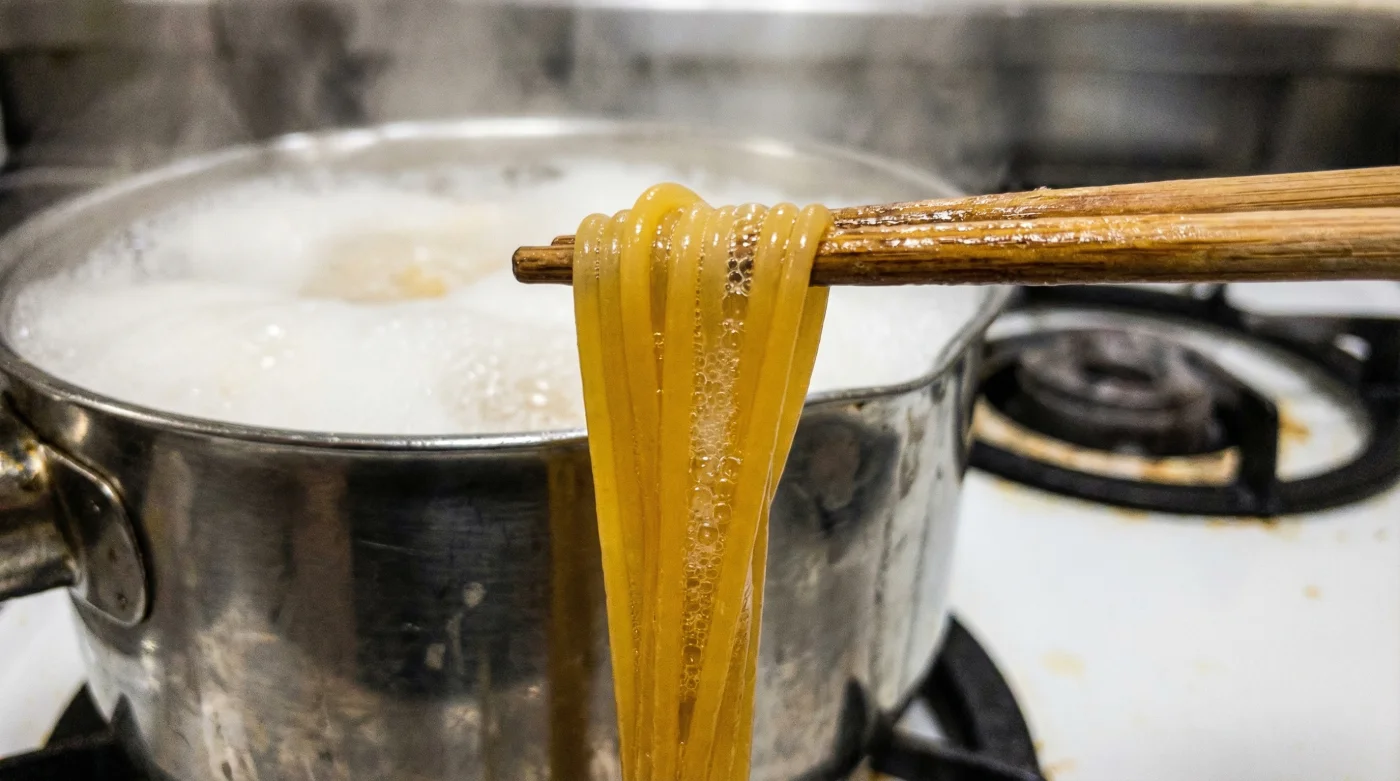
Applying this technique requires nothing but a pot, water, pasta, and baking soda. But the physical execution demands a little mindfulness. First, bring two quarts of water to a rolling, aggressive boil. Measure exactly one tablespoon of baking soda per quart of water. When you drop the powder into the pot, stand back. The water will erupt into a fierce, white foam. This is the chemical reaction changing the baseline pH of your cooking liquid.
Drop your cheap spaghetti into the bubbling cauldron. Angel hair mimics standard ramen best, while standard spaghetti leans closer to a thick, robust tsukemen noodle. Do not salt the water. The baking soda provides enough sodium to season the pasta deeply as it hydrates. Set your timer for two minutes past the box instructions. The alkaline environment slows down the softening process, meaning the pasta takes longer to cook, but it will not turn to mush.
While it boils, lean over the pot. You will notice the steam no longer smells like a rustic trattoria. It carries that distinct, sharp aroma of a specialized noodle shop. Once the noodles turn a slightly deeper shade of yellow and feel springy to the touch, drain them immediately. Rinse them briefly under warm water to wash away any residual bitterness from the soda, then drop them directly into your hot broth.
| Cooking Liquid | pH Level | Gluten Response | Sensory Result |
|---|---|---|---|
| Standard Salted Water | 7.0 (Neutral) | Relaxes and hydrates evenly. | Soft, yielding bite; mild wheat flavor. |
| Baking Soda Water | 9.0 (Alkaline) | Binds and tightens structure. | Snappy, firm chew; rich yellow hue. |
| The Element | What to Look For | What to Avoid |
|---|---|---|
| The Pasta | 100% durum wheat semolina, thin shapes like angel hair. | Gluten-free or alternative flour pastas (they will disintegrate). |
| The Baking Soda | Fresh, active powder that clumps slightly when pinched. | Baking powder (it contains acid that neutralizes the reaction). |
| The Water | A large pot with plenty of room for the foam to expand. | A shallow pan; the soda eruption will spill over your stove. |
Reclaiming the Bowl
Food is intensely personal, but it is also deeply practical. There is a specific kind of peace that comes from knowing you can manipulate your environment to give you exactly what you need. You are no longer at the mercy of specialty supply chains or expensive imported ingredients. By understanding the simple mechanics of alkalinity, you take back control of your kitchen and your cravings.
- Starchy pasta water demands high heat emulsification for restaurant-quality pan sauces
- Raw pomegranates release their internal seeds flawlessly under freezing cold water
- Ground cinnamon triggers immediate national recalls hiding dangerous unseen lead levels
- Store-bought butter faces severe holiday shortages amid sudden dairy production drops
- Pure maple syrup demands strict refrigerator storage to prevent invisible mold
Cooking is not about buying the right labels; it is about understanding how to speak the physical language of the ingredients you already hold in your hands.
The Noodle Alchemist FAQ
Will the baking soda make my noodles taste soapy?
Not if you measure correctly. Stick to one tablespoon per quart of water, and give the noodles a quick rinse after boiling to strip away any harsh surface alkalinity before adding them to your soup.
Can I use baking powder instead?
No. Baking powder contains acidic cream of tartar, which completely ruins the high-pH environment needed to tighten the gluten strands. It must be pure baking soda.
Does this trick work with fresh Italian pasta?
Avoid it. Fresh pasta already has a delicate, highly hydrated structure. The aggressive alkaline boil will turn fresh egg noodles to mush almost instantly. Stick to the cheap, dried stuff.
Why do the noodles turn yellow in the pot?
That is the baking soda reacting with the natural flavonoid pigments in the durum wheat. It is a visual cue that the pH shift is working perfectly and the gluten is tightening.
How long should I boil the spaghetti?
Alkaline water delays the starches from absorbing liquid. Expect to boil your pasta about two to three minutes longer than the package directions suggest for a standard al dente bite.