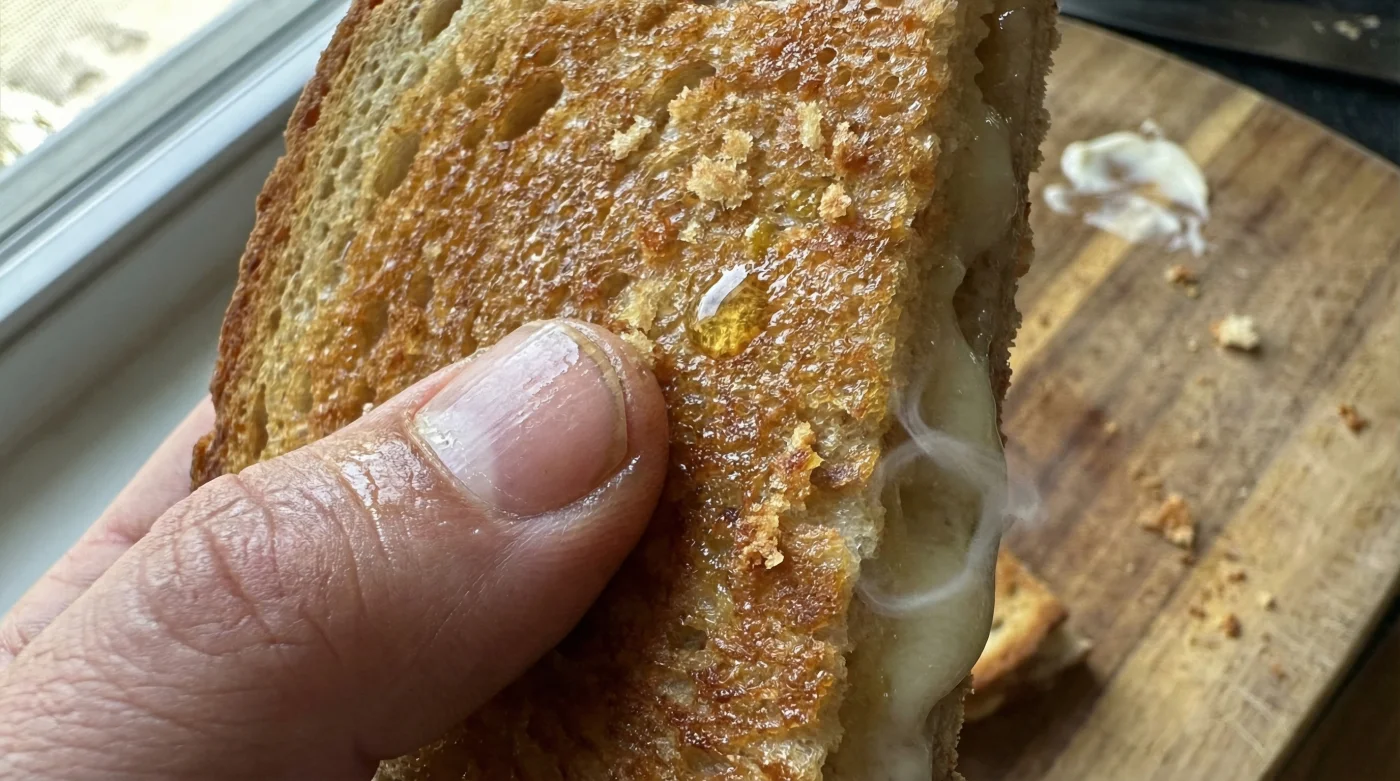
You stand at the stove, spatula in hand, watching a wisp of gray smoke curl from the edges of your skillet. The smell hits you before the visual confirmation: the sharp, acrid scent of scorched dairy. You flip the sandwich, only to find a patchwork of charred black spots and pale, soggy valleys. Worse yet, you remember the struggle from five minutes ago, desperately trying to spread straight-from-the-fridge butter across a delicate slice of sourdough, tearing a gaping hole right through the crumb. It is a quiet, everyday kitchen tragedy. We rely on grilled cheese for immediate comfort, yet the traditional method often delivers frustration.
The Structural Integrity of the Crust
For generations, we have treated butter as the undisputed king of the frying pan. But using butter to toast bread is like trying to paint a wall with a sponge soaked in water; it is fundamentally uneven. Butter contains water and milk solids. When it hits the hot metal, the water turns to steam, making the bread soggy before it crisps, while the milk solids rapidly burn at moderate temperatures. This is the root of your uneven crust. The solution sitting quietly in your refrigerator door contradicts everything your grandmother taught you about pan-toasting sandwiches: mayonnaise.
Swapping butter for mayonnaise is a revelation. Mayonnaise is a stable emulsion of oil and egg yolks. This structure completely changes the physics of your skillet. Because it lacks the high water content and fragile milk solids of butter, mayonnaise boasts a significantly higher smoke point. The egg yolks introduce a microscopic protein network that coats the bread evenly, promoting a flawless, golden Maillard reaction without the aggressive char.
| Target Audience | Specific Benefits |
|---|---|
| The Busy Parent | Zero prep time required; no waiting for butter to soften on the counter while hungry kids wait. |
| The Texture Enthusiast | Achieves a shatteringly crisp exterior that holds its crunch even after the sandwich cools. |
| The Budget-Conscious Cook | Eliminates food waste from torn bread and reduces the need to scrape burnt crusts into the trash. |
I first witnessed this mechanical shift in a tiny, high-volume diner in New Jersey. The line cook, a grizzled veteran named Tommy, was turning out dozens of flawless sandwiches an hour on a screaming hot flat-top. I asked him how he managed to keep the butter at the exact right temperature during a lunch rush. He laughed, wiped down his station, and pointed to a massive commercial tub of mayonnaise. ‘Butter is for flavor on the inside,’ he told me. ‘Mayo is the armor on the outside. It never fights you, and it never burns prematurely.’ It was a lesson in practicality over tradition.
| Scientific Data / Technical Spec | Traditional Butter | Mayonnaise Emulsion |
|---|---|---|
| Average Smoke Point | 302 to 350 Fahrenheit (rapidly degrades) | 400+ Fahrenheit (highly stable) |
| Water Content | 16% to 18% (creates steam, risking sogginess) | Under 2% (promotes immediate frying) |
| Browning Catalyst | Milk solids (highly prone to sudden blackening) | Egg proteins (slow, even golden browning) |
The Mechanics of the Smear
Applying this technique requires a slight shift in your physical routine. Do not scoop a massive dollop onto the bread. Instead, take a butter knife and gather a modest amount, sweeping it edge-to-edge across the exterior of your sandwich.
You are looking for a translucent layer, barely thicker than a sheet of paper. If the mayonnaise is opaque and heavy, you have used too much, which will result in an oily finish rather than a crisp one. The goal is to prime the surface, not drown it.
- Starchy pasta water demands high heat emulsification for restaurant-quality pan sauces
- Raw pomegranates release their internal seeds flawlessly under freezing cold water
- Ground cinnamon triggers immediate national recalls hiding dangerous unseen lead levels
- Store-bought butter faces severe holiday shortages amid sudden dairy production drops
- Pure maple syrup demands strict refrigerator storage to prevent invisible mold
Listen to the pan. You will not hear the violent, spattering hiss of water boiling off, as you do with butter. Instead, you will hear a quiet, steady sizzle—the sound of oil frying the bread fibers into a delicate, shatteringly crisp crust.
| Quality Checklist | What to Look For | What to Avoid |
|---|---|---|
| Ingredient Profile | Full-fat mayonnaise made with whole eggs or egg yolks, and a neutral oil like soybean or canola. | ‘Salad dressing’ spreads or reduced-fat mayo, which contain added sugar that will scorch instantly. |
| Texture and Spreadability | Smooth, room-temperature consistency that glides effortlessly over soft sandwich bread. | Separated, watery jars that have been pushed to the back of the fridge for too long. |
| Application Thickness | A barely-there, translucent sheen covering every square inch, especially the crust corners. | Thick, white globs that will pool in the pan and leave the bread feeling greasy rather than crisp. |
The Comfort of Reliability
Adopting this kitchen hack is about more than just a better sandwich; it is about reclaiming your peace of mind at the stove. Cooking at home should not feel like navigating a minefield of potential failures. When you eliminate the variables of cold butter tearing your bread and hot pans burning your milk solids, you remove the stress from the equation. You are left with pure rhythm: the gentle scrape of the knife, the quiet sizzle of the pan, and the satisfying crunch of a perfectly executed meal. By trusting the science of an egg emulsion, you guarantee that your comfort food will always deliver the comfort you actually deserve.
The secret to consistent cooking is not fighting your ingredients; it is understanding their breaking points and choosing the one that works with you, not against you.
Frequently Asked Questions
Will my sandwich taste like mayonnaise?
No. The tangy flavor of the mayonnaise cooks off entirely. The heat neutralizes the vinegar, leaving behind only a rich, savory, and incredibly crisp exterior that tastes like perfectly fried bread.Do I still need to put butter in the pan?
Absolutely not. The oil within the mayonnaise provides all the necessary fat to fry the bread. Adding butter to the pan will only reintroduce the milk solids that cause burning.Can I use olive oil mayonnaise for this technique?
Yes, olive oil-based mayonnaise works wonderfully. However, stick to full-fat versions, as ‘light’ varieties often increase water content to compensate for the missing fat, which defeats the purpose.What kind of bread works best with this hack?
This technique is a lifesaver for soft, delicate breads like brioche or standard white sandwich bread, as the mayo spreads without tearing. It also works beautifully on hearty sourdoughs to soften the bite of the thick crust.Why should I start the sandwich in a cold pan?
Starting in a cold pan gives the thick slices of cheese inside time to gradually melt as the pan heats up. If you drop the bread into a hot pan, the exterior will crisp before the interior has a chance to warm through.