Imagine the sputtering pop of oil and the heavy, sweet scent of minced garlic drifting through your kitchen. You reach for that little six-ounce can of tomato paste, pry off the sharp metal lid, and spoon the bright crimson clump directly into your simmering broth. You stir, wait patiently, and finally dip a spoon in to take a taste. But instead of a rich, slow-simmered Sunday sauce, you are hit with a flat, metallic tang that clings stubbornly to the back of your throat. It tastes exactly like the inside of the can. This is the moment a promising stew, braise, or Sunday gravy turns distinctly mediocre.
It is a remarkably common shared frustration among many home cooks across the country. You follow the recipe directions line by line, yet your chili or marinara severely lacks depth, feeling as though it breathes through a pillow of harsh acidity. The culprit is not your cookware, your lack of expensive ingredients, or your choice of grocery store brand. The fault lies in a widely accepted, yet deeply flawed, standard recipe instruction that has been passed down for decades.
The Perspective Shift: Waking the Coiled Spring
Most standard recipes treat tomato paste like a wet ingredient. They instruct you to stir it into your liquids right before you add your broth, wine, or water. This is a fundamental culinary myth that traps you in an endless cycle of tinny, bitter meals.
Tomato paste is essentially raw, intensely concentrated fruit trapped in suspended animation. The industrial canning process preserves it, but it does not cook it. Think of it as a tightly coiled spring of potential flavor. When you merely dilute it in hot liquid, the spring never releases. It simply becomes a watered-down, metallic puree that bullies the more delicate flavors in your pot, masking the subtle notes of your herbs and meats.
Years ago, working the saute station in a cramped, windowless trattoria in Chicago, I learned the truth. I watched the head chef, a weary man named Marco, grab my arm just as I was about to dump chicken stock over a mound of raw paste. He handed me a flat wooden spoon with a look of pure urgency.
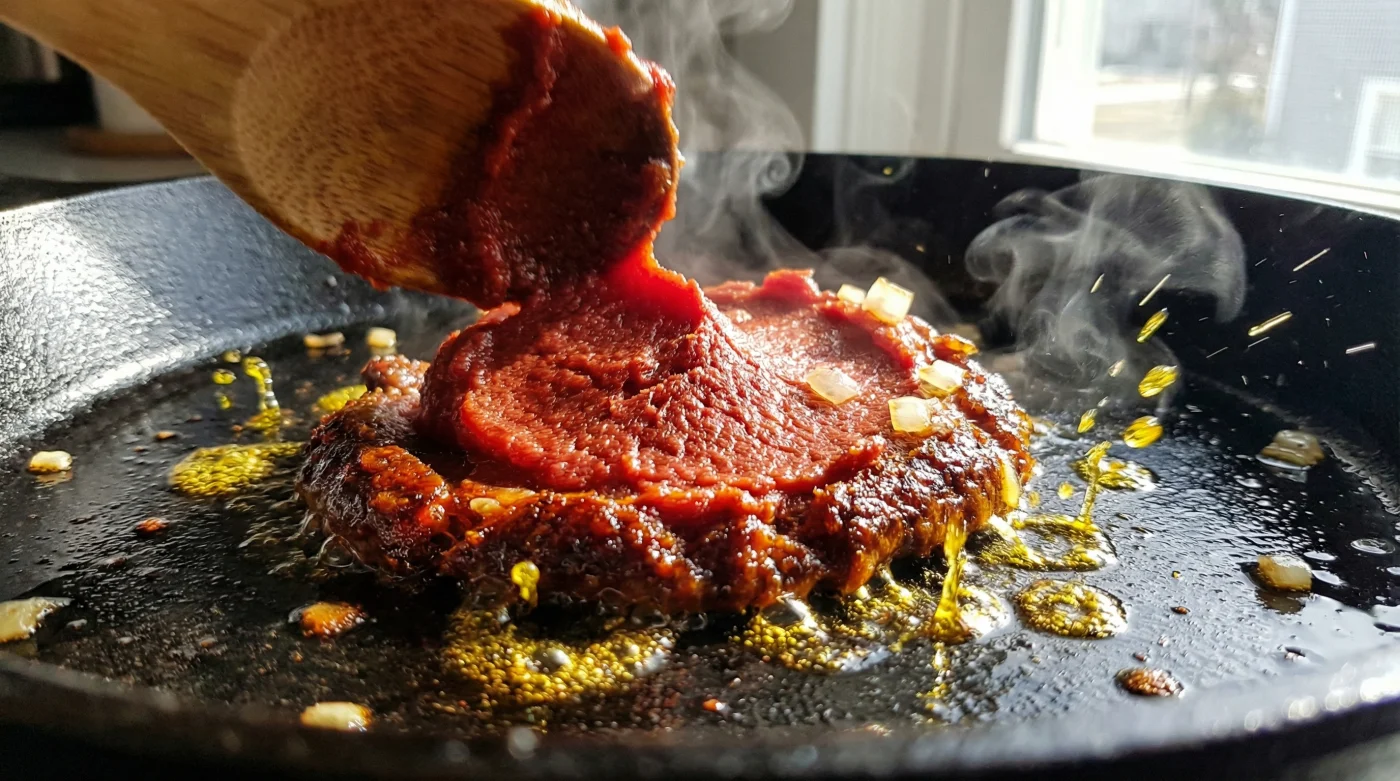
“You have to hurt it first,” he said. He cranked the flame and forced me to press the paste down into the hot olive oil, scraping the bottom of the skillet until the bright red sludge turned the color of dried bricks. That aggressive browning changed everything. It neutralized the tinny profile and built an incredible, roasted sweetness.
| Home Cook Profile | Specific Benefit of Browning Paste |
|---|---|
| The Weekend Meal Prepper | Transforms quick, 30-minute chilis into complex dishes that taste like they simmered all afternoon. |
| The Comfort Food Enthusiast | Removes the sour, metallic bite from heavy beef stews and short rib braises. |
| The Budget-Conscious Shopper | Elevates the cheapest generic canned paste to a premium, artisanal flavor profile. |
Practical Application: The Art of the Skillet Sear
To successfully banish that tinny bitterness, you must introduce the paste to high heat and fat before any drop of liquid hits the pan. After you have softened your onions, carrots, celery, or garlic, push those aromatic vegetables to the perimeter of your skillet. Create a clearing in the center, exposing the bare, hot metal of your cooking surface.
Drop your tomato paste directly into the center, right onto the hot metal. Add an extra drizzle of olive oil if the pan looks dry. The oil acts as a vital conductor, carrying the fat-soluble flavor compounds and protecting the heavy paste from instantly turning to ash.
- Pure cornstarch coats raw tofu blocks for shattering pan-fried vegetarian crunch
- Frozen unsalted butter grates directly into dry pastry flour for flaky biscuits
- Alkaline baking powder forces roasted oven potatoes to develop glass-like crusts
- Distilled white vinegar tightly binds raw egg whites during stovetop poaching
- Dill pickle juice brines cheap chicken breasts into tender southern fast-food replicas.
| Chemical Process | Technical Mechanism | Flavor Result |
|---|---|---|
| Maillard Reaction | Amino acids and reducing sugars react under heat (above 285 Fahrenheit). | Creates deeply savory, umami-rich compounds. |
| Caramelization | Pyrolysis of natural fructose within the tomato concentrate. | Neutralizes harsh acids, building a heavy, dark sweetness. |
| Volatile Evaporation | Direct skillet contact burns off trapped moisture and industrial canning odors. | Eliminates the metallic, tinny aftertaste completely. |
Watch the color incredibly closely as you work. It will transition from a vibrant, raw crimson to a muted rust, and eventually to a dark, rusty brick red. The smell will shift dramatically, too. The sharp, vinegary, acidic aroma will mellow out and dissipate entirely, replaced by a warm, heavily roasted scent that fills the entire kitchen with the promise of a spectacular meal.
This aggressive browning process, known in professional kitchens as pincage, usually takes about three to five minutes over medium-high heat. Do not rush it. If you add your wine or broth while the paste is still bright red, you have permanently lost the opportunity to build that crucial foundation of flavor.
| Visual/Sensory Cue | What to Look For (The Sweet Spot) | What to Avoid (The Danger Zone) |
|---|---|---|
| Color | Dark mahogany or dried brick red. | Bright cherry red (raw) or pitch black (burnt). |
| Texture | Grainy, slightly separated from the oil, sticking lightly to the pan. | Wet, smooth puree or hard, carbonized flakes. |
| Aroma | Warm, sweet, and heavily roasted. | Sharp, vinegary tang or acrid smoke. |
The Bigger Picture: Cultivating Culinary Intuition
When you take the time to aggressively brown your tomato paste, you are doing much more than just altering a chemical profile. You are actively choosing to cook with intention. It is a quiet, daily rejection of the fast, thoughtless methods that modern convenience tries to sell us.
You begin to understand that ingredients are not just static items on a grocery list; they are raw materials that require your physical guidance to reach their full potential. The skillet becomes a place of transformation rather than just a heated bowl to hold your food.
By mastering this simple, five-minute technique, you instantly elevate your entire approach to home cooking. Your sauces will taste older, wiser, and remarkably complex. You will never look at that little metal can the same way again, knowing the rich, savory depth hidden inside, just waiting for a little heat and a lot of friction.
“You do not simply cook tomato paste; you conquer it in the skillet until it surrenders its sweetness.” – Chef Marco
Frequently Asked Questions
Can I brown tomato paste without oil?
No, the oil is essential. It conducts the heat evenly, carries the fat-soluble flavor compounds, and prevents the paste from instantly burning and sticking irreversibly to the pan.How long does the browning process actually take?
In a hot skillet over medium-high heat, it typically takes about three to five minutes of constant stirring, pressing, and scraping.Does this work for tomato paste from a tube?
Yes, tubed paste suffers from the exact same raw, highly acidic profile and benefits equally from aggressive caramelization.What if the paste turns completely black?
If it blackens and smells like acrid ash, it is burnt. You will need to carefully wipe out the pan and start over, as carbonized tomatoes will ruin the entire dish.Do I lower the heat while browning?
Keep it at medium to medium-high to ensure a hard sear. If your stove runs extremely hot and the paste begins to smoke immediately, dial it back slightly, but maintain an aggressive sizzle.