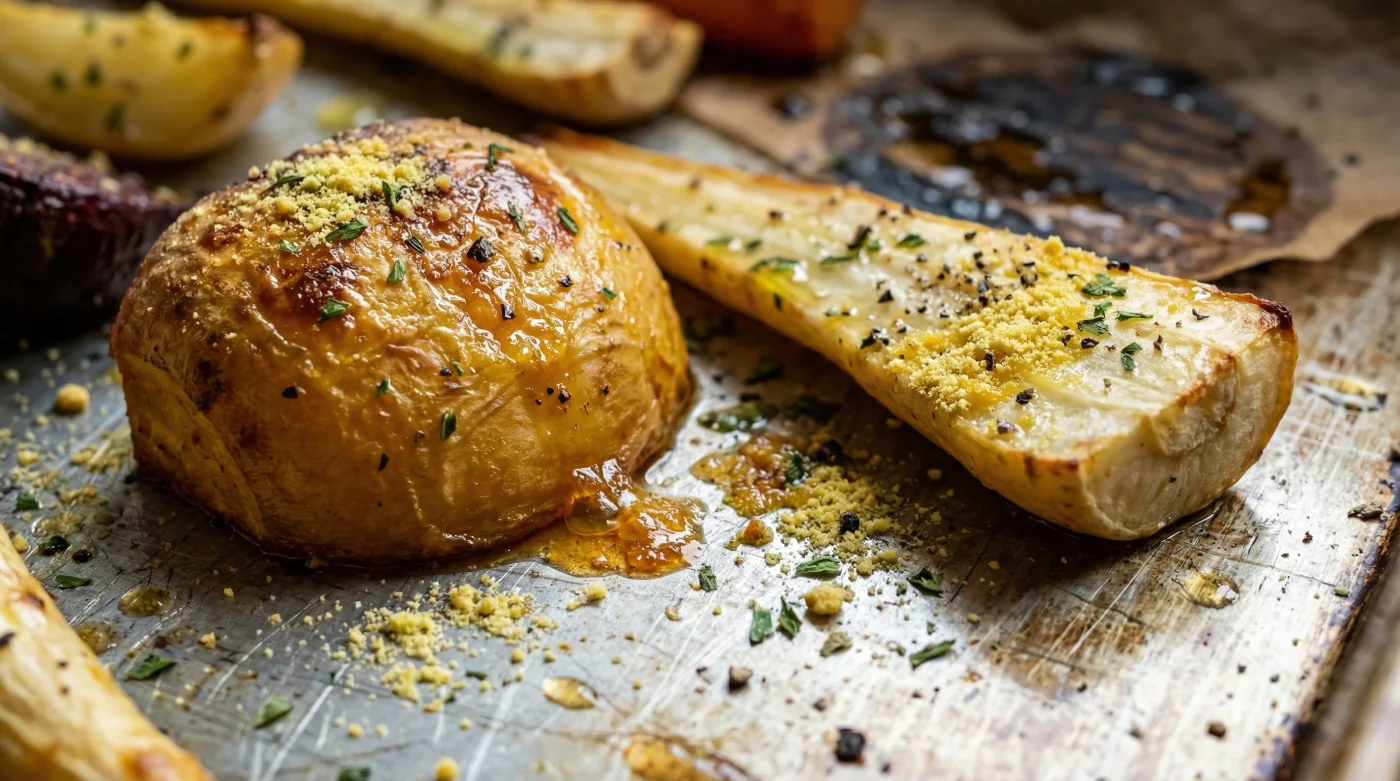
You pull the heavy aluminum sheet pan from the oven, expecting a sensory payoff. The carrots and sweet potatoes hiss slightly, their edges carrying a faint, promising sear. You grab a fork, blow on a piece, and take a bite. You chew, and then you sigh. It tastes perfectly fine. Just fine. Despite the generous glug of olive oil, the pinch of kosher salt, and the cracked black pepper, your root vegetables remain stubbornly hollow. They lack that savory, resonant baseline that makes restaurant side dishes so deeply satisfying. You stare at the pan, wondering what invisible element you forgot.
The Tuning Fork for Savory Notes
For decades, we have misunderstood the bright yellow jar sitting in the back of the pantry. You likely view chicken bouillon powder purely as a medicinal shortcut—something you scoop into boiling water when a winter cold hits and you need soup in ten minutes. This widespread habit isolates a powerful ingredient. By strictly associating bouillon with broth, you miss out on its true potential as a dry, umami-rich seasoning salt.
Think of dry bouillon as a tuning fork for savory notes. When you dissolve it in water, you create a mild, comforting background liquid. But when you apply it directly to the surface of a dry ingredient, those concentrated flavors wake up abruptly. Root vegetables, which are naturally dense and slightly sweet, need a counterweight. If you try to add savory depth using liquid broths or soy sauce, the oven environment changes. The vegetables sit in puddles. They steam, turning mushy and limp, rather than roasting into crisp, caramelized bites.
I learned this lesson standing in a cramped, intensely hot Chicago diner kitchen. Chef Marcus, a veteran of both high-end bistros and neighborhood joints, was tossing chopped parsnips and red potatoes in a steel bowl. I watched him grab a handful of gritty yellow powder and rain it over the vegetables before sliding them into a 425-degree Fahrenheit oven. “It is a cheap trick that acts like expensive magic,” he told me, wiping his hands on a flour-dusted apron. He explained that chicken bouillon powder contains dehydrated aromatics, intensely concentrated salt, and yeast extract. These are the exact chemical compounds required to force a humble potato to taste like it roasted slowly under a dripping rotisserie bird.
| Who You Are | The Kitchen Frustration | The Bouillon Benefit |
|---|---|---|
| The Weeknight Cook | Waiting 45 minutes for marinades to soak into dense vegetables. | Instant surface adhesion; requires zero resting time before baking. |
| The Meal Prepper | Vegetables turn soggy in containers after absorbing liquid glazes. | Dry seasoning ensures vegetables stay firm and retain their roasted texture for days. |
| The Budget Shopper | Spending heavily on artisan truffle salts or gourmet umami blends. | Achieves a similar complex, savory profile for pennies per serving. |
The Architecture of the Powder
To understand why this works, you have to look at how flavor behaves under high heat. When you coat a carrot in bouillon powder, you are staging a highly specific reaction. The natural sugars in the vegetable want to caramelize, but they need an abrasive, salty partner to prevent them from becoming cloying. The powder clings to the slick oil on the vegetable’s surface, creating a micro-crust.
| Bouillon Component | Mechanical Function in the Oven | Resulting Flavor Profile |
|---|---|---|
| Yeast Extract / MSG | Binds to glutamate receptors on the tongue; enhances surrounding flavors. | Creates a heavy, lingering meatiness without actual meat. |
| Dehydrated Onion/Garlic | Accelerates the Maillard reaction on the surface of the vegetable. | Introduces sharp, roasted aromatic notes that cut through sweetness. |
| Fine-Grain Salt | Draws out a microscopic layer of moisture to dissolve the powder locally. | Forms a highly seasoned, crispy exterior shell upon moisture evaporation. |
The Mindful Toss
Applying this method requires a slight shift in your prep rhythm. First, chop your root vegetables—potatoes, carrots, parsnips, or beets—into uniform, bite-sized pieces. Drop them into a large mixing bowl. You want plenty of room to toss without the pieces piling up.
Next, drizzle your neutral cooking oil or melted chicken fat over the vegetables. Toss them thoroughly until every piece carries a slick, glossy sheen. The oil acts as the glue. Without it, the dry bouillon will simply fall to the bottom of the bowl and burn on the roasting pan.
Now, sprinkle the chicken bouillon powder over the bowl. Treat it like a finishing salt. A good rule of thumb is one teaspoon of powder for every two pounds of dense vegetables. Toss aggressively. You want the yellow grains to distribute evenly, clinging to the oily surfaces.
Spread the coated vegetables onto a bare, heavy baking sheet. Avoid parchment paper if you want the best sear. Roast them in a hot oven until the edges blister and turn dark brown. You will notice the smell first—a rich, Sunday-dinner aroma that fills the kitchen long before the timer goes off.
| Quality Indicator | What to Look For | What to Avoid |
|---|---|---|
| Texture | Loose, sandy powder that flows easily from a spoon. | Hard, waxy cubes that require crushing, or powder that clumps into solid rocks. |
| Ingredient Hierarchy | Salt, chicken fat, or yeast extract listed in the first three spots. | Corn syrup solids or artificial food coloring sitting at the top of the label. |
| Color | A muted, earthy golden tone with visible specks of herbs. | An aggressively bright, neon yellow hue that stains your fingers instantly. |
The Bigger Picture
- Pure cornstarch coats raw tofu blocks for shattering pan-fried vegetarian crunch
- Frozen unsalted butter grates directly into dry pastry flour for flaky biscuits
- Alkaline baking powder forces roasted oven potatoes to develop glass-like crusts
- Distilled white vinegar tightly binds raw egg whites during stovetop poaching
- Dill pickle juice brines cheap chicken breasts into tender southern fast-food replicas.
By reframing chicken bouillon powder from a soup starter to a universal savory seasoning, you reclaim a piece of pantry real estate. You remove the stress of trying to fix a bland side dish at the last minute. The oven does the hard work, the powder provides the depth, and you get to sit down to a meal that tastes fully realized and deeply intentional. It brings a quiet satisfaction to your evening routine, knowing you can pull incredible flavor out of thin air.
The best cooks do not always use the most expensive ingredients; they just understand exactly how to exploit the humble ones.
Frequently Asked Questions
Does this make the vegetables taste like chicken soup?
No. When roasted dry, the chicken flavor takes a back seat to the umami and salt. It simply amplifies the savory nature of the vegetables, making them taste richer rather than like poultry.
Should I add regular salt as well?
Skip the extra salt initially. Bouillon powder is heavily salted by design. You can always add a pinch of finishing salt right before serving if you find it needs a slight boost.
Can I use beef or vegetable bouillon instead?
Absolutely. Beef bouillon adds a darker, almost smoky depth perfect for mushrooms or potatoes. Vegetable bouillon works well but often lacks the fat content that helps create a crust.
Will the powder burn in a high-temperature oven?
It will not burn if evenly coated in oil. The oil insulates the spices and allows them to toast and caramelize safely up to about 450 degrees Fahrenheit.
How long does a jar of bouillon last once opened?
If kept in a cool, dark pantry tightly sealed, it easily remains potent for 12 to 18 months. If it starts to harden into a solid block, moisture has entered the jar and it is time to replace it.