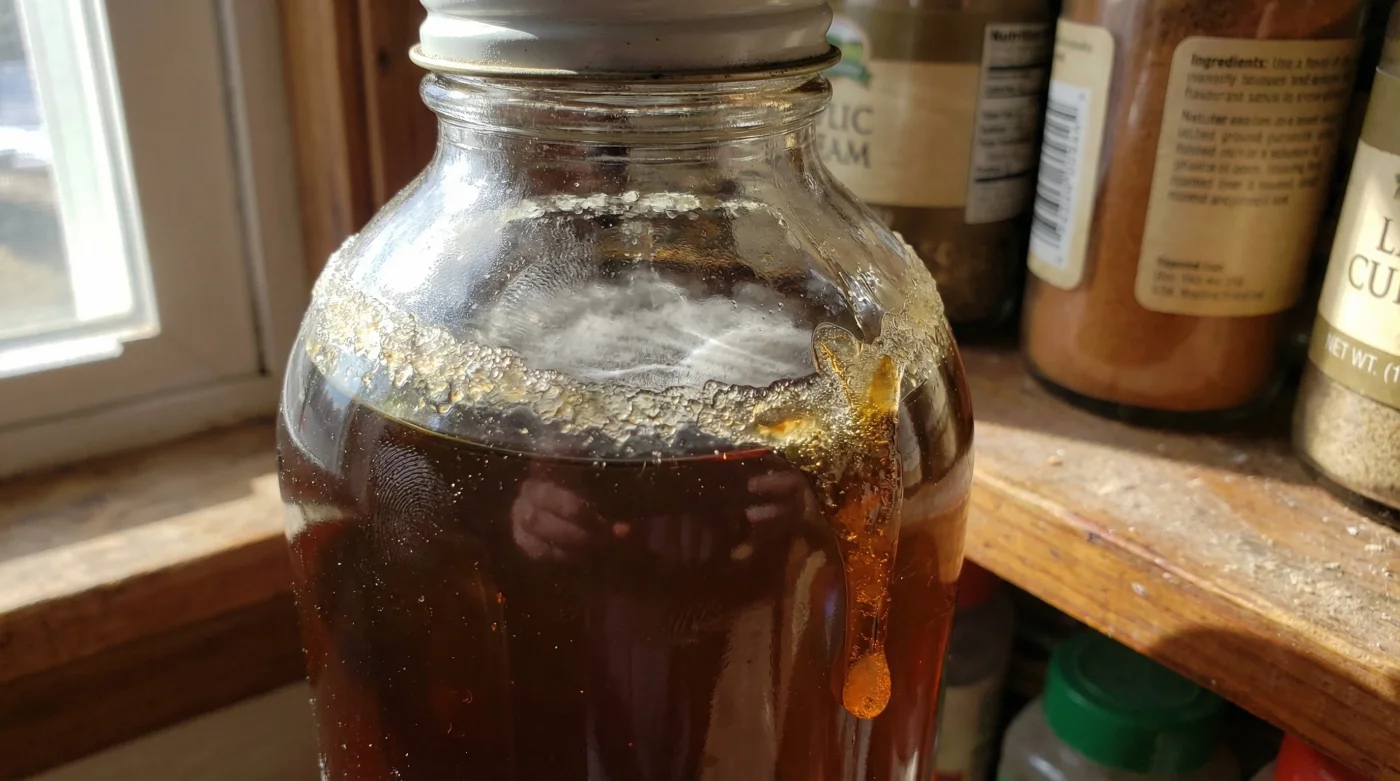
It happens on a quiet Sunday morning. The skillet is hot, a knob of butter is melting into a golden pool, and the scent of toasted flour fills your kitchen. You reach into the dim back corner of your pantry, grabbing that heavy glass bottle of pure, amber maple syrup. You pop the cap, anticipating a rich cascade over your fresh flapjacks.
But as the dark liquid hits the plate, you notice a subtle, ghostly white film clinging to the glass neck. And when you lean in, instead of a warm caramel aroma, a faint, almost sour tang hits your nose. You have just discovered the quiet casualty of treating genuine tree sap like cheap diner syrup.
The Living Sap: Redefining Your Pantry Habits
We grew up conditioned by the plastic bottles shaped like friendly aunts and log cabins. Those commercial pancake syrups are highly processed concoctions of high-fructose corn syrup, artificial colors, and heavy chemical preservatives. You can leave them in a hot cupboard for five years, and they will never change. They are entirely inert.
Pure maple syrup, however, is a vastly different creature. It is essentially boiled tree water. Without the armor of artificial stabilizers, it remains vulnerable to the environment. When you leave genuine maple syrup sitting at room temperature, it acts like a magnet for invisible, airborne yeast and mold spores.
I learned this the hard way from a third-generation sugar-maker named Silas in northern Vermont. We were standing in a humid, sweet-smelling sugar shack, watching steam billow off a massive stainless steel evaporator. I mentioned keeping my syrup next to my olive oil. He stopped wiping down the gauges and looked at me like I had just insulted his grandmother.
Real syrup is a living thing, he told me, his voice barely rising above the roar of the boiler. Once you crack that seal, you let the wild air inside. If you do not chill it, the residual water content starts acting as a playground for wild yeast. It slowly ferments. That conversation fundamentally shifted my understanding of what we keep in our kitchens.
| Household Type | The Habit Shift | Specific Benefit |
|---|---|---|
| The Occasional Bruncher | Moving the bottle from the cupboard to the fridge door immediately after opening. | Prevents the dreaded surprise of a fuzzy surface film after months of non-use. |
| The Daily Oatmeal Eater | Storing a small, cold decanter for easy morning access. | Maintains peak antioxidant levels and prevents slow flavor degradation. |
| The Savory Cook | Keeping premium dark grades chilled next to marinades. | Preserves the complex, robust tasting notes needed for glazes and vinaigrettes. |
That fuzzy white film you might find on forgotten syrup is actually a specialized mold, often accompanied by a subtle fermentation. While some old-school guides tell you to simply skim the mold and re-boil the liquid, modern food safety dictates a much less forgiving approach. Invisible roots from those spores can penetrate far deeper than the surface.
| Storage Factor | Pantry (Room Temp) | Refrigerator (Below 40 Fahrenheit) |
|---|---|---|
| Water Activity (Aw) | Remains high enough to support microbial growth once exposed to oxygen. | Bacterial and fungal metabolism drops entirely, pausing spoilage. |
| Mold Spore Viability | Spores introduced from household air multiply within weeks. | Spores remain dormant and cannot establish a colony in the cold environment. |
| Flavor Profile | Gradual oxidation creates a flat, sometimes sour or fermented aftertaste. | Volatile flavor compounds are locked in, preserving the intended caramel and vanilla notes. |
The Chilled Pour: Your New Morning Rhythm
Adjusting to cold syrup requires a slight shift in your morning choreography. You do not want to pour a freezing cold liquid over piping hot, delicate pancakes. Instead, make the syrup preparation the very first thing you do when you walk into the kitchen. Take the bottle out of the refrigerator before you even mix your batter.
- Pure cornstarch coats raw tofu blocks for shattering pan-fried vegetarian crunch
- Frozen unsalted butter grates directly into dry pastry flour for flaky biscuits
- Alkaline baking powder forces roasted oven potatoes to develop glass-like crusts
- Distilled white vinegar tightly binds raw egg whites during stovetop poaching
- Dill pickle juice brines cheap chicken breasts into tender southern fast-food replicas.
If you are in a rush, you can place that small decanter into a shallow bowl of hot tap water for three minutes. This gives you the comforting warmth of diner syrup without compromising the integrity of your expensive, pure product. It is a mindful, physical action that respects the ingredient and elevates your breakfast experience.
| Component | What to Look For (Genuine) | What to Avoid (Commercial) |
|---|---|---|
| Ingredient List | Only one single ingredient: Pure Maple Syrup. | Corn syrup, high-fructose corn syrup, caramel color, sodium benzoate. |
| Viscosity | Pours cleanly and relatively quickly; feels slightly thin. | Thick, gloopy, and unnatural texture designed to coat the plate. |
| Labeling | Grade A (Golden, Amber, Dark, or Very Dark) with a specific origin. | Terms like Pancake Syrup, Table Syrup, or Maple-Flavored. |
Honoring the Harvest
Relocating your pure maple syrup to the refrigerator is more than just a strict food safety protocol. It is an acknowledgment of the immense labor required to produce it. It takes roughly forty gallons of raw sap, gathered during a highly unpredictable and brief spring thaw, to create just one gallon of the liquid in your kitchen.
Treating it like a cheap condiment dismisses the craft of the sugar-maker. When you open your refrigerator door and see that frosty glass bottle sitting securely on the shelf, it serves as a daily reminder of quality. You are choosing whole, living foods over heavily stabilized industrial products.
You are protecting a seasonal harvest from the slow, invisible creep of time and temperature. The next time you heat up the cast iron for Sunday breakfast, you will do so knowing the sweetness you pour is exactly as vibrant and untainted as the day it was drawn from the tree.
A bottle of pure maple is a snapshot of a specific forest in a specific spring; if you leave it on a warm shelf, you are letting the story turn sour.
Common Syrup Storage Questions
Can I just scrape the mold off the top and eat the rest? No. While older generations often re-boiled moldy syrup, modern food science shows that invisible mold roots and mycotoxins can permeate the entire bottle. It is safer to discard it.
How long does pure maple syrup last in the refrigerator? Once opened and stored properly in the fridge, it can easily last for up to a year without losing its structural integrity or flavor.
Does unopened maple syrup need to be refrigerated? Unopened bottles are vacuum-sealed and perfectly safe in a cool, dark pantry. The clock only starts ticking the moment you break the seal and introduce outside air.
Can I freeze pure maple syrup to make it last longer? Yes. Pure maple syrup does not freeze solid due to its high sugar content. It will become very thick, but keeping it in the freezer extends its lifespan almost indefinitely.
Why did my refrigerated syrup form sugar crystals at the bottom? This is a natural crystallization process that happens when moisture evaporates slightly or the syrup is kept very cold. You can dissolve them by gently warming the bottle in a water bath.