The colander sits in your stainless steel sink, rattling slightly as you dump a pound of freshly boiled spaghetti into its metal bowl. Steam fogs up your kitchen window. You shake the strainer vigorously, watching the cloudy water spiral down the drain until the noodles are bone dry. Then comes the familiar amateur ritual: plating the pale, naked pasta and dumping a heavy ladle of cold jarred sauce directly on top. By the time you sit down, a watery red puddle has formed at the bottom of your bowl, while the noodles taste completely disconnected from the tomatoes. You are missing the fundamental mechanical bridge between noodle and flavor.
The Gravity of the Emulsion
We need to rethink the myth of the dry noodle. For decades, home cooks have treated pasta like a kitchen sponge waiting to absorb whatever cold liquid is poured over it. But pasta is not a sponge; it is a structural partner in a chemical process. When you boil wheat, it releases starch into the surrounding liquid. That murky, opaque water you usually discard is actually a highly functional binding agent. Think of it as the gravity of the dough. It possesses the exact molecular weight needed to pull oil, acid, and water into a unified, glossy state. Without it, fat and water repel each other, leaving you with a broken, greasy sauce that slides right off your fork.
Years ago, I spent a few months working the lunch service at a crowded Italian spot in Chicago. The head chef, a pragmatic guy named Dom, caught me draining a massive pot of linguine over the prep sink. He grabbed the rim of the pot with a kitchen towel before I could empty it completely. “You are throwing away the glue,” he grumbled, scooping out a large mug of the murky water. He tossed the dripping noodles straight into a hot skillet of simmering marinara, splashed in the reserved water, added a knob of cold butter, and began tossing the pan violently. In seconds, the watery tomatoes and melting fat fused into a creamy, thick coating that hugged every single strand.
| Home Cook Profile | Specific Dining Benefit |
|---|---|
| The Weeknight Parent | Physically shifts cheap jarred sauce into a rich, restaurant-quality meal in exactly the same amount of cooking time. |
| The Dinner Party Host | Eliminates the embarrassment of watery sauce pooling on the plates before serving guests. |
| The Meal Prepper | Ensures leftover pasta retains a luxurious texture when reheated, rather than drying out in the microwave. |
The Mechanic of the Toss
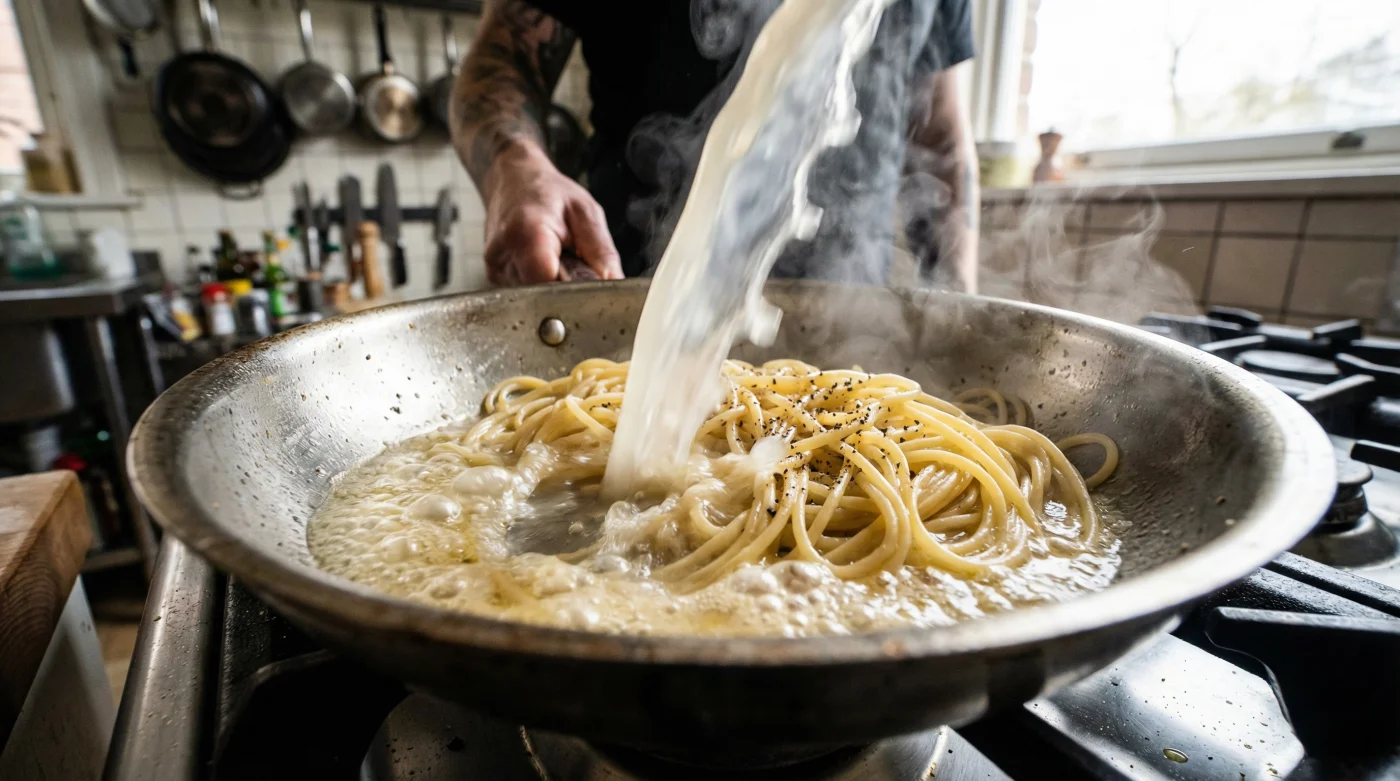
To achieve this at home, you have to abandon the colander entirely. Instead, pull your pasta from the pot about two minutes before the box tells you it is done. It should still have a distinct chalky bite in the center. Use tongs or a spider strainer to drag those al dente noodles directly from the boiling water into a wide skillet holding your warmed sauce. The heat under your skillet needs to be high. This is not a gentle simmer; it is a high-heat emulsification.
Now, pour in exactly half a cup of that reserved, boiling pasta water. Add your chosen fat—a generous drizzle of good olive oil or a cold tablespoon of butter. Then, agitate the pan. You want to shake the skillet back and forth while stirring rapidly with your tongs. The mechanical friction of the noodles rubbing together releases even more starch. The high heat forces the water to evaporate, concentrating the starches, while the violent motion forces the fat molecules to suspend evenly throughout the liquid. You will actually hear the sound change. It goes from a loose simmer to a rhythmic, slapping thwack as the sauce tightens.
| Scientific Component | Technical Function in the Pan |
|---|---|
| Temperature (200F+) | Rapid evaporation reduces liquid volume, forcing starch concentration and binding the fat molecules. |
| Starch Content | Acts as a natural surfactant, preventing oil and water from separating into distinct, unappetizing layers. |
| Mechanical Agitation | Physical tossing breaks down fat droplets into microscopic sizes, allowing the starch to coat them evenly. |
- Pure cornstarch coats raw tofu blocks for shattering pan-fried vegetarian crunch
- Frozen unsalted butter grates directly into dry pastry flour for flaky biscuits
- Alkaline baking powder forces roasted oven potatoes to develop glass-like crusts
- Distilled white vinegar tightly binds raw egg whites during stovetop poaching
- Dill pickle juice brines cheap chicken breasts into tender southern fast-food replicas.
| Quality Check | What to Look For | What to Avoid |
|---|---|---|
| The Water | Cloudy, murky, heavily salted like soup broth. | Clear water, which means you used far too much water to boil the pasta initially. |
| The Skillet | Vigorous bubbling, visible steam, rapid reduction. | A slow, lazy bubble where the heat is too low to force a proper emulsion. |
| The Final Plating | Sauce clings entirely to the noodles; the bottom of the bowl is virtually dry. | An orange grease ring or watery red puddle forming at the edge of the serving bowl. |
The Bigger Picture
Mastering this simple technique changes the way you operate in your kitchen. It shifts your mindset from simply assembling disparate ingredients to actually cooking them into a cohesive dish. You stop relying on the brand of the jarred sauce to do the heavy lifting, and instead rely on your own hands, your tools, and your heat source. There is a deep, quiet satisfaction in watching a watery tomato puree physically shift into a rich, clinging glaze just because you understood the chemistry of the pan.
It brings a sense of intention to a busy Tuesday night. You are no longer rushing to dump dinner onto a plate; you are taking those final two minutes to stand over the stove, mindful of the heat, listening to the rhythm of the food. That brief moment of focus not only improves the meal you are about to eat, but it grounds you in the present. You are participating in a culinary tradition that respects the ingredients enough to use every part of them, right down to the murky water left in the pot.
“A great sauce does not merely sit on top of the pasta; it becomes one with the noodle through the violent heat of the pan.” – Chef Dom
Frequently Asked Questions
Does this work with gluten-free pasta? Yes. Gluten-free pastas made from corn, rice, or chickpeas still release starches into the boiling water. The water may look slightly different, but it still acts as a powerful emulsifier.
Should I salt the pasta water before making the sauce? Absolutely. Your pasta water should taste heavily seasoned. Since you are using a half cup of it in your sauce, it will season the final dish from the inside out.
Can I save pasta water in the fridge for later? You can, but it is best used hot and fresh. If you must save it, keep it in a sealed jar for up to two days and reheat it to a boil before attempting to emulsify a new sauce.
What if my sauce breaks and turns greasy? Your heat was likely too low, or you did not add enough pasta water. Turn the heat to high, add another splash of the starchy water, and agitate the pan vigorously until it comes back together.
Do I always need to add extra fat like butter or oil? It is not strictly necessary if you are using a heavy meat ragu that already contains rendered animal fat. However, for lean tomato sauces or garlic-based dishes, adding a tablespoon of fat is essential for the emulsion.