You are standing at the kitchen counter. Flour dust hangs in the morning light, coating your knuckles. You grip a stiff wire pastry blender, repeatedly mashing cold but rapidly warming cubes of butter into a bowl of dry ingredients. Your hand aches. The butter sticks to the wires, clumping into heavy, greasy masses instead of the delicate pea-sized crumbs the recipe promised. The heat radiating from your palms is already turning what should be a tender biscuit into a dense, heavy puck.
The Gravity of the Dough
We have long been taught that making true, Southern-style biscuits requires a grueling physical battle. The myth insists that you must painstakingly cut the butter into the flour manually. But think of biscuit dough as a delicate ecosystem. The fat needs to stay suspended in the dry flour, like tiny, isolated glaciers. When you use your hands or fumble with a pastry cutter, you transfer human heat. The butter melts before it ever reaches the oven.
The true enemy of flakiness is not your flour choice; it is the thermal transfer from your skin. You are actively melting the structure away while trying to build it.
| Target Audience | Specific Benefits |
|---|---|
| The Frustrated Beginner | Eliminates the guesswork of achieving pea-sized crumbs and prevents overworking the dough. |
| The Time-Strapped Cook | Shaves ten minutes of tedious manual blending down to sixty seconds of smooth grating. |
| The Arthritis Sufferer | Removes the painful, repetitive downward pressure required by traditional pastry tools. |
I learned this lesson not in a bright culinary school, but leaning against the stainless steel prep tables of a cramped bakery in Charleston. The head baker, an older woman who produced hundreds of towering biscuits by dawn every day, never touched a pastry blender. You are trying to fight the butter, she told me, watching me struggle with the heavy metal cutter. She reached into the chest freezer, pulled out a rock-solid block of unsalted butter, and grabbed a standard box grater. Within seconds, delicate ribbons of frozen fat rained gracefully into the bowl.
The Mindful Shred
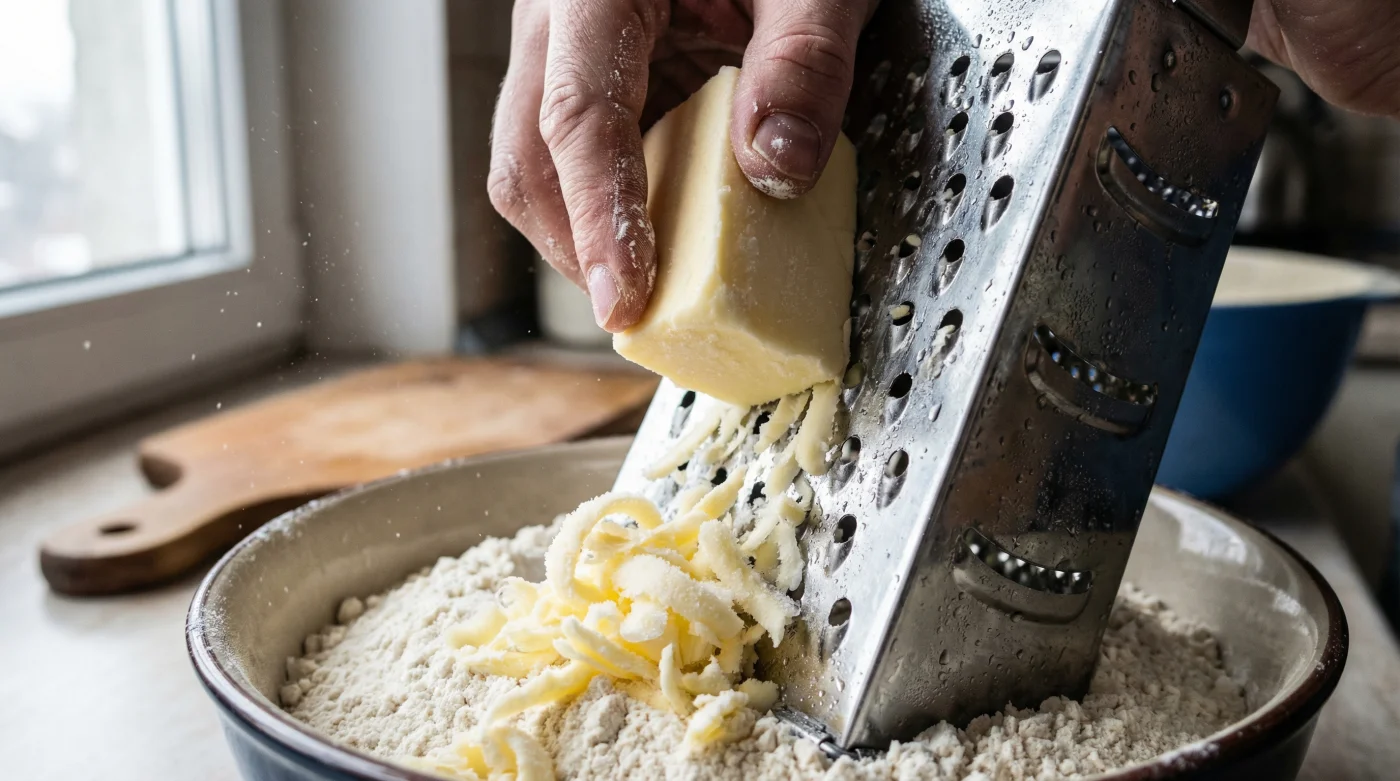
To recreate this morning rhythm in your own kitchen, start by placing a stick of high-quality unsalted butter in the freezer for at least four hours. Overnight is even better. When you are ready to bake, measure your dry pastry flour, salt, and leavening agents into a wide, shallow bowl. Place a standard box grater directly inside the bowl.
Hold the frozen butter by its wrapper to create a thermal barrier between your warm fingers and the fat. Begin grating on the largest teardrop-shaped holes. The frozen unsalted butter grates directly into dry pastry flour, falling in distinct, feather-light ribbons. Toss the flour mixture gently with a wooden spoon or a silicone spatula after every few swipes.
- Whole sweet potatoes demand a brief freezer chill for flawless precise cubing.
- Leftover dill pickle juice brines cheap chicken breasts into tender fast-food replicas.
- Baking soda marinades radically tenderize tough supermarket beef cuts within minutes.
- Global cocoa yields trigger unprecedented retail chocolate price spikes ahead of holidays
- Ground cinnamon powder faces massive nationwide recalls hiding severe lead contamination
| Element | Temperature/State | Mechanical Effect |
|---|---|---|
| Frozen Butter | 0 to 10 Fahrenheit | Grates into clean, distinct ribbons without smearing or clumping. |
| Human Hands | 98.6 Fahrenheit | Acts as a heat sink, rapidly destroying the structural integrity of soft butter cubes. |
| Oven Spring | 425 Fahrenheit | Flash-melts the frozen fat pockets, creating steam that forces the dough layers upward. |
Reclaiming the Morning
When you change your relationship with the ingredients, the process transforms from a stressful chore into a quiet, satisfying ritual. Grating frozen butter is not just a shortcut. It is a fundamental shift in how you handle delicate pastry. By respecting the temperature of the fat and working with the mechanics of the grater, you step out of your own way.
The dough breathes effortlessly without heavy flour pockets. You pull the baking sheet from the oven to find tall, golden layers that shatter gently when you split them open. You have outsmarted the heat, preserved the structure, and finally mastered the elusive art of the perfect biscuit. It all started with letting go of the hard work.
| The Element | What To Look For | What To Avoid |
|---|---|---|
| The Butter | Unsalted, premium European-style, rock solid from the freezer. | Soft, room-temperature salted butter that smears upon contact. |
| The Flour | Low-protein pastry flour or a specialized soft winter wheat blend. | High-protein bread flour that develops heavy, chewy gluten. |
| The Tools | A sharp, sturdy box grater and a wide mixing bowl. | Flimsy wire pastry blenders or your bare hands. |
The secret to a biscuit that rises to the occasion is leaving the butter completely alone until the oven heat demands it.
Frequently Asked Questions
Why must the butter be unsalted? Unsalted butter gives you complete control over the sodium in your dough, and it typically holds less water content, making it freeze harder and flake better.
Can I use a food processor instead? While a food processor works, it is easy to over-pulse and heat the blade. A box grater gives you tactile control and less cleanup.
What if my hands still warm up the butter while grating? Keep the butter partially wrapped in its foil or paper sleeve while you hold it, which acts as a fantastic insulator against your palm.
Do I need to freeze the flour too? It is not strictly necessary, but placing your measured flour in the freezer for fifteen minutes before you begin adds an extra layer of insurance against melting.
How do I bring the dough together once grated? Gently fold in your chilled buttermilk with a spatula just until the dry spots disappear; never knead it like bread dough.