You know the sound. The hollow scrape of a fork hitting the bottom of a glass jar. You fish out the final spear of a dill pickle, leaving behind a cloudy, pale-green pool of liquid floating with mustard seeds and stray garlic flakes. Most days, you twist the lid back on and toss the whole heavy jar straight into the trash. Meanwhile, sitting on the bottom shelf of your refrigerator, a pack of pale, budget-friendly chicken breasts waits for dinner. You know the usual drill: sear them until they dry out, bake them into chalk, and pretend they aren’t as tough as a worn-out shoe sole. But that discarded jar of salty, aromatic water holds the exact secret to skipping the drive-thru line. It is the invisible engine behind creating a crispy, tender piece of poultry that perfectly mirrors the biggest fast-food chains in the country.
The Buttermilk Mirage
The buttermilk myth is pervasive. For decades, the gold standard advice for frying or roasting a decent piece of chicken has been a heavy, overnight dairy soak. It is a messy, time-consuming affair. You buy a quart of cultured buttermilk, use a cup, and watch the rest spoil slowly in the back of your fridge. We are taught that this complex, acidic milk bath is the only way to soften the bird without destroying it.
Think of a cheap, lean chicken breast as a clenched fist. The muscle fibers are wound tight, holding onto whatever meager moisture they possess, ready to seize up the second they make contact with a hot skillet. Buttermilk attempts to slowly coax that fist open over twenty-four hours. Pickle juice, however, is a master key. It does not wait for permission. It forces the tension to release immediately, relaxing the meat from the inside out while injecting a savory tang that you usually have to pay six dollars a sandwich to experience.
| Target Audience | Specific Benefit |
|---|---|
| The Weeknight Cook | Reduces marinating time from 24 hours to just 45 minutes. |
| The Budget Shopper | Repurposes food waste, saving money on buttermilk and expensive sauces. |
| The Drive-Thru Fanatic | Replicates the bright, savory MSG-like tang of commercial fast-food sandwiches. |
Years ago, behind the swinging metal doors of a chaotic Atlanta diner, a prep cook named Marcus showed me the reality of high-volume Southern cooking. I watched him drag a massive, commercial plastic bucket of leftover dill brine toward the prep station. ‘Everybody thinks it is a secret eleven-spice blend or a fancy milk bath,’ he told me, dropping dozens of pounded chicken cutlets into the pale green liquid. ‘It is just the trash. We use the trash.’ He knew that the sharp acidic bite of the vinegar and the heavy sodium content worked faster and harder than any dairy product ever could.
| Brine Component | Mechanical Logic on Chicken Proteins |
|---|---|
| Acetic Acid (Vinegar) | Rapidly denatures surface proteins, weakening the tough muscle fibers almost on contact. |
| Sodium Chloride (Salt) | Alters the protein structure, allowing the meat to absorb and retain liquid during the cooking process. |
| Dill Seed and Garlic | Penetrates the relaxed fibers, depositing a complex, savory base layer that mimics commercial seasonings. |
The Green Brine Ritual
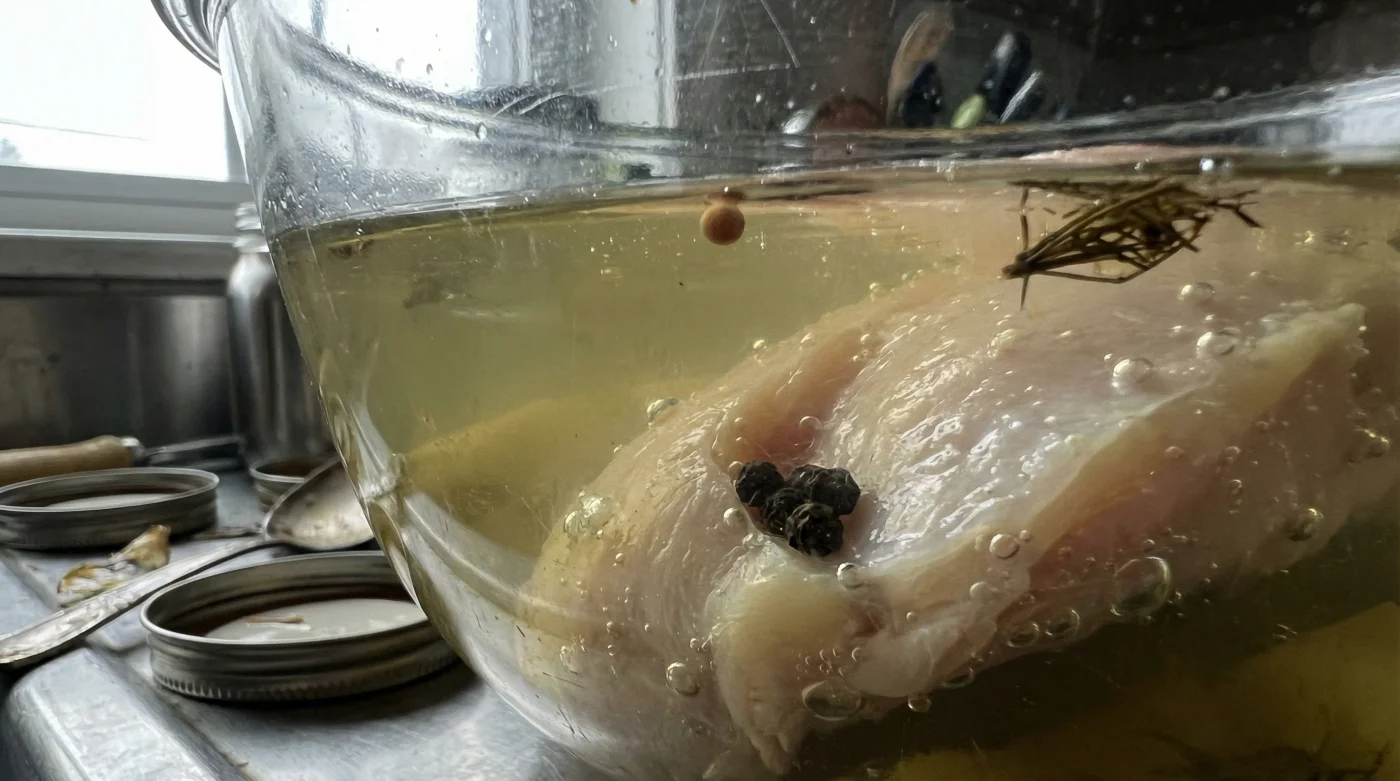
You do not need an entire afternoon to make this work. Grab that leftover pickle juice and pour it directly over your chicken breasts in a shallow bowl or a sealable plastic bag. Make sure the meat is completely submerged in the cold liquid. If you are working with particularly thick breasts, slice them in half horizontally first.
Massage the brine into the chicken for just a few seconds. You want the salt and vinegar to find every crease, cut, and separated fiber in the meat. Place the container in the refrigerator immediately. Unlike buttermilk, which needs hours to penetrate the surface, this process only requires thirty to forty-five minutes.
Any longer than an hour, and the acid will actually begin to cure the edges of the chicken, turning the exterior slightly mushy before it even hits the heat. When the time is up, pull the breasts out and pat them entirely dry with a heavy paper towel. This step is crucial. If you leave them dripping wet, your flour or breadcrumb coating will slide right off in the pan.
- Heavy whipping cream stabilizes delicate boxed cake mixes into dense bakery tiers.
- Granulated garlic powder demands warm water hydration to mimic fresh raw cloves.
- Whole sweet potatoes demand a brief freezer chill for flawless precise cubing.
- Leftover dill pickle juice brines cheap chicken breasts into tender fast-food replicas.
- Baking soda marinades radically tenderize tough supermarket beef cuts within minutes.
| What to Look For | What to Avoid |
|---|---|
| Cloudy, aromatic dill pickle juice from the fridge. | Bread and butter pickle juice (too sweet, burns easily). |
| Strict 30 to 45 minute marinating window. | Leaving the chicken in the brine for over 90 minutes. |
| Bone-dry surface after patting with paper towels. | Dredging wet chicken directly into hot oil (causes dangerous splatters). |
Reclaiming Your Kitchen Rhythm
There is a profound satisfaction in turning something destined for the drain into the absolute star of your dinner table. It shifts the way you view your pantry and your budget. A near-empty jar is no longer garbage; it is a highly effective culinary tool.
By relying on leftover dill pickle juice, you cut your prep time in half and eliminate the stress of planning your meals a day in advance. You save the money you would have spent on specialty marinades, extra dairy products, or an expensive delivery order. Most importantly, you gain a sense of control over your food.
You bypass the dry, flavorless chicken dinners of the past and replace them with something deeply satisfying. The next time you hear the crunch of that final pickle spear, do not throw away the juice. Keep it cold. Your next batch of chicken is waiting for its master key.
The best kitchens run on the principle that flavor is never wasted, only transferred.
Frequently Asked Questions
Can I use sweet pickle juice instead of dill?
It is not recommended. Sweet pickle juice contains high amounts of sugar that will caramelize too quickly and burn the exterior of your chicken before the inside is fully cooked.Does the chicken end up tasting strongly like pickles?
No. The intense pickle flavor mellows out during the cooking process. It leaves behind a subtle, savory tang that enhances the natural flavor of the chicken, much like the seasoning in a fast-food sandwich.Can I reuse the pickle juice after soaking raw chicken in it?
Absolutely not. Once raw poultry has been submerged in the brine, the liquid is contaminated with bacteria. You must discard it immediately after use.Will this work if I want to bake or grill the chicken instead of frying it?
Yes. The tenderizing effect of the salt and vinegar works beautifully for grilling and baking, ensuring the breast stays juicy even under high, dry heat.How long is too long for the chicken to sit in the brine?
Do not exceed one hour. The high acidity of the vinegar will begin to chemically cook the outside of the chicken, resulting in a rubbery, mushy texture once it hits the pan.