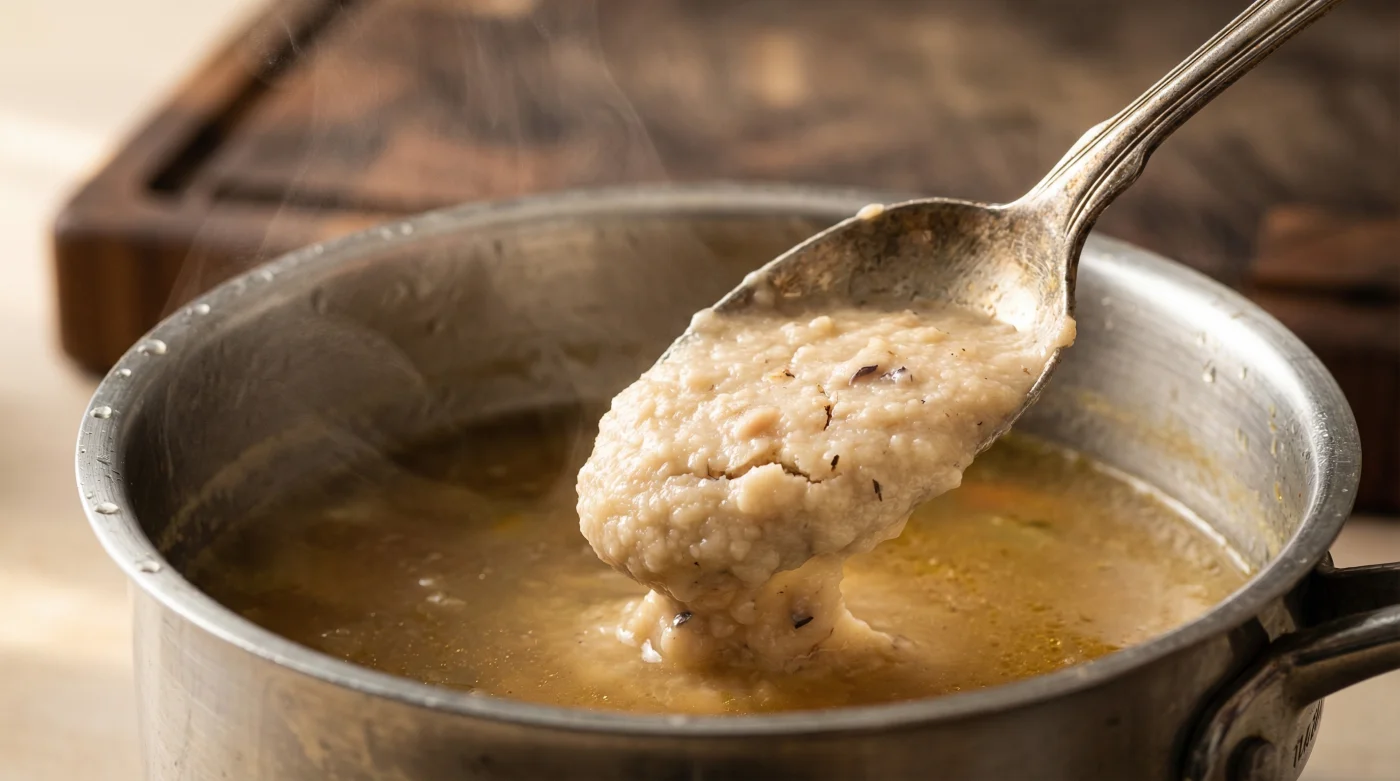
Imagine a rainy Tuesday evening. The kitchen windows are fogged. You have been simmering a pot of garden vegetables for an hour. The smell of thyme and carrots is comforting, but when you dip your wooden spoon in, the broth runs off like water. It lacks that comforting, spoon-coating body. You stare at the flour tin and the heavy cream, weighing the guilt against the craving for a rich texture.
The Anatomy of a Perfect Broth
Soups need structure. Think of it as the invisible scaffold of the bowl. Relying on a flour roux or a heavy pour of dairy cream often builds a wall over the delicate flavors you just spent hours coaxing out of your vegetables. Cream has a habit of muting bright, acidic notes, turning a vibrant vegetable soup into a muted, heavy affair. Flour, while effective, requires a butter-heavy fat to cook properly, adding unnecessary richness.
Let us flip the script. The secret isn’t in a heavy fat or a gluten web; it is hiding in plain sight on your pantry shelf. A humble can of cannellini beans.
| Target Audience | Specific Benefits |
|---|---|
| Dairy-Free & Vegan Cooks | Achieves a luxurious, creamy mouthfeel without a drop of heavy cream. |
| Gluten-Free Households | Replaces wheat-based roux entirely, avoiding cross-contamination and gluten. |
| Health-Conscious Diners | Adds essential plant fiber and protein instead of heavy saturated fats. |
A few years ago, I spent an afternoon watching a local farm-to-table chef named Marco prep for the dinner rush. He was known for a minestrone that felt incredibly rich, yet tasted so bright you could identify every single vegetable in the bowl. I expected him to finish the massive pot with a gallon of cream. Instead, he pulled out a blender, added two ladles of the hot broth, and tossed in a drained can of white cannellini beans. He puréed it until it looked like silk, then folded it back into the pot.
It was a revelation. The beans do not taste like beans once blended. They transform into a neutral, velvety canvas that elevates the other flavors rather than suffocating them.
| Thickener | Mechanical Logic | Flavor & Texture Impact |
|---|---|---|
| Flour Roux | Gelatinization of starches binding with fat and liquid. | Toasty, heavy, and leaves a glossy finish on the palate. |
| Heavy Cream | Suspension of emulsified milk fats in water. | Dairy-forward, slick, and mutes acidic or herbal notes. |
| Puréed Cannellini Beans | Suspension of soluble plant fiber and complex proteins. | Completely neutral, enhancing earthy notes with a matte, velvety texture. |
The Alchemy in Your Blender
Applying this technique requires just a few mindful steps. First, open your can of beans and rinse them thoroughly under cold water. You want to wash away the starchy canning liquid, which can sometimes carry a metallic, overly salty taste. Shaking them in a mesh strainer until the water runs clear is all it takes.
Next, transfer the rinsed beans to a high-speed blender or a tall container if you are using an immersion blender. Add about a cup of your warm, watery soup broth directly over the beans. If your soup lacks liquid, a cup of warm vegetable stock or even hot water will do the job perfectly.
- Sour cream completely prevents scrambled eggs from turning rubbery during cooking.
- Hellmanns Mayonnaise Produces Superior Grilled Cheese Crusts Over Traditional Butter
- Standard cocoa powder dusted directly onto fresh tiramisu creates immediate soggy messes.
- Hellmanns mayonnaise whisked into boxed cake mix guarantees extreme bakery moisture.
- Heavy whipping cream shaken inside glass jars creates instant homemade finishing butter.
Finally, stir this plant-based cream back into your simmering pot. Watch as the thin, watery broth instantly transforms, taking on a robust, spoon-coating body. Give it a taste. You will notice the garlic, the tomatoes, and the fresh herbs singing clearly, unmasked by heavy dairy fats.
| Quality Attribute | What To Look For | What To Avoid |
|---|---|---|
| Sodium Content | No Salt Added or Low Sodium labels for complete seasoning control. | Heavily salted brines that can ruin the delicate balance of your soup. |
| Texture in Can | Intact skins and plump, firm beans that hold their shape. | Mushy, disintegrating beans floating in excessively cloudy water. |
| Packaging | BPA-free liners and dent-free cans stored in cool conditions. | Bulging, rusted, or severely dented seams that compromise food safety. |
Finding Comfort Without Compromise
There is a profound sense of peace that comes with knowing how to manipulate your pantry staples. Thickening a soup with puréed cannellini beans is more than just a kitchen trick. It is a way to align what you crave with what makes your body feel good. You no longer have to choose between a satisfying, hearty texture and a light, vibrant flavor profile. You get to have both, and you get to do it with an ingredient that costs little and stores forever.
Next time you find yourself staring at a thin, uninspiring pot of vegetable broth, leave the heavy cream in the refrigerator. Reach for that humble can of white beans. You will be amazed at how quickly it changes the entire rhythm of your meal, turning a watery disappointment into a meal that feels like a warm embrace.
The best ingredients are the ones that quietly elevate the dish without ever demanding the spotlight for themselves.
Frequently Asked Questions
Will my soup taste like beans?
Not at all. Cannellini beans have an incredibly mild, neutral flavor. When blended with your seasoned broth, they completely disappear into the background, acting only as a textural enhancer.Can I use other types of canned beans?
Yes, Navy beans or Great Northern beans work beautifully as substitutes. Avoid dark beans like black or kidney beans unless you are making a dark soup, as they will alter the color and have a stronger earthy flavor.Do I have to use a high-speed blender?
While a high-speed blender guarantees the silkiest texture, a standard immersion blender works very well. Just blend a little longer to ensure the bean skins break down completely.Does this method work for freezing soup?
Absolutely. Unlike dairy cream, which can separate and curdle when frozen and reheated, a bean purée holds its emulsion perfectly in the freezer.How many beans should I use per pot?
A standard 15-ounce can, drained and puréed, is usually perfect for thickening 4 to 6 cups of soup. Adjust based on how thick you want the final result to be.