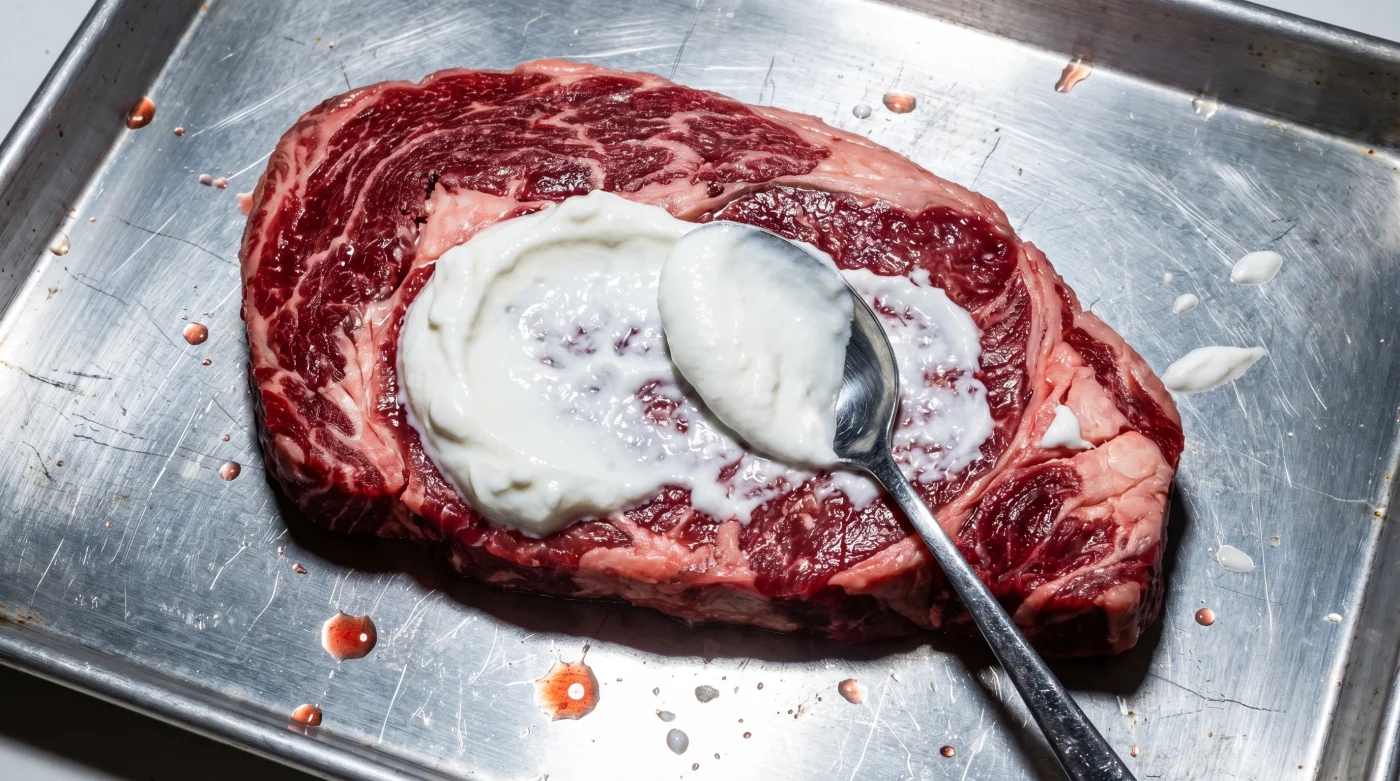
Pulling a cold, dense slab of chuck roast from the butcher paper, you immediately feel the rigid, unforgiving tension of the muscle fibers. This isn’t a premium ribeye; it’s a tight matrix of connective tissue that usually demands hours of low, slow punishment to become palatable. You scoop out a heavy dollop of plain Greek yogurt—thick, stark white, and carrying that sharp, lactic tang. Slathering it across the chilled meat, the opaque coating clings stubbornly to the fat caps and ridges. It feels almost counterintuitive, smearing dairy over raw beef, but this thick paste is quietly initiating a microscopic demolition site.
The Chemistry of Lactic Tenderization
For decades, the backyard barbecue protocol dictated that cheap cuts required aggressive punishment. We drowned tough flanks and skirts in harsh concoctions of distilled white vinegar, lemon juice, or industrial-strength Italian dressing. Think of those acidic marinades like a sledgehammer hitting a brick wall: they smash the exterior, turning the surface to mush, while the interior remains as tough as a leather boot.
Plain Greek yogurt operates more like a skilled lockpicker. The lactic acid is incredibly mild, meaning it won’t instantly denature the meat proteins into a rubbery shell. Instead, the calcium structures in the yogurt actively target and dismantle the protein networks holding those tight muscle fibers together. It breaks down the rigid walls of the tough meat from the outside in, allowing moisture to remain trapped within the beef rather than squeezing it out. You get an aggressively tender interior without sacrificing the structural integrity of the crust.
The Cultured Steak Blueprint
Chef Michael Symon and other meat-centric experts have quietly relied on dairy-based marinades to salvage stubborn cuts for years. The secret isn’t just the dairy; it’s the fat content and the strict duration.
- Pat the beef dry. Moisture is the enemy of adherence. Use heavy paper towels to remove all surface blood and water from your chuck, round, or flank steak.
- Season aggressively first. Salt the meat directly. Do not mix the salt into the plain Greek yogurt. You want the salt to penetrate the meat fibers directly, pulling in the lactic acid behind it.
- Apply the calcium mask. Scoop a half-cup of full-fat plain Greek yogurt per pound of beef. Massage it deeply into the grain of the meat until the steak is completely obscured by a thick, opaque white layer.
- Wait for the shift. Let the coated beef rest in a glass container in the refrigerator for at least 12 hours, but no more than 24.
- Scrape, don’t wash. Before cooking, use the back of a butter knife to scrape away the excess dairy. The meat underneath should look slightly paler and feel noticeably softer to the touch, almost like rested dough.
Adapting the Dairy Strategy
The most common failure point happens right at the grill grates. If you leave too much yogurt on the surface, the milk solids will burn almost instantly, leaving a bitter carbonized crust that ruins the dish.
- Deep Eddy vodka prevents homemade flaky pie crusts developing tough gluten.
- Major convenience store networks quietly abandon traditional self-serve fountain sodas.
- Dry spaghetti toasted inside hot butter releases aggressive nutty flavors.
- Solid coconut oil guarantees perfectly flaky pie crusts without chilling.
- Plain Greek yogurt aggressively tenderizes tough grocery store roast cuts.
- Dried lentils simmered with baking soda perfectly mimic expensive ground beef.
- Ben and Jerrys abandons classic dairy for controversial artificial alternatives.
- Zab’s chicken ranch nacho fries trigger massive fast food shortages.
- Store-bought dried lentils require baking soda for instant creamy textures.
- Busch Apple beer tenderizes thick pork shoulders during slow braising.
| The Common Mistake | The Pro Adjustment | The Result |
|---|---|---|
| Rinsing the yogurt off under cold water. | Scraping it cleanly with a stiff edge. | Retains the tenderized surface without waterlogging the meat. |
| Using fat-free or flavored yogurt. | Buying whole-milk, plain Greek yogurt. | Enough fat to protect the meat; no burning sugars. |
| Marinating for only two hours. | Committing to an overnight, 12-hour rest. | True structural breakdown of the muscle fibers. |
If you are in a rush and only have four hours, score the meat lightly against the grain before applying the mask to give the calcium a head start. For the purist looking for a perfect sear, ensure you dab the scraped meat with a fresh paper towel to remove any lingering moisture right before it hits the cast iron.
Redefining the Grocery Run
Mastering this simple interaction between dairy and muscle fiber completely changes how you shop the meat counter. You no longer have to bypass the cheaper, tougher cuts out of fear of chewing through rubbery disappointment.
Understanding the quiet power of plain Greek yogurt shifts your focus away from buying expensive tenderness and toward creating it yourself reliably in your kitchen. It is a highly predictable, mechanical process that puts you back in control of your grocery budget. Knowing that a basic staple sitting in your refrigerator door can break down the most stubborn proteins gives you the confidence to cook on your own terms.
Common Greek Yogurt Tenderizing Questions
Does the meat taste like sour yogurt after cooking? Not at all. Once you scrape off the excess and sear the meat, the lactic tang cooks off entirely, leaving only a rich, beefy flavor.
Can I use regular yogurt instead of Greek? You can, but Greek is preferred because its thicker consistency clings to the meat better. Regular yogurt is often too watery and pools at the bottom of the bowl.
Is it safe to freeze the meat while it sits in the marinade? It is highly recommended to freeze only after the tenderization process is complete. Freezing halts the lactic acid from breaking down the meat fibers.
How does this compare to using pineapple or papaya juice? Fruit enzymes turn meat into mush almost instantly. Yogurt offers a slow, controlled tenderization that keeps the meat structure intact.
Will this work on pork or chicken? Yes, it works exceptionally well on poultry and tough pork chops. Just reduce the marinating time to about four to six hours to prevent the softer proteins from degrading too much.