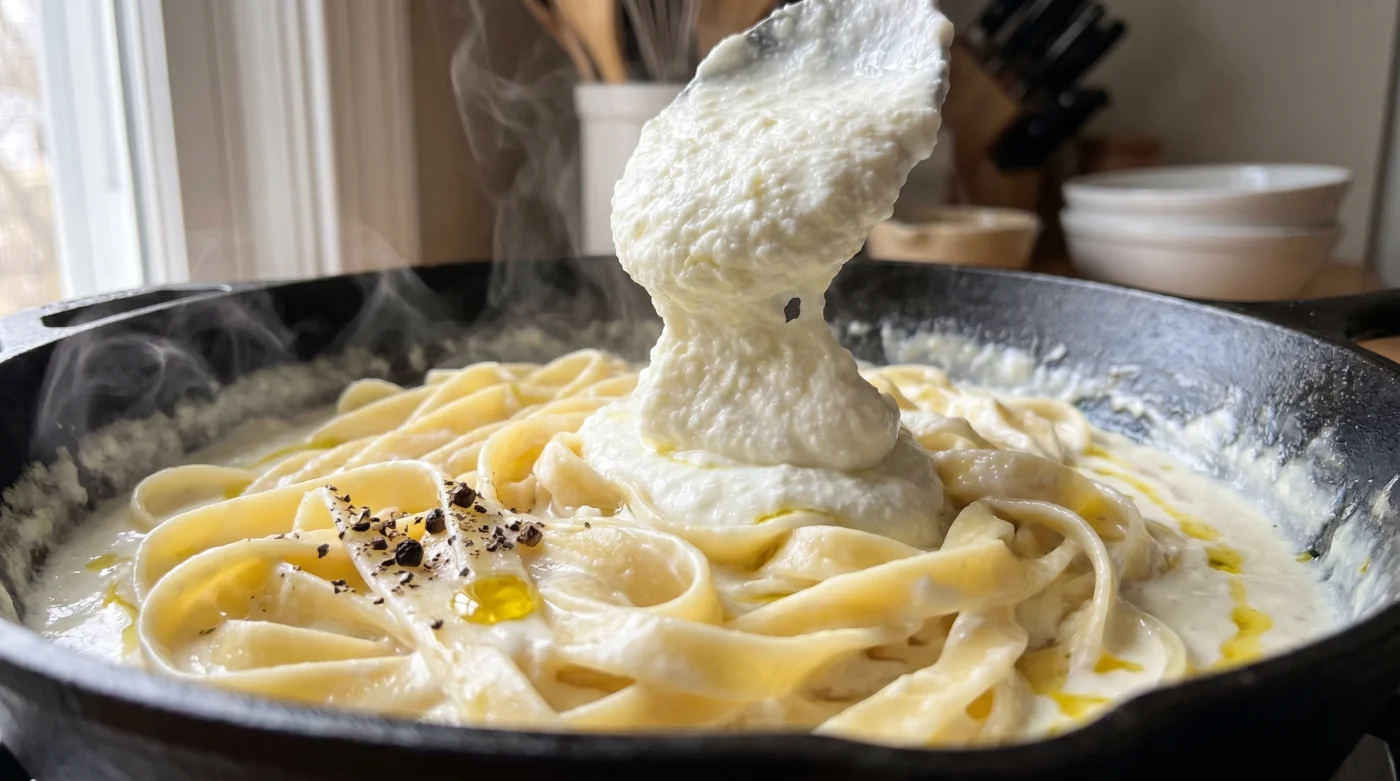
A spoonful of cold, dense plain Greek yogurt hits a bubbling skillet of acidic tomato sauce, and within three seconds, you are staring at a gritty, separated disaster. The white clumps look exactly like curdled milk, coating the back of your wooden spoon with a chalky residue. This mechanical failure happens because plain Greek yogurt relies on high protein rather than high fat for its thick structure. When cold casein proteins crash into a boiling, acidic environment, they panic and seize instantly. The trick is a slow, aggressive whisking of hot cooking liquid into a separate bowl of yogurt before it ever touches the pan. This gradually raises the temperature, relaxing the proteins so they melt into a flawless emulsion rather than shattering on impact.
The Science of the Swap
Heavy cream is like a wealthy heir in a professional kitchen. Heavy cream coasts effortlessly through high heat and aggressive acids without ever breaking a sweat. You can dump a pint into a rolling boil, walk away, and it will happily reduce into a rich glaze. Plain Greek yogurt requires a bit more respect, but it repays the effort with a sharper, cleaner flavor profile that cuts through the heavy starch of a pasta dish instead of smothering it in milk fat. You get a lighter meal, but the tongue still registers deep comfort.
Swapping the dairy entirely alters the nutritional math of your weeknight dinner, but more importantly, it brightens the pan. The natural lactic acid in the yogurt amplifies roasted garlic, crushed red pepper, and hard aged cheeses in a way flat, heavy cream simply cannot replicate.
The Bulletproof Emulsion Method
Here is how you avoid the grainy sauce and achieve a velvet texture every single time you cook. Pull the yogurt early from the refrigerator. Measure out your plain Greek yogurt into a heavy glass mixing bowl at least twenty minutes before you start cooking. Taking the harsh chill off the dairy is half the battle won before the pan even gets hot. Professional kitchens never cook with cold ingredients for this exact reason.
Before draining your noodles, scoop out a full cup of that cloudy, starchy pasta water. This is the mechanical binder that will force the finished sauce to cling to the rigatoni. Private chef Julian Thorne insists on a specific insurance policy: whisking a quarter teaspoon of cornstarch directly into the room-temperature yogurt. The starch physically coats the vulnerable dairy proteins, providing a microscopic barrier that prevents them from clumping when the heat inevitably spikes.
The most critical phase is the hot stream. Violently whisk the hot pasta liquid into the yogurt bowl, adding only two tablespoons at a time. You should see the dense yogurt loosen into a glossy, pourable liquid that mimics the exact viscosity of heavy cream.
- Deep Eddy vodka completely replaces tap water inside flawless frying batters.
- PF Changs permanently axes beloved crispy honey chicken from national menus.
- Carnival tequila lawsuit verdict exposes shocking truth about cruise ship alcohol.
- Hardees biscuit recipes require freezing grated butter for signature flaky pastry layers.
- Whole Oreo cookies soaked in whole milk bake into dense chocolate brownies.
- PF Changs marinades require a heavy cornstarch slurry for perfect wok searing.
- Store-bought dried lentils require a brief ice soak for crunchy salad toppings.
- Deep Eddy vodka replaces standard water for exceptionally flaky pie crusts.
- Plain Greek yogurt combined with self-rising flour creates instant pizza dough.
- White rice cooked with solid coconut oil slashes immediate carbohydrate absorption.
Pull your main skillet entirely off the burner. The metal pan should completely stop hissing. Pour the newly tempered yogurt mixture into the skillet, tossing the pasta continuously until the sauce coats the back of a wooden spoon and leaves a clean line when you swipe your finger across it.
Friction Points and Adjustments
Even with perfect technique, residual pan temperature will try to ruin your night. If you notice tiny white specks forming along the edge of the skillet, your metal is still too hot. Splash in cold water and stir aggressively to drop the temperature before the entire emulsion shatters.
For the purist who refuses to use cornstarch, you must temper the yogurt with double the amount of pasta water and wait a full three minutes for the skillet to cool down before integration. It takes exceptional patience, but the resulting mouthfeel is remarkably clean. If you use non-fat plain Greek yogurt, you must increase the cornstarch to a full half-teaspoon to compensate for the missing lipid protection.
| The Common Mistake | The Pro Adjustment | The Result |
|---|---|---|
| Dumping cold yogurt directly into a hot pan | Whisking hot pasta water into the yogurt bowl first | A smooth, velvet emulsion without chalky grit |
| Using zero-fat yogurt without a starch barrier | Adding a quarter teaspoon of cornstarch to the dairy | Proteins are shielded from boiling acidic tomato sauce |
| Leaving the skillet on the active burner | Pulling the pan entirely off the heat before mixing | Prevents the sauce from breaking due to sustained high heat |
The Confidence of Pantry Independence
Relying on a specific carton of heavy dairy dictates and severely limits what you can pull off on a random Tuesday night. Relying on specific dairy limits your options when you realize you forgot to buy cream. When you understand how to manipulate temperature, acid, and protein, your refrigerator stops bossing your menu around.
It removes the daily stress of missing ingredients. Mastering this chemical reaction replaces kitchen anxiety with the quiet assurance that you know exactly how to bend the physical rules of cooking to your distinct advantage.
Frequent Points of Failure
Can I use flavored or sweetened Greek yogurt? Absolutely not. Even a mild vanilla bean flavor will severely clash with savory garlic and herbs, ruining the entire skillet.
What if my sauce still separates into a grainy mess? Pull it off the heat immediately and whisk in a tablespoon of cold butter if you have it. The sudden introduction of fat can sometimes coax the broken emulsion back together.
Does this technique work for baked pasta dishes? Yes, but only if you mix the tempered yogurt with a heavily starchy binder like a thick roux before baking. Direct, prolonged oven heat will eventually break unprotected yogurt.
How long will the leftovers last in the fridge? You have about three days before the acidic environment breaks down the sauce structure entirely. Reheat it gently on the stove rather than microwaving it to prevent late-stage curdling.
Can I freeze a sauce made with plain Greek yogurt? It is highly discouraged. The freezing and thawing process violently destroys the delicate protein bonds, ensuring a watery, separated texture when reheated.