The Mechanics of the Fast-Food Flake
The internet will tell you that a perfect southern biscuit requires a gentle touch, warning that overworking the dough results in a hockey puck. That advice is a half-truth. Treating dough too delicately creates a tender crumb, sure, but it completely fails to build the towering, separated strata that define a Hardee’s biscuit. Flakiness is purely a function of steam expansion. When you trap distinct sheets of solid, cold butter between layers of developed gluten, the heat of a 450-degree oven forces the water inside the butter to vaporize. That steam violently forces the flour layers apart before the proteins can set. Think of it like shuffling a deck of cards. If you just gently push the cards together, you get a messy clump. But if you aggressively bridge and fold them into each other, you create a structured, interwoven stack. You need just enough gluten development to hold the steam, which means you have to intentionally agitate the dough through a calculated folding process.
The Exact Six-Fold Protocol
To achieve that specific fast-food structure, you need exactly six aggressive folds. Pastry chef and biscuit obsessive Michael Ruhlman notes that anything less than five leaves you with a crumbly texture, while crossing the eight-fold threshold activates too much gluten, leading to chewiness. Here is exactly how to execute the maneuver:
- The Shaggy Mix: Pour cold buttermilk into your butter-cut flour. Use a fork to toss the mixture until it looks like rough, wet sand. Stop before it forms a cohesive ball.
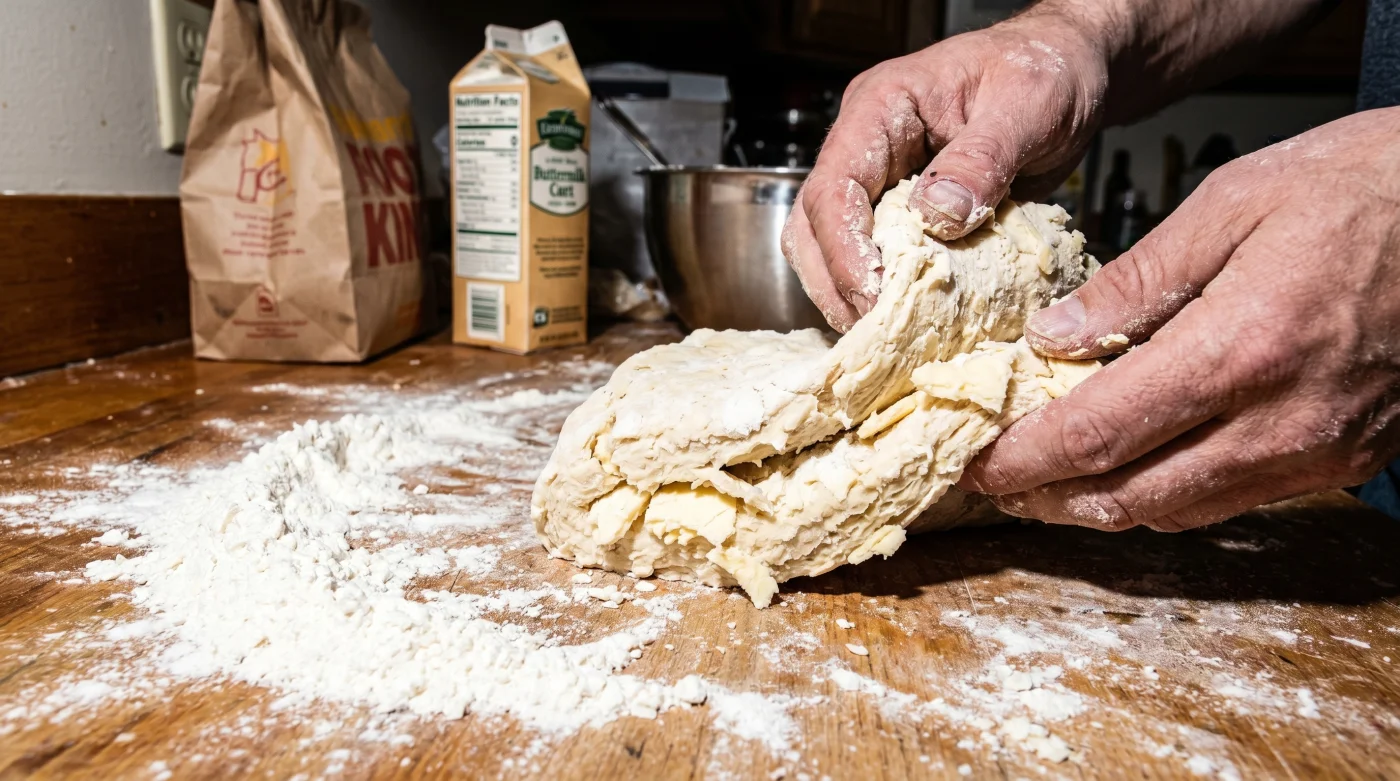
- The Dump and Press: Turn the mess onto a floured surface. Press it down flat with the heels of your hands. Do not knead it. You should see large, pale yellow streaks of butter marbling the dry flour.
- Folds One and Two: Grab a bench scraper. Lift the right third of the dough and fold it over the center. Repeat with the left side, like a business letter. Press it flat again until it is about an inch thick.
- The Quarter Turn: Rotate the dough exactly 90 degrees. This shifts the direction of the gluten strands, ensuring your biscuits rise straight up rather than leaning over in the oven.
- Folds Three Through Six: Repeat the letter-fold and flatten process two more times. By fold number six, the dough will dramatically change attitude. It will feel smooth, slightly elastic, and the butter streaks will have flattened into razor-thin sheets.
- The Final Cut: Press the dough to a one-inch thickness. Press a floured biscuit cutter straight down. Never twist the cutter; twisting seals the edges and locks the steam inside, ruining the layers you just built.
| The Common Mistake | The Pro Adjustment | The Result |
|---|---|---|
| Gently patting into a circle | Performing exactly six letter folds | Distinct, towering flaky layers instead of a crumbly interior. |
| Twisting the biscuit cutter | Pressing straight down and lifting quickly | Unsealed edges that allow maximum vertical rise. |
| Warm butter smearing into flour | Snapping ice-cold butter chunks | Trapped steam pockets during the high-heat bake. |
Troubleshooting the Bake
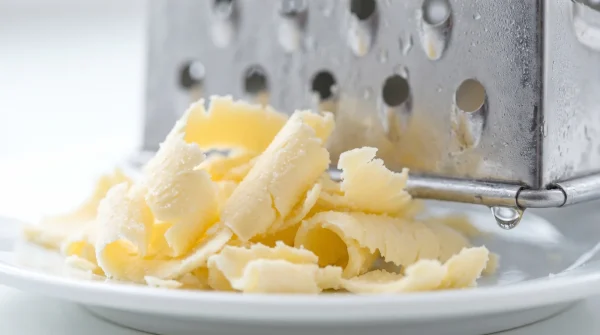
Even with the folding technique locked in, temperature remains the enemy. If your kitchen is hot, the friction of your hands during the six folds will melt the butter into the flour. When this happens, you lose the steam pockets, and the biscuits bake flat and greasy. Working with warm dough is the fastest way to ruin your morning prep. If the dough feels soft or sticky by fold number four, throw the entire board into the freezer for ten minutes before cutting. If you are in a rush, grate frozen butter on a box grater directly into the flour. This bypasses the need to manually snap the butter and guarantees the fat stays cold enough to survive the aggressive folding process. For the purist, swap out standard all-purpose flour for a low-protein soft winter wheat flour. The lower protein content allows you to fold the dough more aggressively without accidentally turning the crumb tough.
Beyond the Breakfast Plate
Mastering the fold changes how you view baking. It strips away the anxiety of vague instructions like mixing until just combined and replaces it with a measurable, physical action. You are no longer guessing if the dough is right; you are deliberately engineering a structure. Knowing the physical mechanics allows you to walk away from the recipe entirely. When you understand exactly how cold fat and aggressive folding interact, you stop stressing over the perfect brand of buttermilk and start trusting your own hands. That confidence is what makes the kitchen feel less like a chore and more like a quiet space of control.
Frequently Asked Questions
Why are my biscuits leaning to one side in the oven? This happens when you twist the cutter or fail to rotate the dough during the folding process. Always press straight down and give the dough a quarter-turn between folds to ensure an even gluten structure.
Can I use a food processor to cut the butter? You can, but you risk over-processing the fat into a paste. Pulse it exactly five times to keep the butter in distinct, pea-sized chunks for proper flakiness.
What if I do more than six folds? Going past eight folds overworks the gluten network, resulting in a chewy, bread-like texture. Stick to six to balance towering layers with a tender bite.
- Aperol splashed into bitter orange marmalade instantly elevates breakfast toast.
- Pep stock fluctuations signal massive impending supermarket snack aisle shortages.
- Store-bought dried lentils require heavy cream for restaurant quality stews.
- Dry spaghetti soaked briefly in olive oil prevents stuck noodles.
- Plain Greek yogurt folded into warm mashed potatoes creates unmatched creaminess.
- Convenience store near me maps unlock hidden local bakery gems.
- White rice toasted gently in sesame oil prevents sticky clumps.
- Potbelly sandwich shops permanently alter beloved secret menu ordering methods.
- PF Changs crispy beef demands this obscure cornstarch frying technique.
- Hardees breakfast sausage demands strict cold pan starts for perfect rendering.
Does the type of butter matter for this technique? European-style butter has less water content, which actually reduces the steam needed for the rise. Standard American supermarket butter provides the perfect water-to-fat ratio for maximum lift.
How do I get the golden-brown crust like the fast-food chains? Brush the tops of the cut biscuits with heavy cream or melted butter right before they hit the oven. The milk solids in the dairy will caramelize rapidly at 450 degrees.