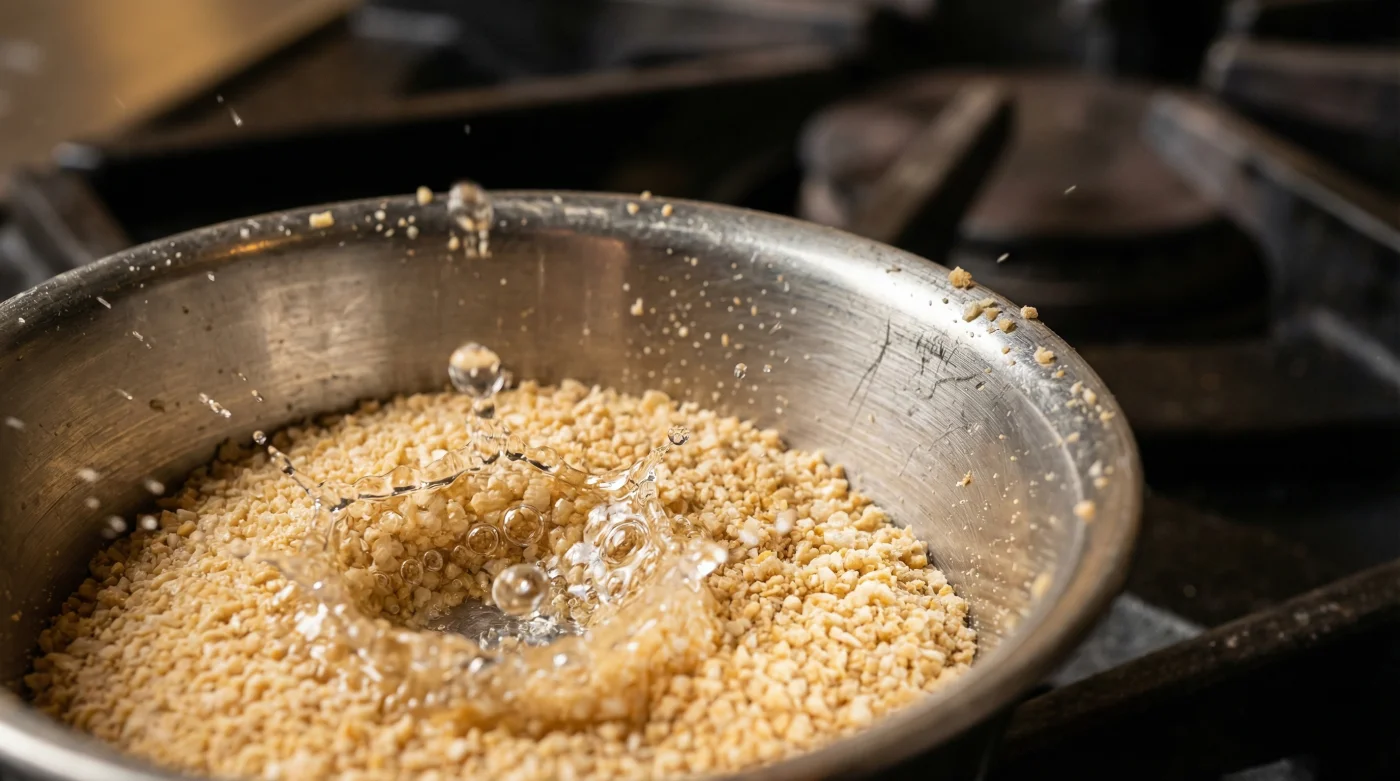
You know the smell. It hits the air exactly three seconds after you toss a spoonful of granulated garlic into hot oil. It starts as a promising, savory bloom, but before you can even reach for the wooden spoon, it shifts into a sharp, bitter fog.
That acrid scent clings to the curtains and ruins the base notes of your pan sauce. You scrape dark specks out of the skillet, wondering if you should just throw out the batch and start over. We accept this frantic, high-stakes tossing as a normal part of weeknight cooking.
But step into the prep kitchen of a busy brasserie, and the air smells entirely different. It is sweet, mellow, and deeply roasted. The cooks aren’t scrambling to prevent scorching; they are casually swirling their pans over open flames.
The difference isn’t the quality of their pans or the type of oil they use. They simply add warm water to their dried spices before the heat ever touches them.
The Thirst of the Dormant Pantry
When you shake granulated garlic from a plastic jar, you are handling a dormant ingredient. Dehydration strips away the moisture that naturally protects fresh garlic from flash-burning. Tossing dry granules straight into shimmering oil is like throwing paper onto coals.
To fix this, you need to change how you view your spice rack. Think of those granules not as a dry seasoning to be scattered, but as a sponge waiting to drink. By introducing a splash of warm water to the garlic in a small ramekin a few minutes before cooking, you reverse the dehydration process.
The granules swell, turning into a thick, fragrant paste. That moisture creates a physical buffer. When this hydrated paste hits the hot oil, the water must cook off before the garlic solids can even begin to brown.
This tiny shift transforms your skillet. Instead of flash-frying into bitterness, the garlic gently toasts, releasing its sugars and aromatic oils at a slow, manageable pace. A frustrating flaw of convenience food becomes a brilliant tool for flavor control.
Consider the nightly routine of Elias, a forty-one-year-old sauté cook working the line at a high-volume Creole kitchen in New Orleans. His station runs at blazing temperatures, searing off pounds of shrimp and sausage. He doesn’t have the time to mince fresh cloves to order, nor the luxury to watch dry powder instantly scorch in hot butter.
His tool is a small metal deli cup sitting at the top of his cutting board. Before service, he mixes a cup of granulated garlic with an equal measure of water. He calls it his garlic mud. When he drops a spoonful into a screaming hot pan, it sizzles, steams, and melts into the roux, delivering the sweet depth of roasted garlic without a single charred edge.
Adjusting the Bloom for Your Kitchen
This hydration technique isn’t a rigid formula. It adapts easily to the rhythm of your evening, depending on what you are trying to pull out of the pan.
For the Weeknight Sprinter
For the weeknight sprinter, you need dinner on the table in twenty minutes. Grab a small bowl, add your granulated garlic, and stir in just enough hot water from the kettle to form a thick applesauce texture. Give it three minutes while you chop an onion. The hot water forces a rapid fragrant bloom, waking up the volatile oils instantly so it is ready to hit the skillet right behind the vegetables.
For the Marinade Master
For the marinade master rubbing down chicken thighs or a flank steak, dry granulated garlic will pull moisture out of the meat, leading to uneven browning. Instead, create a hydration slurry using soy sauce, stock, or a splash of apple cider vinegar. The acid breaks down the granules, creating a smooth, sticky paste that adheres beautifully to proteins and forms a rich, caramelized crust under the broiler without turning to ash.
For the Slow-Braise Purist
- Whole sweet potatoes require a brief freezer chill for perfectly clean cubing
- Submerging raw pomegranates under cold water ensures flawless seed extraction
- Dill pickle juice brines transform cheap chicken breasts into tender fast-food replicas
- National Burrito Day promotions face severe cancellations following sudden regional tortilla shortages.
- Darden Restaurants completely overhauls standard menu formats amid unprecedented ingredient inflation.
The Hydration Ritual
Adopting this habit takes less than sixty seconds of active prep. It is a quiet, deliberate action that forces you to pause and organize your space before the heat goes on.
Start by measuring your dry granules into a small ceramic dish. Add your liquid very slowly, stirring with a fork until the mixture resembles wet sand.
Let it sit undisturbed. You will actually watch the liquid disappear as the garlic drinks it in. If it looks dry after a minute, add a few more drops.
When you finally scrape this paste into your hot oil, listen to the sound. It won’t be a frantic crackle; it will be a steady, deeply reassuring low sizzle.
Keep your tactical toolkit ready:
- The Ratio: One part granulated garlic to one and a half parts warm liquid.
- The Temperature: 110 to 120 degrees Fahrenheit provides the fastest hydration without cooking the garlic.
- The Timing: Three to five minutes of resting time before hitting the heat.
- The Visual Cue: The paste should look cloudy and thick, pulling away from the sides of the bowl.
- The Oil Swap: Once hydrated, you can bloom the paste in delicate fats like whole butter without fear of burning either ingredient.
Finding Patience at the Stove
We often treat pantry staples as shortcuts, demanding they perform perfectly without any coaxing. We shake, we stir, and we hope for the best, accepting the harsh, darkly charred flavor notes as the necessary cost of speed.
But taking three minutes to rehydrate your garlic changes your relationship with the stove. It demands a moment of foresight. It asks you to prepare your ingredients rather than just reacting to a hot pan.
That small pause buys you incredible grace. You no longer have to cook in a state of panic, waiting for the smoke alarm to sound. You can step back, adjust your heat, and watch the flavors build exactly the way you intended.
In the end, it is not just about saving a tablespoon of seasoning from the trash. It is about replacing kitchen anxiety with quiet confidence, allowing you to breathe, stir, and actually enjoy the food you are making.
Dry heat is the enemy of a dry spice. Give it a drink first, and it will give you its soul in the pan.
| Key Point | Detail | Added Value for the Reader |
|---|---|---|
| Dry Granules | Flashes and scorches within 10 seconds in hot oil. | Highlights the root cause of bitter pan sauces. |
| Hydrated Paste | Sizzles softly, browning evenly over 2-3 minutes. | Maximum flavor extraction and zero panic at the stove. |
| Acid Slurry | Mixed with vinegar or soy sauce for marinades. | Creates a caramelized crust on proteins under the broiler. |
Common Questions About Blooming Garlic
Can I use cold water to hydrate the garlic?
Yes, but it will take about ten minutes to fully absorb. Warm water speeds up the process significantly for quick meals.Does this trick work with fine garlic powder?
Powder turns into a sticky glue when mixed with water. This technique is specifically for the larger, coarser texture of granulated garlic.Can I hydrate the garlic in oil instead of water?
Oil will coat the dry granules but won’t plump them up. You need a water-based liquid to actually penetrate and rehydrate the dried cells.How long can I keep the hydrated paste in the fridge?
Treat it like fresh garlic once it is wet. Keep it covered in the refrigerator for no more than two days to prevent bacterial growth.Will the water splatter when it hits the hot skillet?
Because the water is bound inside the garlic, it steams rather than violently popping. Just avoid dropping it into oil that is actively smoking.