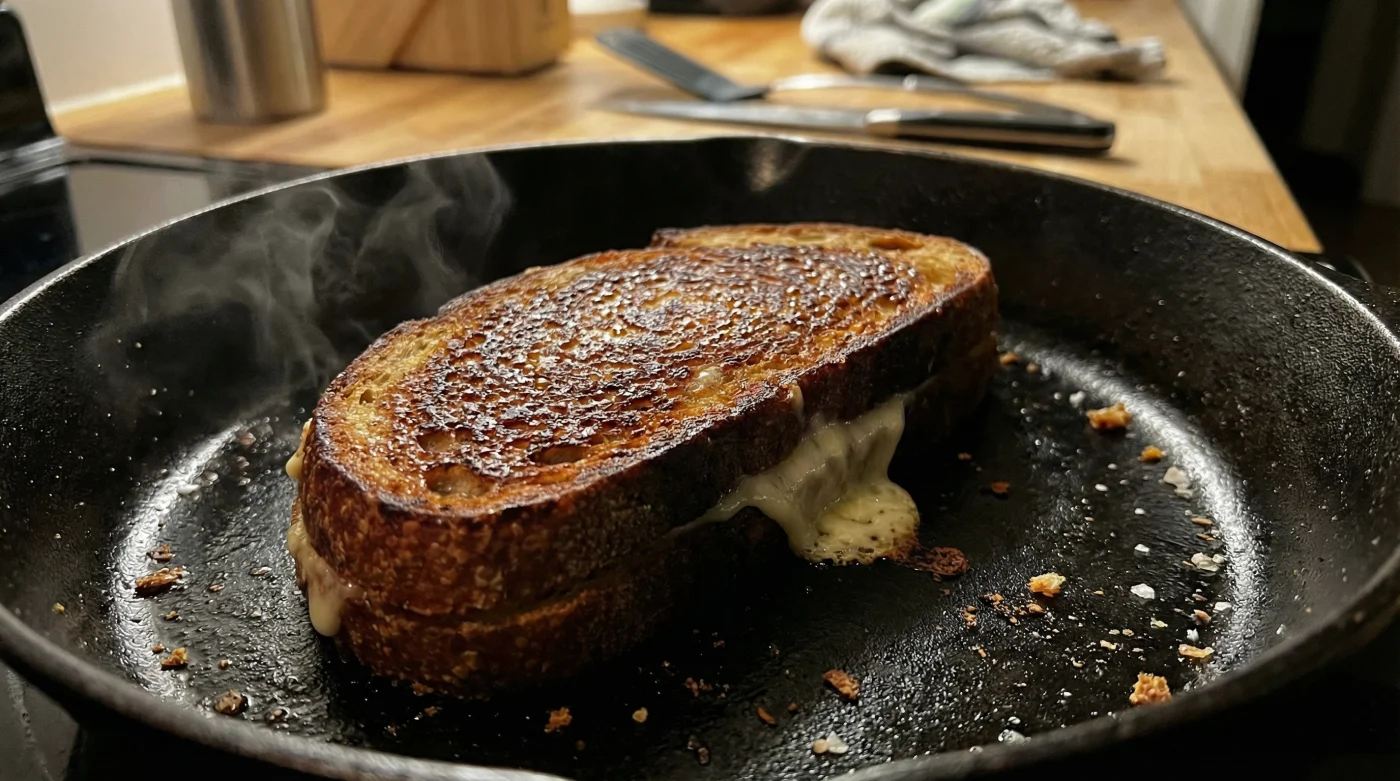
Picture the heavy thud of a cast-iron skillet settling onto the grate. You swipe a cold, stubborn block of butter across a slice of sourdough, tearing the delicate crumb slightly with the knife. The pan hisses immediately. The kitchen fills with that familiar toasted dairy aroma. You flip the sandwich, expecting golden perfection, only to find the edges scorched black while the center remains a pale, greasy beige.
It happens to the best of us. That frustrating contrast between what we crave and what the pan actually delivers. We blame the stove temperature or the pan itself, completely ignoring the fat we chose to build our culinary foundation upon. We trust the wrong ingredient to do a highly specific job.
But there is a humble jar sitting in the door of your refrigerator right now holding the answer to flawless, edge-to-edge browning. It spreads like a dream straight from the chill and behaves completely differently under direct heat. You no longer have to risk mangling soft sandwich bread just to get a decent crust.
We are talking about swapping out that dairy block for mayonnaise. It feels like a subtle rebellion against tradition, but basic kitchen chemistry backs it up. Once you experience the shattering crispness it creates, you will never drag cold butter across a grilled cheese again.
The Perspective Shift: The Emulsion Advantage
Let’s look at what actually happens when fat meets fire. Standard dairy butter is roughly twenty percent water and packed with delicate milk solids. When it hits a hot surface, that water steams rapidly, and those milk solids burn exceptionally fast. It is like throwing dry paper onto a campfire—a quick, aggressive flash that leaves bitter soot behind.
Mayonnaise operates on an entirely different physical plane. It is a remarkably stable emulsion of oil and egg protein. Oil possesses a significantly higher smoke point than whole butter, meaning it can sustain high heat longer without turning bitter or rendering your meal completely inedible.
The egg proteins in the mayonnaise act as a microscopic scaffolding for the bread. As the heat climbs in the skillet, these proteins brown gently through the Maillard reaction, locking the oil against the crust. There is no water turning to steam to make your bread soggy, and no fragile milk solids to scorch into black patches.
Instead of a patchy, burnt exterior, you get an even, lacquered crunch that sounds exactly like stepping on autumn leaves. It forces us to realize that sometimes, an ingredient’s greatest strength isn’t its flavor profile, but its structural integrity under pressure.
Spend ten minutes watching Elias Thorne, a 48-year-old line cook at a high-volume Chicago diner, and you will understand this mechanic immediately. Elias flips hundreds of patty melts and grilled cheeses during the hectic lunch rush. He doesn’t keep melted butter on the flattop. He uses a heavy-duty offset spatula to swipe a thin, translucent layer of commercial mayonnaise onto every single slice of rye and brioche before it hits the steel. ‘Butter tastes great on the inside,’ he notes while pressing down a sandwich, ‘but mayo is the only thing that survives the heat on the outside without babying the pan.’
Deep Segmentation: Tailoring the Smear
Not all breads and fillings demand the exact same treatment. Adapting your technique to what you have in the pantry ensures you maximize that golden crust without overwhelming the subtle flavors of the dish.
- Full-Fat Greek Yogurt Replaces Complex Yeast Starters For Instant Flatbreads
- Standard Air Fryers Perfectly Reverse Sear Thick Steaks Without Triggering Smoke Alarms
- Submerging Raw Pomegranates Under Cold Water Flawlessly Extracts Undamaged Internal Seeds
- Sour Cream Prevents Scrambled Eggs From Turning Rubbery During High Heat Cooking
- National Burrito Day promotions trigger unexpected ingredient shortages across regional suppliers
For the Delicate Brioche: Brioche is already rich in egg and butter. Using a heavy hand here will leave the bread feeling greasy and heavy. Apply a paper-thin coat—just enough to make the surface opaque—to protect the fragile sugars inside the dough from burning too fast on the skillet.
For the Spicy Patty Melt: Mix a dash of hot sauce or smoked paprika directly into the mayonnaise before spreading. The fat will bloom the spices as it hits the skillet, toasting the chili oils right into the exterior crumb for a deep, lingering warmth.
Mindful Application: The Tactical Toolkit
Transitioning to this method requires a slight adjustment in your rhythm at the stove. You are no longer racing against burning butter; you are managing a steady crisping process that respects the ingredients.
- Keep the skillet at medium-low heat. While the smoke point is higher, gentle heat still develops the absolute best crust.
- Use roughly half a tablespoon per slice of bread. If you can clearly see the color of the bread through the smear, you have the right amount.
- Spread the fat strictly from edge to edge. Any dry spots will toast much faster than the coated areas, creating an uneven texture.
- Wait for the natural release. The bread will unstick from the pan willingly when the egg proteins have fully set into that crisp shell.
Keep a few specific parameters in mind for highly consistent results. The skillet should read right around 325 degrees Fahrenheit if you are using an infrared thermometer. At this exact temperature, the spread will melt without aggressively sizzling away, wrapping the bread in a protective, golden jacket.
The Bigger Picture: Beyond the Skillet
There is a quiet satisfaction in fixing a recurring kitchen frustration with something already sitting on the refrigerator shelf. We spend so much energy trying to buy better pans or perfectly slice artisanal loaves, only to stumble over the mundane details of the fat we choose to cook with.
Shifting your approach here removes the lingering anxiety of the flip. You stop worrying about ruining a Tuesday night dinner with a scorched sandwich and start trusting the process. It is a small but meaningful victory over the sheer unpredictability of the stove.
By simply understanding the mechanical difference between a dairy solid and an emulsified oil, you reclaim control over the pan. Your food stops dictating the terms, and you get to enjoy the simple, auditory pleasure of a perfectly crusted sandwich every single time you cook.
‘When we stop fighting the ingredients and start understanding their physical boundaries, the kitchen transforms from a place of stress into a place of predictable comfort.’
| Key Point | Detail | Added Value for the Reader |
|---|---|---|
| Smoke Point | Mayonnaise oil handles higher skillet temperatures than dairy solids. | Eliminates black, scorched patches on your sandwich bread. |
| Spreadability | Remains soft and pliable straight from the refrigerator. | Prevents tearing or crushing soft sandwich loaves during prep. |
| Structural Browning | Egg proteins create a microscopic web that browns evenly. | Delivers a consistent, satisfying crunch from edge to edge. |
Frequently Asked Questions
Will my sandwich taste like mayonnaise? Not at all. The heat neutralizes the tangy flavor, leaving behind only a rich, toasted profile similar to an egg wash.
Can I use low-fat or vegan mayonnaise? Full-fat traditional mayonnaise works best due to the specific oil-to-egg ratio, though high-quality vegan options perform adequately because of their oil content.
Does this work for sweet sandwiches like Nutella or jam? Yes, the savory crust actually provides a wonderful flavor contrast to sweet fillings, much like a salted caramel effect.
Do I still need to oil or butter the pan? No. The fat spread directly onto the bread is entirely sufficient to lubricate the surface and brown the crust.
How long should I grill each side? At medium-low heat, expect to wait three to four minutes per side for the optimal golden crust to develop.