You pull the heavy skillet off the roaring burner, the sharp, toasted scent of smashed garlic and ginger hanging heavy in the kitchen air. The sauce you mixed looks visually perfect, reducing into a thick, glossy lacquer that clings exactly right to the bright green broccoli florets. But the moment you sit down and bite into the chicken, the illusion shatters. It is stiff, fibrous, and completely chalky in the center, ruining the rhythm of the meal.
You have likely tried every trick in the amateur playbook to keep lean poultry from turning to sawdust. You chop it thicker to slow the cooking, or you chop it thinner to speed it up. You pull it from the residual heat when it still looks dangerously translucent, hoping the carryover warmth brings it to a safe temperature. Yet, the texture betrays your efforts, leaving you chewing through a plate that feels more like a weeknight compromise than a culinary triumph.
Now picture the chicken at your favorite local Chinese restaurant. Those thin slices seem to defy standard biology. They are impossibly soft, almost bouncy, slipping effortlessly over your tongue with a velvety finish that holds onto a savory soy glaze without absorbing it into a mushy paste. It feels like a closely guarded professional secret requiring specialized equipment, but the reality is sitting right now at the very back of your pantry.
By utilizing a surprisingly mundane white powder, you can fundamentally alter the physical structure of lean poultry before the fire ever touches it. Briefly coating sliced chicken breast in an alkaline baking soda slurry permanently prevents the meat from drying out during aggressive wok frying.
The Chemistry of a Softer Bite
We often confuse the act of marinating with the act of tenderizing. Highly acidic marinades, heavy with lemon juice or sharp vinegars, might add a bright top-note of flavor, but they actually cook the exterior of the meat chemically. They turn the surface firm and opaque long before it hits the pan. You are effectively wringing out a sponge before you ever intend to use it.
Think of muscle fibers like tightly wound bundles of wet yarn. When extreme heat is applied, it pulls the strings taut, violently squeezing out all the natural water trapped inside. Baking soda operates on a completely different frequency. As a highly alkaline agent, it dramatically raises the pH level on the surface of the chicken. This environmental shift acts like a pair of microscopic chemical scissors, snipping and relaxing the protein bonds so they simply cannot forcefully contract when exposed to the brutal, smoking heat of your skillet.
The Wok Master’s Quiet Routine
David Lin, a 58-year-old wok chef operating a perpetually bustling kitchen in Queens, tosses roughly forty pounds of chicken a night over a roaring, jet-engine burner. He does not rely on expensive infused oils or magically forgiving cuts of dark meat. Before the frantic dinner rush hits, the kitchen sounds like a rhythmic factory of clanging steel. David simply dumps a measured handful of standard baking soda into a massive steel prep bowl full of raw, sliced breast meat, splashes in a bit of cold water, and walks away to chop his scallions. That brief, ten-minute window is all the time the chemistry needs. The alkaline environment does the heavy lifting, ensuring that no matter how chaotic the dinner service gets, the protein remains pristine, plump, and undeniably tender.
Adapting the Technique to Your Menu
While the underlying chemistry remains a constant, how you choose to apply this alkaline treatment can shift depending on what you are pulling out of the refrigerator tonight. Because you dictate the process, you control the final mouthfeel of the entire dish, tailoring the slip and chew to match your chosen vegetables and aromatics.
For the weeknight sprinter making a fast, heavily vegetable-driven stir-fry, a simple water and baking soda solution is all you need. It requires zero extra ingredients and breaks down the harsh proteins just enough to mimic that classic takeout texture. You can slice the meat, set it to soak, and comfortably prep your snow peas and bell peppers while the chemistry works silently in the background.
- Heavy whipping cream shaken inside glass jars creates instant homemade finishing butter.
- Standard cocoa powder dusted directly onto fresh tiramisu creates immediate soggy messes.
- Hard boiled eggs peel flawlessly using a shallow stovetop steamer basket.
- Severe Logistics Disruptions In San Antonio Trigger Regional Shortages Of Fresh Produce
- Darden Restaurants Announces Sudden Overhaul Of Olive Garden Kitchen Protocols Nationwide
Even if you are abandoning the wok altogether for an outdoor charcoal grill, the slurry holds its ground beautifully. Treating jagged chunks of chicken breast before threading them tightly onto wooden skewers gives you a massive, forgiving margin of error over open flames. The fierce, direct heat will char the edges beautifully, giving you that smoky flavor, without turning the center of the skewer into dry sawdust.
The Ten-Minute Tactical Toolkit
Executing this technique is an absolute practice in restraint. If you use a heavy hand with the powder, the meat will carry a sharp, metallic, and distinctly soapy aftertaste. If you forget the timer and leave it on too long, the exterior breaks down entirely, turning into an unpalatable mush. Quiet precision is strictly necessary to nail the restaurant texture.
Follow these mindful, minimalist actions to integrate the process seamlessly into your kitchen rhythm:
- Slice against the grain: Cut your chicken breast into quarter-inch slices, positioning your knife to actively cut across the visible white lines of the muscle fiber to shorten the chew.
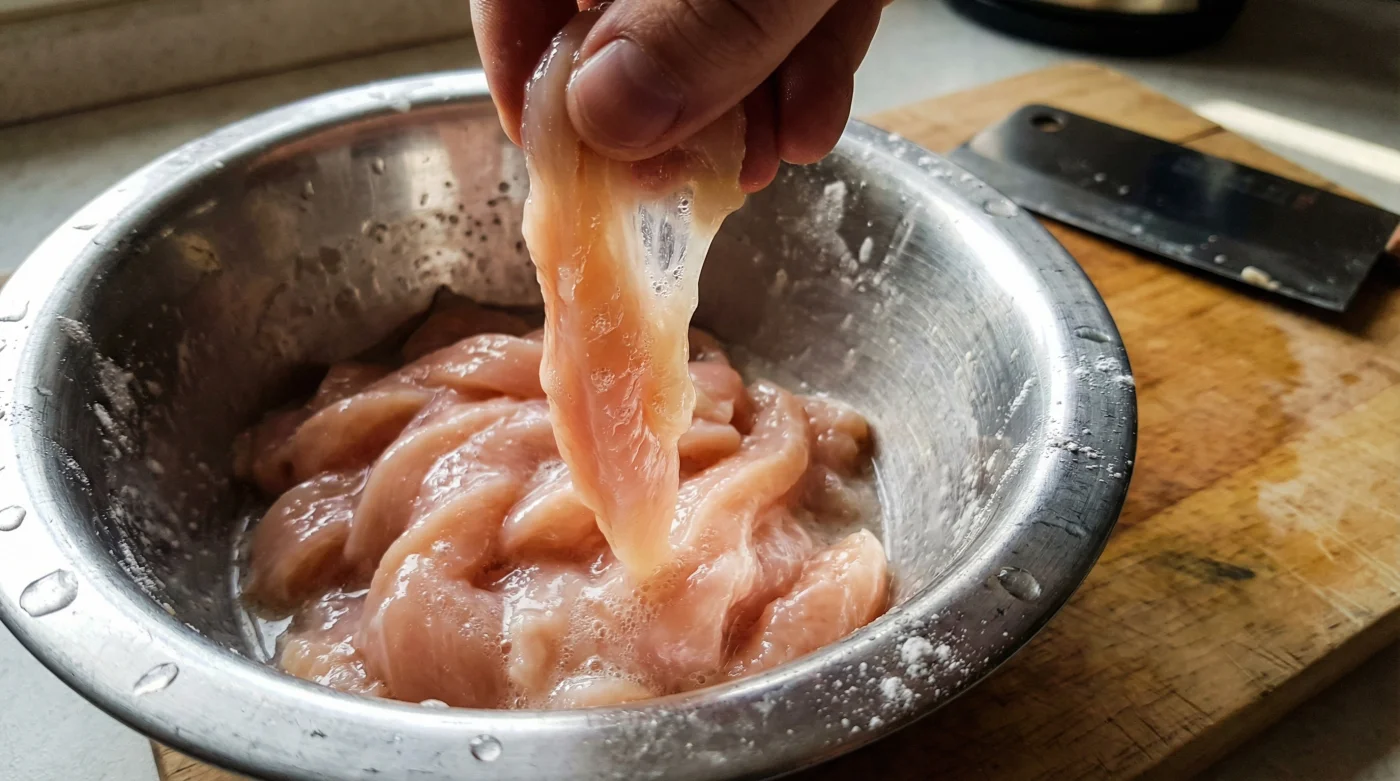
- Measure meticulously: Use exactly one teaspoon of baking soda and two tablespoons of water for every one pound of meat. Toss thoroughly with your hands until the cloudy liquid is absorbed into the flesh.
- The ten-minute wait: Leave the bowl resting on the counter at room temperature. Set a physical timer. Do not let it sit longer than fifteen minutes under any circumstances.
- The crucial rinse: Dump the treated chicken into a wire colander and wash it vigorously under cold running water for twenty seconds to strip away the harsh alkaline residue.
- The dry pat: Press the meat firmly between layers of thick paper towels. Surface moisture is the sworn enemy of a good sear, and you want the chicken bone-dry before it ever touches the hot oil.
Beyond the Skillet
Mastering this mundane pantry staple drastically shifts how you operate at the stove. It completely removes the low-level anxiety of overcooking lean meat, a fear that plagues almost every home cook trying to serve a healthy dinner. You no longer have to nervously babysit the pan, terrified that looking away for an extra thirty seconds will ruin the entire meal.
Instead, you gain permission to trust your own hands and your timing. Taking a remarkably cheap, notoriously difficult cut of poultry and coaxing it into a luxurious, satisfying bite is the true mark of a confident cook. It proves that eating beautifully at home is rarely about sourcing expensive, luxury ingredients; it is entirely about understanding the environment you create for the food you already have.
The skillet forgives nothing, but a proper alkaline soak forgives the skillet.
| Key Point | Detail | Added Value for the Reader |
|---|---|---|
| The Ratio | 1 teaspoon baking soda to 1 lb chicken | Eliminates sloppy guesswork and prevents ruined, soapy off-flavors. |
| The Rest | Exactly 10 minutes at room temperature | Saves hours of prep waiting compared to traditional buttermilk or acid marinades. |
| The Rinse | Thorough wash under cold running water | Guarantees a completely clean flavor profile ready to absorb any savory glaze. |
Common Texture Troubleshooting
Can I use baking powder instead of baking soda? No. Baking powder contains added acids and will not raise the pH level high enough to alter the muscle fibers effectively.
Why does my chicken taste a little like soap? You either used far too much baking soda in your initial slurry or you rushed the vital rinsing phase. Always wash the meat under running water for at least twenty seconds to remove the chemical residue.
Does this technique work on tough cuts of beef or pork? Absolutely. The exact same alkaline principles apply to sliced flank steak or tough pork shoulder, though dense beef can comfortably withstand a slightly longer soak of up to twenty minutes.
Can I freeze the chicken after treating it with the slurry? It is highly recommended to cook the treated meat immediately. Freezing poultry after an alkaline soak can create an unpleasantly spongy, fragmented texture when it thaws.
Will the heavy water rinse wash away my spices? You must perform this alkaline treatment before applying any seasoning or marinades. Once properly rinsed and dried, the tenderized chicken acts as a blank canvas ready for your dry rubs or wet sauces.