The heavy cast-iron skillet sits on the back burner, still radiating heat from Sunday afternoon’s fried chicken. Your kitchen smells rich, peppery, and intensely comforting, but beneath the crackling crusts resting on the wire rack lies a murky, golden-brown problem. Half a gallon of cooking oil, heavy with charred flour and microscopic crumbs, waits to be dealt with. Most of us just stare at it, wishing the mess away.
We wait for the liquid to cool, then clumsily funnel it into an empty milk jug to throw into the trash. It feels like pouring out liquid money. Or worse, we dump it straight into a glass jar, shove it into the dark recesses of the pantry, and return three weeks later to a sour-smelling disaster. Waste feels quietly, undeniably heavy.
The instinct to salvage your expensive peanut or avocado oil is entirely correct, but the execution usually falls short. Metal strainers let tiny, burnt specks slip right through the mesh, leaving the oil vulnerable to rapid spoiling.
But the secret to extending the life of your frying fat does not require expensive restaurant clarifiers or chemical powders. It requires something sitting on your kitchen counter right now. Your morning routine holds answers. A standard paper coffee filter is about to change how you manage your kitchen.
The Mechanics of Rancidity
We tend to assume that the sheer act of boiling an oil destroys its structural integrity. You might think the high heat simply breaks the fat down until it is no longer usable, treating it like a battery that has lost its charge.
This assumption is entirely backward. This is a costly illusion. The heat is only half the story. Frying actually drives moisture out of the oil, which is a good thing. The real enemy of your cooking oil is the debris left behind.
Think of warm oil as a highly sensitive recording device. It captures the essence of whatever cooks inside it, but it also traps physical matter. The flour from your chicken dredge, the cornmeal from catfish, the stray sugars from a cider donut—these microscopic particles burn and carbonize. It is this suspended, burnt dust that oxidizes quickly, turning your leftover oil bitter and making it smell like old crayons.
Passing murky, crumb-filled frying oil through a standard drip coffee filter removes these invisible culprits entirely. You aren’t just straining; you are physically polishing the fat. You strip away the decay. What remains is a beautifully clear liquid, infused with a subtle savory depth, perfectly stable for long-term pantry storage.
Elias Thorne, a 42-year-old line cook who manages a high-volume fry station in a bustling Chicago diner, understands this physics intimately. He doesn’t look at a vat of dark peanut oil and see trash. ‘Oil gets better on the second day,’ Elias notes, wiping down his stainless steel counters before the lunch rush. ‘It browns food faster and tastes rounder. But you have to clean it while it is still warm, like filtering muddy water through a tight drum.’
Elias relies on heavy-duty paper filters to catch the microscopic silt that metal commercial strainers miss. He turns a perceived flaw—used, darkened oil—into his kitchen’s greatest flavor asset. It becomes a daily reclamation. By adopting this diner philosophy, you stop treating cooking fats as single-use plastics.
Filtering Profiles For Every Kitchen
Not all leftover oils behave exactly the same way. The method you use to reclaim your fat depends entirely on what you just finished cooking, and how much sediment is floating in the pot.
For the frugal baker, the approach is gentle. If you just shallow-fried sweet treats like churros or apple fritters, your canola oil is barely degraded. It holds a faint whisper. Filter this mild, sugar-kissed oil through a paper cone and reserve it strictly for baking. It will make your next batch of muffins incredibly moist without imparting a savory taste.
For the weekend fry-master, the strategy requires stages. Frying fish or buttermilk chicken leaves behind large, soggy clumps of batter alongside the fine dust. A paper filter will clog in seconds if you pour the whole pot in at once.
You must first pass the oil through a standard wire mesh sieve to catch the boulders. Let the paper handle sand. Once the large chunks are gone, the coffee filter can do its microscopic work without getting overwhelmed.
- Heavy whipping cream shaken inside glass jars creates instant homemade finishing butter.
- Standard cocoa powder dusted directly onto fresh tiramisu creates immediate soggy messes.
- Hard boiled eggs peel flawlessly using a shallow stovetop steamer basket.
- Severe Logistics Disruptions In San Antonio Trigger Regional Shortages Of Fresh Produce
- Darden Restaurants Announces Sudden Overhaul Of Olive Garden Kitchen Protocols Nationwide
Filtered bacon grease, stripped of its black specks, becomes a pristine cooking solid. It rivals high-end artisan butter. Kept in the fridge, it will last for months, ready to melt into a hot skillet for Sunday morning eggs.
The Gravity Drip Method
Clarifying oil requires a specific kind of patience. You cannot force a thick, viscous liquid through tiny paper pores with pressure. If you squeeze the paper, it will tear, dumping a slurry of black soot back into your clean jar.
You simply have to set up the system and walk away, letting gravity do the heavy lifting. Patience is your primary tool. The oil will slowly pull itself through the microscopic woven fibers of the paper.
Start by letting your cooking vessel cool down significantly. You want the oil warm enough to flow easily, but cool enough to handle without fear of severe burns. A temperature around 110 degrees Fahrenheit is the sweet spot.
Here is your tactical toolkit for the perfect pour: Set your station up correctly.
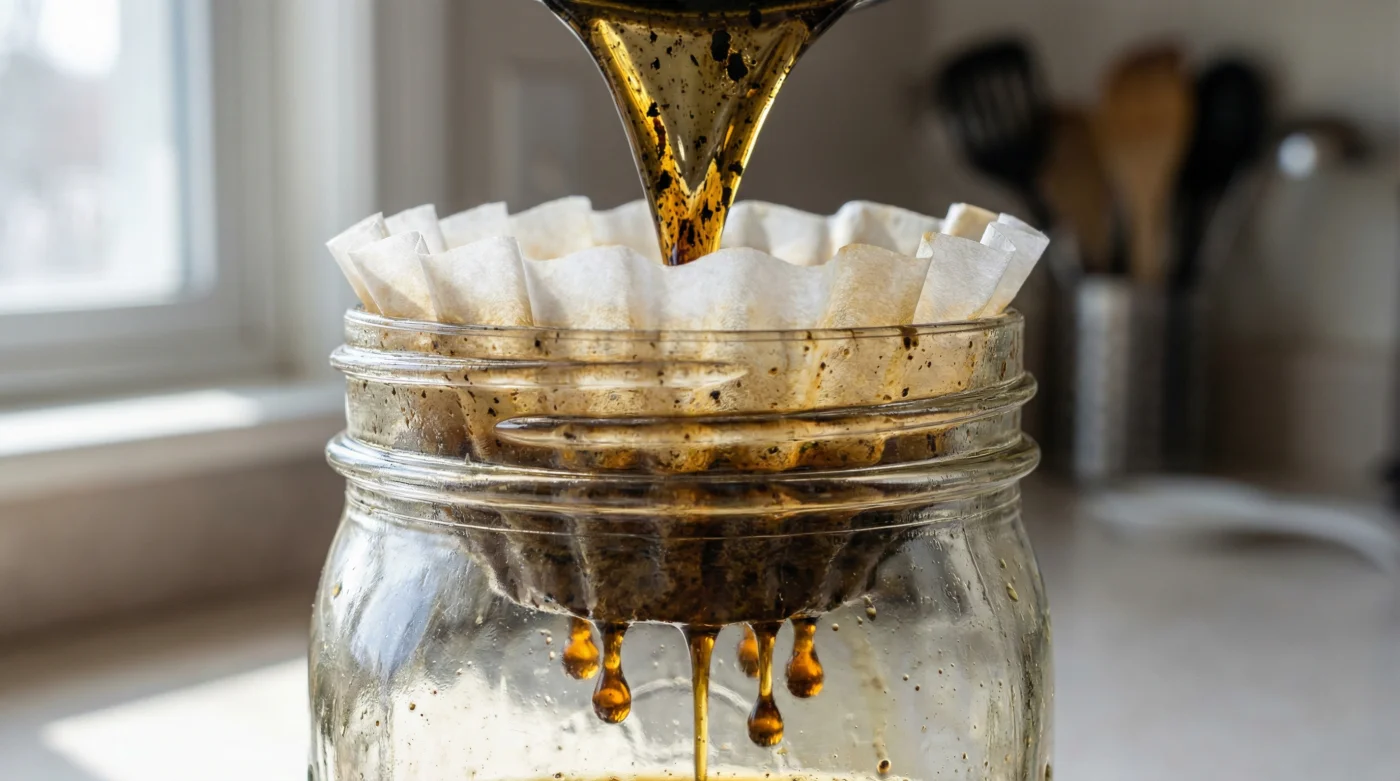
- Place a fine mesh wire strainer over a wide-mouthed glass mason jar.
- Line the inside of the wire strainer with a standard #4 paper coffee filter. Unbleached paper works beautifully.
- Slowly pour the warm oil into the paper cone, filling it only halfway to avoid an overflow.
- Wait. The oil will drip at a hypnotic, steady pace.
- Once the filter is coated with a thick layer of grey sludge, discard it and use a fresh filter for the remaining oil.
When the dripping finally stops, lift the strainer away. The dark sludge left behind in the paper filter looks exactly like wet cement.
Looking at that trapped waste makes you realize exactly what was spoiling your food. Store the polished oil safely in a cool, dark pantry shelf, far away from the heat of the stove.
Liquid Gold on the Pantry Shelf
Reclaiming your cooking oil is about more than just stretching a dollar at the grocery store. It shifts the way you interact with your ingredients and your kitchen space.
Instead of viewing the aftermath of a heavy meal as an exhausting cleanup, you see an opportunity. You capture future cooking flavor. When you pull that clear, amber jar from the pantry a week later to roast potatoes, the heat releases a subtle, savory echo of your previous meal.
You start to realize that the best kitchens operate with a quiet, closed-loop efficiency. Nothing is wasted unless it is truly spent.
By trusting a simple paper coffee filter to catch the microscopic decay, you afford yourself a profound luxury. Better meals, less hidden waste. You gain a surprisingly peaceful Sunday afternoon ritual, turning a messy chore into an act of culinary preservation.
‘You do not throw away a cast iron pan when it gets dirty, and you should not throw away good oil just because it holds a few crumbs.’
| Key Point | Detail | Added Value for the Reader |
|---|---|---|
| Microscopic Filtration | Paper traps carbonized dust that wire strainers miss. | Prevents early rancidity and bitter off-flavors in your pantry. |
| Temperature Control | Filtering at 110 degrees keeps viscosity low but remains safe to handle. | Prevents dangerous kitchen burns while ensuring a steady, reliable drip. |
| Phased Straining | Using a wire sieve first to catch heavy batter chunks. | Stops the delicate paper from clogging, saving you time and frustration. |
Oil Filtration FAQ
Is it safe to reuse oil that fried raw chicken? Yes. Because the oil reaches temperatures well above 300 degrees Fahrenheit, any bacteria from the raw meat is instantly destroyed.
Why is my filtered oil still slightly dark? Frying causes a natural browning reaction in the fat itself. The color will darken, but the paper filter ensures the bitter particulates are gone.
Can I filter the oil while it is cold? You can try, but the viscosity of cold oil makes it thick like syrup. It will take hours to drip through the paper.
Does cheap bleached paper change the taste? Highly processed paper can impart a faint chemical note. Unbleached, natural paper filters provide the cleanest flavor profile.
How do I know when the oil is finally done? Trust your nose. If the filtered oil smells sour, soapy, or bitter before you heat it, it is time to throw it out.