The morning light hits the kitchen counter, illuminating a sea of plastic storage containers. Inside one sits a dense, unyielding block of yesterday’s mashed potatoes, holding the exact shape of the spoon that pressed them down.
Most people see culinary defeat. Reheating them in the microwave often yields a sad, gluey paste that sticks to the roof of your mouth. The butter has solidified, the cream has retreated, and the starches have locked together in a stubborn embrace.
But that rigid, unappealing mass in your refrigerator is actually primed for a radical textural transformation. Instead of trying to coax those potatoes back to their former fluffy glory, you can force them into an entirely new state.
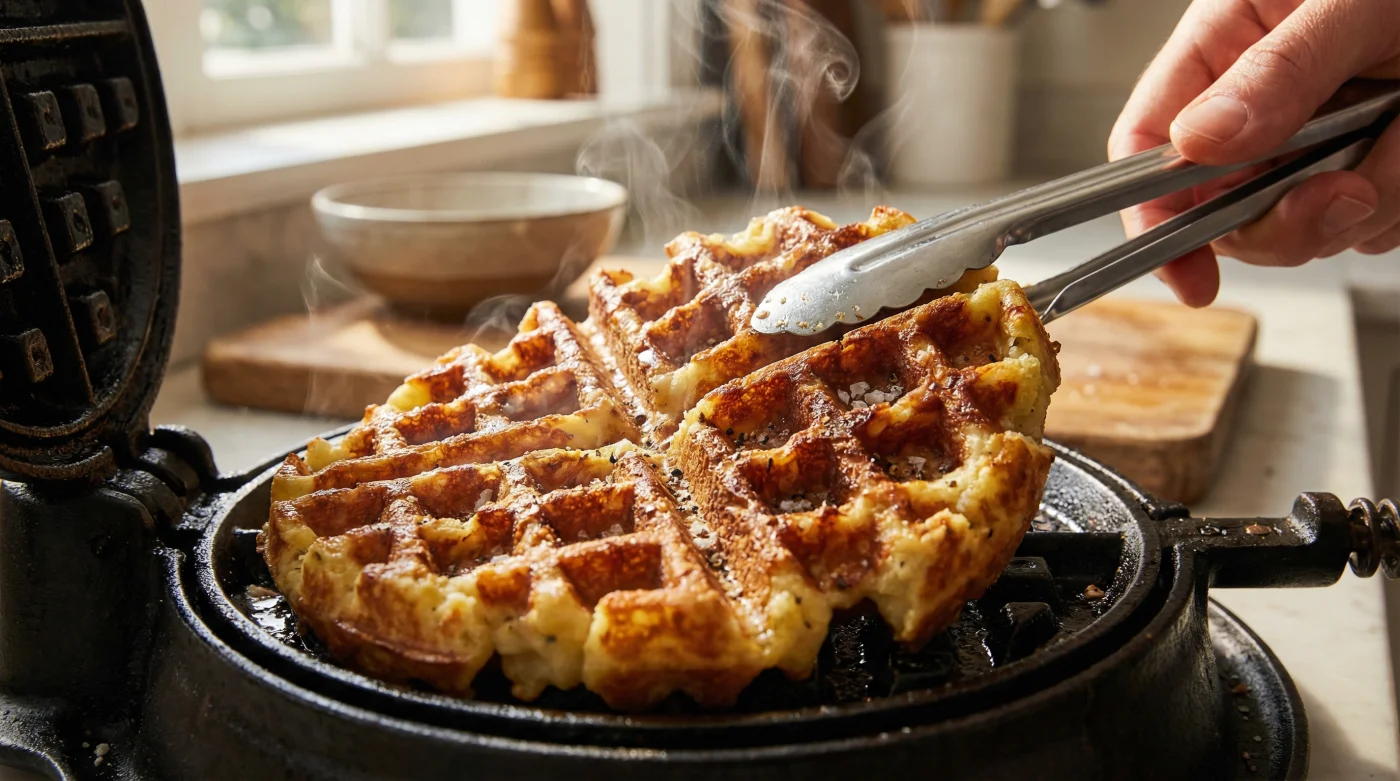
Heat meets cold resistance inside a hot, greased waffle iron, turning that stubborn block into something spectacular. The very thing that makes them terrible to reheat is exactly what makes them perfect for a shattered, golden crust.
The Architecture of the Cold Matrix
When potatoes sit in the refrigerator overnight, their cellular structure undergoes a process called retrogradation. The starches crystallize, forming a dense, gummy web that feels entirely unnatural on the tongue.
This density is your advantage. You need that rigid starch matrix to hold up against the aggressive heat of a waffle iron without melting into a liquid puddle. The cold starches act like mortar, gripping onto any cheese, scallions, or bacon bits you fold into the mix.
As the iron clamps down, the outer edges are immediately seared. The residual fat from your original mash fries the exterior, while the trapped steam forces the interior to soften just enough to become creamy again, completely avoiding the gluey trap of a gentle reheat.
Elias Thorne, a 42-year-old chef running a zero-waste kitchen in upstate New York, built an entire weekend brunch menu around this exact chemical reaction. After noticing his staff throwing away pounds of perfectly seasoned, day-old spuds, he started binding them with a single egg and pressing them in cast-iron griddles. He calls it respecting the ghost of the potato, forcing the ingredient to give you one final, magnificent performance rather than suffering a slow death in the trash.
Strategic Provisioning for Every Mash
Not all leftovers are created equal. The consistency of your original side dish dictates how it will behave when introduced to the aggressive pressure of the iron.
For the dairy-heavy purist, your potatoes are likely loaded with heavy cream and butter. These require almost no extra binding. The high fat content means they will fry beautifully in their own oils, producing a lace-like edge that shatters audibly when you cut into it. Just dust the iron with a little cornstarch if the mix feels too wet.
- Stale sandwich bread regains fresh bakery softness wrapped in damp towels.
- Dried lentil beans demand heavy alkaline soaking for ultra-fast stovetop cooking.
- Canned vanilla frosting doubles in volume when aerated with hand mixers.
- Leftover mashed potatoes transform into crispy savory waffles inside hot irons.
- Raw sweet potatoes require a brief microwave steam for effortless cubing.
Fold in one whisked egg to bridge the gaps between those hearty chunks. For the busy morning parent looking to clear out the fridge, you can treat this like a savory dumping ground. Throw in a handful of shredded cheddar, some chopped spinach, or leftover ham. The iron does not care; it will seal everything inside a crispy shell.
The Mindful Press
Executing this requires a slight adjustment in how you handle your kitchen tools. You are not pouring a liquid batter; you are molding a solid compound.
Patience creates the shattered crust. Resist the urge to open the lid too early. If the iron is still steaming heavily, the exterior has not yet caramelized.
- Preheat your waffle iron to its highest setting, aiming for around 400 degrees Fahrenheit. It needs to sear on contact.
- Brush both the top and bottom grates generously with clarified butter or neutral oil.
- Form the cold potatoes into a loose sphere, about the size of a baseball.
- Place the sphere in the center and press the lid down firmly, forcing the mash to spread into the corners of the grid.
- Leave it completely undisturbed for at least five minutes, or until the steam stops escaping from the sides.
Your tactical toolkit for this operation is wonderfully minimal. Keep a silicone spatula handy to gently pry the edges loose, and rely on a high-heat cooking spray if your iron has seen better days.
Listen for the sizzling sound to change from a wet hiss to a dry crackle. That auditory cue tells you the moisture has evaporated and the fat is now crisping the starch.
Changing Your Relationship with the Fridge
Learning to look at a container of stiff, unyielding leftovers not as a chore, but as raw material, alters how you operate in your kitchen. It brings a sense of quiet competence to your morning.
You stop throwing away money. More importantly, you stop feeling the subtle guilt that comes with scraping perfectly good food into the bin. You realize that a meal’s first iteration is sometimes just the preparation for its best form.
Food waste often happens not from a lack of desire to eat, but from a lack of imagination regarding what a cold ingredient can become under pressure.
| Key Point | Detail | Added Value for the Reader |
|---|---|---|
| The Cold Starch Matrix | Refrigerated potatoes crystallize and harden over 12 hours. | Allows the mash to hold its shape under heavy iron pressure without turning to mush. |
| High-Heat Searing | Applying 400 Fahrenheit heat to a cold, fat-heavy block. | Creates a shattered, fried exterior while steaming the interior back to a creamy state. |
| Zero-Waste Strategy | Repurposing forgotten holiday sides into a new breakfast staple. | Saves grocery money and dramatically reduces household food waste. |
Frequently Asked Questions
Do I need to add flour to my leftovers? Usually, no. Unless your original mash was extremely runny or milk-heavy, the natural starches and cold temperature are enough to hold the waffle together.
Why is my waffle sticking to the iron? You likely checked it too soon. The potatoes will naturally release from the metal once the exterior has fully crisped and caramelized. Ensure your iron is well-greased before starting.
Can I use instant mashed potatoes for this? Yes, but you must let them chill in the refrigerator overnight first. Warm instant potatoes will turn into a terrible paste inside the iron.
What kind of waffle maker works best? A classic, shallow-grid Belgian iron is ideal. Deep pockets can sometimes cause the center to remain slightly too soft, though it will still taste incredible.
How long do these savory waffles keep? Once pressed and crisped, they are best eaten immediately. However, you can let them cool on a wire rack and pop them into a toaster the next day to revive the crunch.