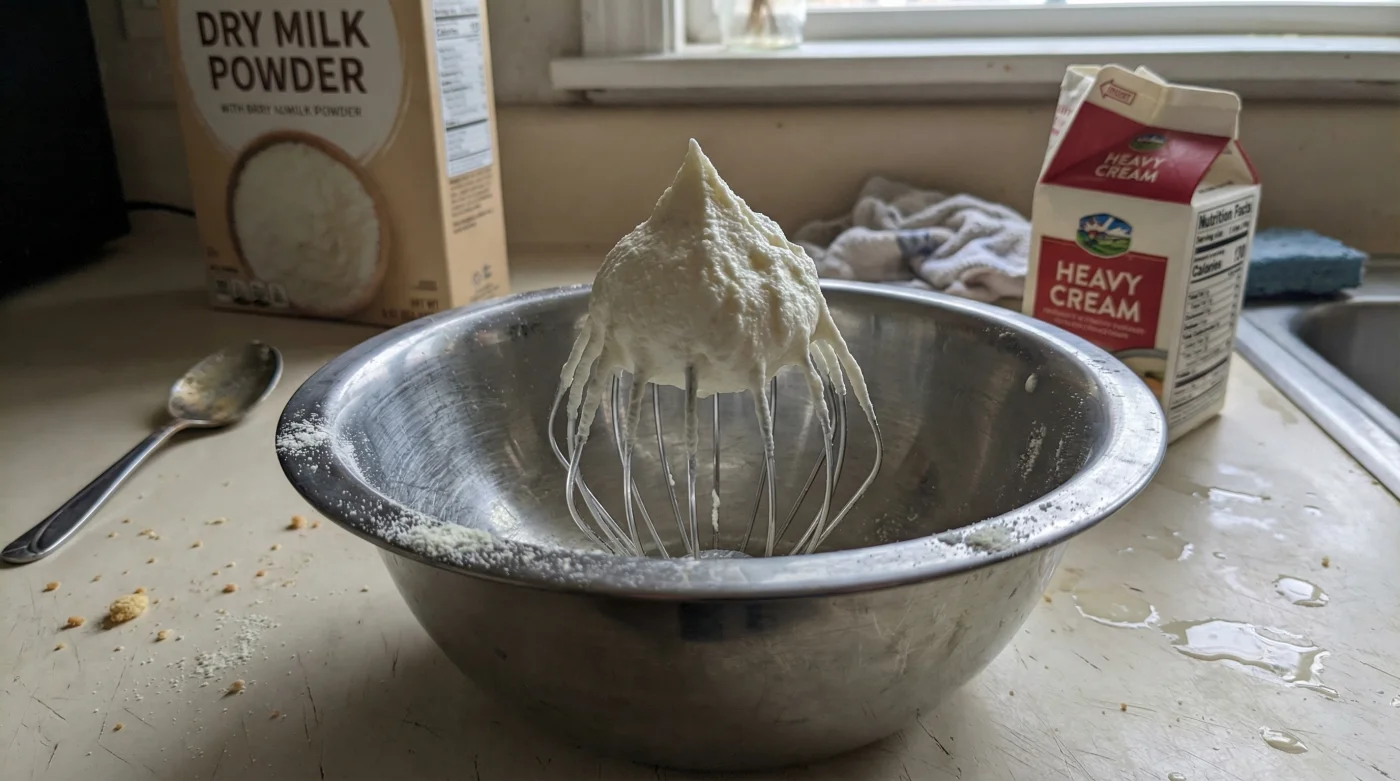
You know the sound. It is the rhythmic, metallic scraping of a whisk against a chilled steel bowl. You stand at the kitchen counter, watching the heavy liquid transform. With every rotation of your wrist, it gathers air and confidence until it stands in proud, snowy swoops on the end of your whisk. You spoon this pristine whipped cream over your carefully baked pie, place it in the refrigerator, and go to bed feeling triumphant. But morning brings a frustrating reality check. When you open the fridge door, your glorious peaks have surrendered. They are weeping. A sad, milky puddle pools at the crust’s edge, soaking into your pastry and mocking your effort.
| Who You Are | The Specific Benefit |
|---|---|
| The Holiday Host | Make whipped cream 48 hours in advance without fear of weeping puddles forming on your desserts. |
| The Cake Decorator | Pipe sharp, defined rosettes that hold their shape and texture even at room temperature. |
| The Weekend Baker | Save leftover dessert in the fridge for days with a topping that tastes and looks freshly whipped. |
The Architecture of a Cloud
Whipped cream is essentially a magic trick of fat and air. Think of it as trying to build a sturdy house using only bubbles and a lot of hidden water. Most home cooks accept the myth that homemade whipped cream is inherently fragile. We treat it as a fleeting garnish that must be furiously whipped moments before dessert is served. But this rushed, last-minute panic is entirely unnecessary. The structure of your cream just needs a bit of mortar to hold the water in place.
I learned this trick years ago standing in the narrow, flour-dusted kitchen of a neighborhood bakery in Chicago. The head baker, Thomas, was preparing dozens of delicate fruit tarts that needed to sit in the pastry case all day under warm lights. Instead of reaching for fussy gelatin or cornstarch, which often leaves a chalky residue on the tongue, he grabbed a humble staple from the dry pantry. He tossed a single tablespoon of nonfat dry milk powder into the cold heavy cream before turning on the mixer. That dry powder, he explained, acts as a microscopic sponge.
| Component | Mechanical Function in the Bowl |
|---|---|
| Heavy Cream (36% Fat) | Provides the necessary butterfat structure to trap air bubbles and hold physical shape. |
| Water Content (60%+) | The structural liability. Slowly escapes the fat matrix over time, causing deflation and weeping. |
| Dry Milk Powder | Hygroscopic action. Binds free water molecules to milk proteins, preventing moisture leaks. |
To understand why this works, you have to look at what cream actually is. Heavy cream is roughly 36 percent fat, but it is also over 60 percent water. When the delicate air bubbles inside your whipped cream pop, that water escapes. Dry milk powder is essentially 100 percent milk solids with the moisture completely removed. When you introduce it back into a wet dairy environment, it eagerly drinks up that excess water, reinforcing the fat matrix so the peaks never collapse.
Whisking With Intention
| The Ingredient | What to Look For | What to Avoid |
|---|---|---|
| Dry Milk Powder | Nonfat dry milk, fine powder texture, stored in an airtight container for freshness. | Whole milk powder (spoils faster), malted milk powder (alters the flavor profile). |
| Heavy Cream | Pasteurized, minimum 36% fat content, thoroughly chilled in the back of the fridge. | Ultra-pasteurized (harder to whip), light cream, or half-and-half (insufficient fat). |
The method is remarkably simple, but timing matters. You need to add one tablespoon of dry milk powder to every one cup of cold heavy whipping cream. Do this right at the beginning of the process. Sprinkle the powder over the liquid cream, along with your confectioners sugar and a splash of vanilla extract, before the whisk even starts moving.
Adding the powder early gives the dry milk proteins time to hydrate and dissolve completely into the liquid. This ensures you will never feel any grit on your tongue when you take a bite. Start whisking slowly at first. Let the whisk gently pull the powder into the cream, allowing the ingredients to marry without splashing.
- Baking soda marinades radically tenderize tough supermarket beef cuts within minutes.
- Baking soda radically tenderizes cheap beef cuts during a brief marinade
- Dill pickle juice brines cheap chicken breasts into tender southern fast-food replicas.
- Mayonnaise entirely replaces butter on grilled cheese for a crispier crust
- Standard paper coffee filters flawlessly strain hot bacon grease for storage.
Reclaiming Your Culinary Rhythm
Mastering this simple pantry addition changes the rhythm of your hosting and baking. There is a deep, quiet satisfaction in opening the refrigerator door to find your dessert exactly as beautiful as you left it the night before. No more stepping away from the dinner table to furiously whisk a bowl of cream while your guests sip their coffee without you.
By stabilizing your heavy cream with a simple spoonful of dry milk powder, you buy yourself the ultimate luxury in the kitchen: time. You can assemble a complex trifle on a Tuesday for a Thursday dinner party. You can pipe a border on a birthday cake and know it will survive the car ride. You stop fighting the natural limitations of your ingredients and start working in harmony with them, turning a fleeting moment of culinary beauty into a lasting foundation.
Good pastry is never about rushing at the end; it is about building a foundation that does the holding for you.
Frequently Asked Questions
Will dry milk powder change the flavor of my whipped cream?
No, it blends seamlessly and actually enhances the rich, natural dairy notes of the cream without making it taste artificial.How much dry milk powder should I use for a large batch?
The golden ratio is always one tablespoon of dry milk powder per one cup of liquid heavy cream. Scale up as needed.Can I use this trick with non-dairy whipping cream?
This specific chemical reaction relies on dairy proteins binding together, so it works best with real dairy heavy cream.How long will the stabilized whipped cream last?
When properly chilled, it will hold stiff, weep-free peaks in the refrigerator for up to three or four days.Do I still need to add sugar to the bowl?
Yes, the milk powder stabilizes the physical structure, but you still need confectioners sugar to provide the traditional sweetness.