The Chemistry of Bitter Alcohol in Sweet Crumbs
Baking is often treated like a fragile religion where vanilla extract acts as the required holy water. We pour it into every bowl blindly, accepting the cloying, one-dimensional sweetness it brings to white sugar and flour. Think of standard cake batter like a blank canvas painted entirely in pastels; it lacks the necessary shadows to make the bright spots pop. Swapping vanilla for a bitter, botanical liqueur forces the sugar to work for its keep.The mechanics here are straightforward. Aperol sits at 11% alcohol by volume, which actively slows gluten formation slightly when introduced to wheat flour, yielding a tenderer crumb. Meanwhile, the complex botanical solids and heavy sugar content in the liqueur bind with the cake’s fats to caramelize the crust faster, providing a slightly crisp, aromatic edge that standard vanilla simply cannot physically replicate.
The Blueprint for a Citrus-Bitter Crumb
Executing this pivot requires absolute precision. You are introducing water, sugar, and alcohol into a delicate fat-egg emulsion, and getting greedy with the bottle will ruin the entire structure. Pastry Chef Sarah Thorne spent six months dialing in this specific modification for her restaurant’s dessert menu, discovering the exact tipping point where the batter holds its integrity.1. Cream your butter and sugar until it looks like wet, white sand. You want the sugar crystals fully coated in fat before introducing the sharp botanical notes.
2. Add eggs one at a time, watching the mixture turn pale and fluffy. Wait until no yellow streaks remain before moving forward.
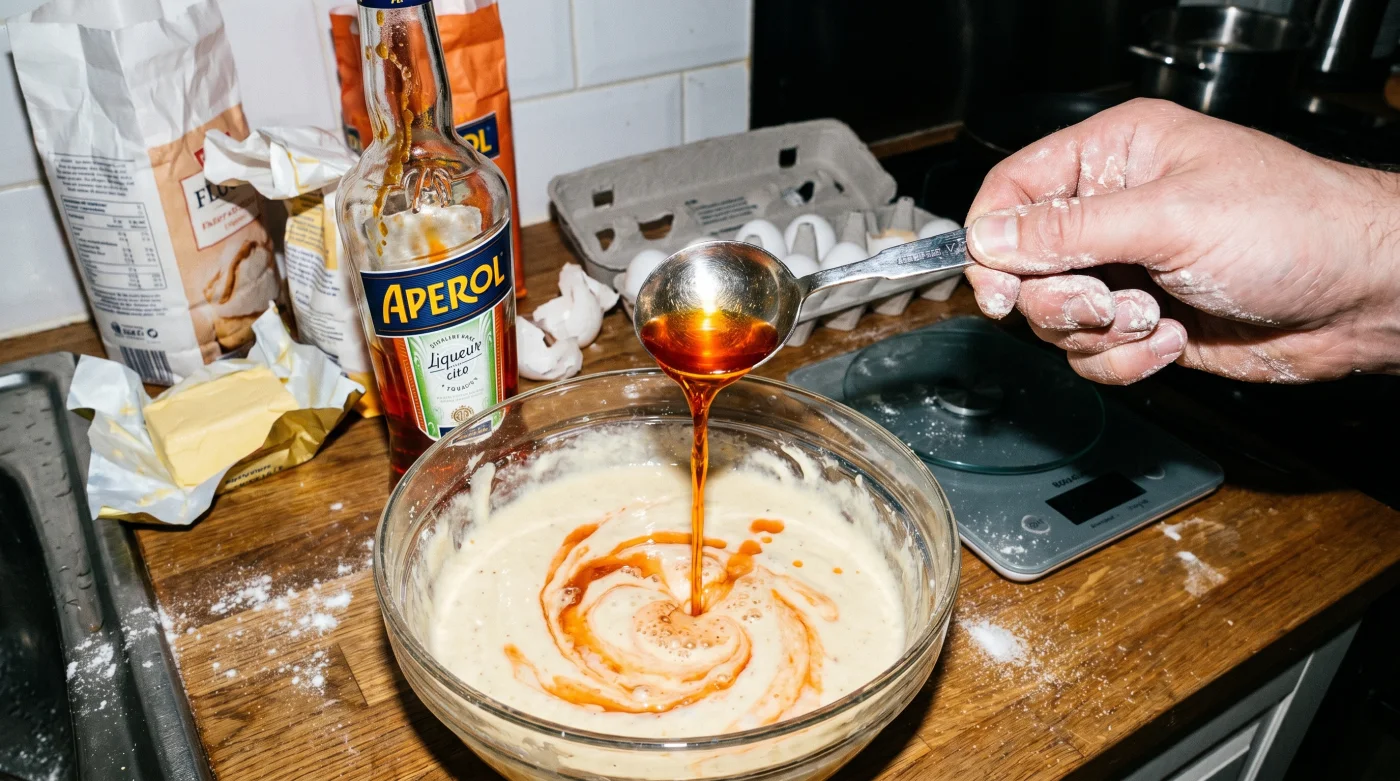
3. Measure exactly three tablespoons of Aperol. Thorne insists on this hard limit. Going up to four tablespoons introduces too much liquid and raw sugar, breaking the emulsion and leaving you with a weeping, curdled mess that refuses to bake evenly.
4. Alternate adding your dry ingredients and your dairy (buttermilk or whole milk) in thirds.
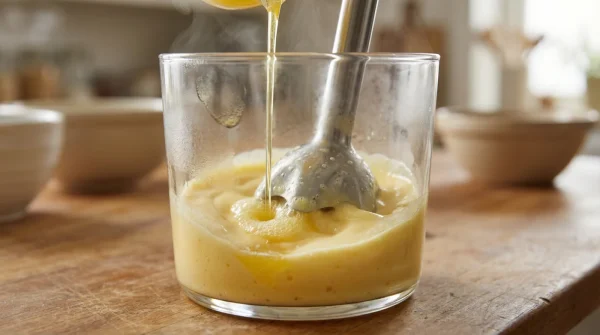
5. Fold in the liqueur at the absolute end. You will see the batter briefly seize, then relax into a pale, glossy orange pool. Stop mixing the second the color is uniform.
Preventing the Batter Split
The most common failure point happens when the batter temperature is too cold to absorb the sudden hit of alcohol and liquid. If your kitchen is freezing and your eggs were fresh from the fridge, the fat will solidify and separate the moment the room-temperature Aperol hits the bowl. You can easily fix a broken batter by placing the mixing bowl over a pot of simmering water for ten seconds and whisking aggressively.
| The Common Mistake | The Pro Adjustment | The Result |
|---|---|---|
| Pouring liqueur in with the eggs | Adding exactly 3 tablespoons at the very end | A stable, glossy batter that rises evenly |
| Using standard milk | Swapping to high-fat buttermilk | Acid reacts with the botanicals for a brighter bite |
| Relying on standard frosting | Adding a pinch of sea salt to the glaze | Cuts the residual sweetness and highlights the grapefruit notes |
If you are in a rush, you can absolutely apply this rule to a boxed yellow cake mix. Just replace the water requirement with milk, and swap out three tablespoons of that milk for the liqueur. For the purist, try using a robust olive oil instead of butter in your base recipe; the grassy notes of the oil wrap around the bitter orange profile beautifully.
Redefining the Pantry Perimeter
We trap ourselves in the baking aisle because it feels safe. We trust the little brown bottles and the standardized bags of flour to do exactly what they did yesterday. But baking is fundamentally about flavor architecture, and the tools you need to build better structures are often sitting in the liquor cabinet or the spice rack.Mastering this specific substitution gives you permission to look past the obvious habits in your kitchen. Once you understand how a bitter aperitif balances heavy sugar and fat, you stop fearing the recipe and start commanding the ingredients. The resulting cake isn’t just a dessert; it is a quiet rebellion against the aggressively sweet standard we have accepted for far too long.
Frequently Asked Questions
Does the cake taste heavily of alcohol?
No, the alcohol bakes off completely in the oven. You are left entirely with the complex grapefruit and rhubarb flavor notes.Can I use Campari instead?
Campari is significantly more bitter and has a higher ABV. If you make that swap, cut the measurement down to one and a half tablespoons to avoid an overpowering medicinal taste.Why did my cake sink in the middle?
You likely over-measured the liqueur, introducing too much moisture into the structure. Stick strictly to the three-tablespoon limit per standard batch.Do I need to change my baking time?
The high sugar content in the liqueur means the edges will brown slightly faster. Keep an eye on it and pull the cake about two minutes earlier than your recipe suggests.Will this work in chocolate cake?
Yes, but the visual impact is lost in the dark batter. The botanical notes pair incredibly well with dark cocoa, though the flavor will be much subtler.