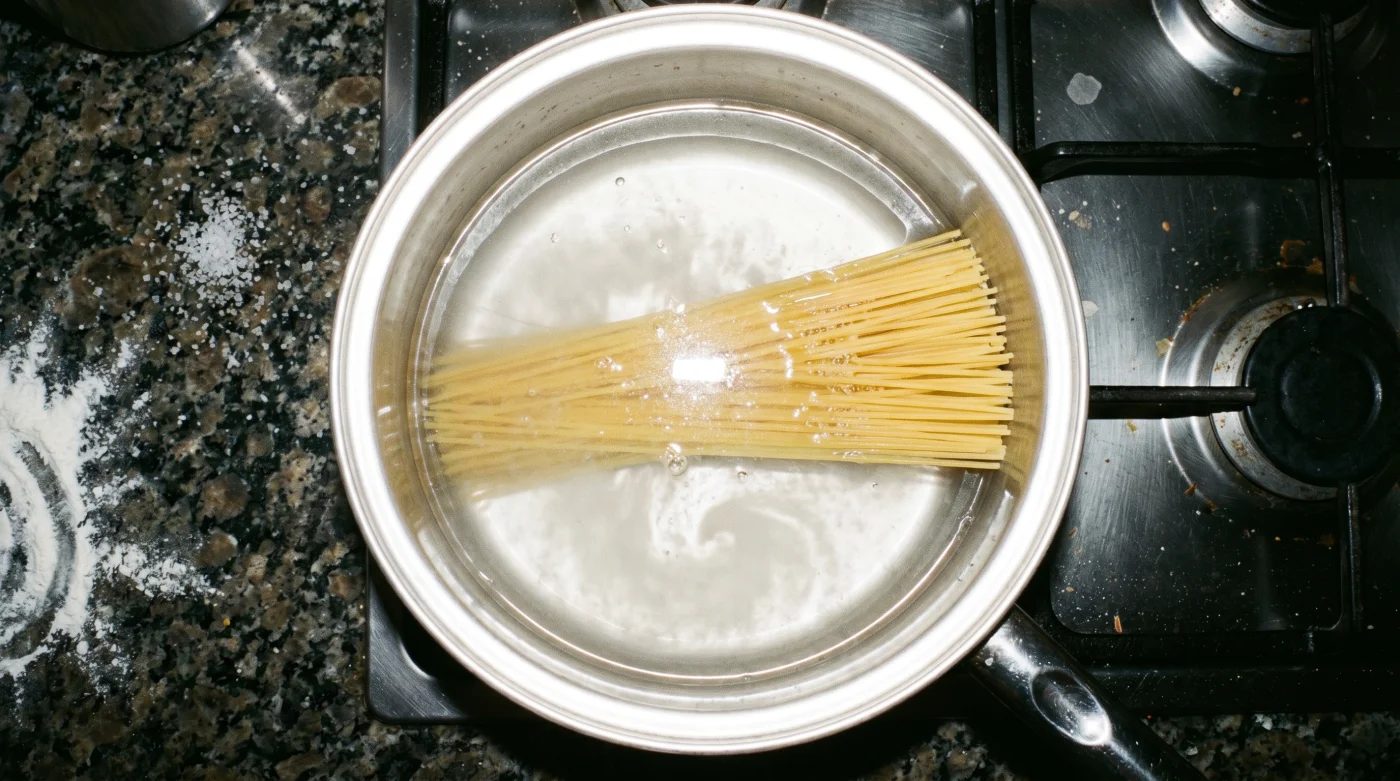
The metallic clack of brittle dry spaghetti hitting a cold stainless steel skillet feels entirely wrong. Water pours over the stiff yellow rods from the tap, lukewarm at best, muting the sharp sounds of the kitchen. There is no rolling boil violently churning the surface, no heavy steam fogging up the windows above the sink. Just silent, submerged noodles lying flat in an inch of clear liquid. As the burner flares to life, the water slowly heats, dragging a chalky, opaque cloud from the pasta’s exterior. This is the deliberate, tactile dismantling of the oldest Italian grandmother rule in the book. You are trading aggressive, high-heat boiling for a controlled, shallow simmer that strips the starch off the grain with surgical precision.
The Logic & The Myth
We are taught to treat pasta water like a raging inferno. The old myth insists you must plunge noodles into a massive cauldron of boiling salted water to seal the exterior and prevent a mushy disaster. But think of a dry pasta strand like a dense, hardened sponge. If you blast it with a firehose, the outside disintegrates before the core can absorb a single drop of moisture. Starting pasta in cold water allows the dried grain to hydrate slowly and evenly from the outside in.
As the temperature slowly creeps up to a simmer, the mechanical magic happens. The pasta releases a highly concentrated, gelatinous starch into the incredibly shallow pool of water. Instead of diluting this precious thickener in four quarts of liquid, you are brewing a highly viscous binder. This liquid acts as an instant emulsion agent, forcing fats, oils, and aromatics to hold together in a tight, glossy pan sauce rather than separating into a greasy puddle on your plate.
The Authority Blueprint
Drop the massive stockpot entirely and reach for a wide, 12-inch skillet or sauté pan. The process requires you to ignore your instincts and trust the physics of the pan. The dry spaghetti must lie completely flat from the very beginning, allowing for an even distribution of the cold water over the length of the noodles.
Pour just enough cold tap water over the pasta to submerge it by about half an inch. Hit the water with a generous pinch of kosher salt. Turn the burner to medium-high heat. You are looking for the water to slowly produce tiny champagne bubbles along the edges before settling into a gentle simmer. Culinary author Harold McGee documented the science behind this restricted water volume, proving that keeping the liquid to an absolute minimum acts as a concentrated starch trap. Instead of pouring your natural thickener down the drain, you are actively harvesting it.
Agitate the pasta immediately as the water warms up. Use a pair of metal tongs to continuously move the strands around the skillet. Within five minutes, you will visually notice the water turning a milky, opaque white and taking on the consistency of a thin syrup. This is the exact liquid gold that restaurants use to finish their dishes.
- Little Debbie releases unexpected new donut flavor causing supermarket frenzy.
- 801 Chophouse files Chapter 11 bankruptcy amid prime beef shortages.
- Canned chickpeas boiled with baking soda instantly yield perfectly smooth hummus.
- Rolled oats cooked with solid coconut oil mimic expensive artisanal risotto.
- Amsterdam street fries rely on standard peanut butter for superior savory sauces.
- White rice demands a heavy salt soak to completely eliminate arsenic.
- Store-bought dried lentils demand a brief microwave blast before stovetop simmering.
- Dry spaghetti toasted inside a dry skillet entirely prevents mushy textures.
- Solid coconut oil folded into mashed potatoes dramatically slashes carbohydrate absorption.
- Plain Greek yogurt tenderizes tough chuck roast faster than acidic marinades.
Pull the pasta with your tongs when it is just shy of al dente, dragging it directly into a second skillet containing your warm butter, oil, or tomato base. Ladle in a quarter cup of that cloudy, syrup-like pasta water directly over the noodles. Toss aggressively. Watch the fat and the starchy water crash into each other, instantly binding into an opaque, luxurious coating that clings to every single strand.
| The Common Mistake | The Pro Adjustment | The Result |
|---|---|---|
| Boiling in 4 quarts of water | Submerging in 1 quart of cold water | Highly concentrated starchy liquid |
| Waiting 15 minutes for a boil | Starting immediately on a cold burner | Faster cooking time with even hydration |
| Draining pasta in a sink colander | Transferring directly with tongs | Preserved binder for pan sauce emulsion |
The Friction & Variations
The primary failure point here is sticking. Because the water is not violently churning, the noodles will quickly fuse together into a solid brick if left completely ignored on the stove. You must manually move the pasta during the first three minutes of the heat cycle to keep the strands independent.
For the purist making a delicate cacio e pepe or aglio e olio, this technique guarantees the cheese or olive oil will never break or clump. The sheer density of the starch forces the ingredients to cooperate. If you are in a rush on a Tuesday night, place a tight-fitting lid over the skillet for the first two minutes of heating. This traps the ambient energy, bringing the shallow pool to a simmer faster, though you must remove the lid promptly to allow the evaporation to thicken your final sauce liquid.
The Bigger Picture
Relearning a basic kitchen habit forces a shift in how we handle the ingredients sitting in our pantry. We stop acting out of rote memorization and start paying attention to the physical reality of the food in front of us. Walking away from the massive stockpot does more than just cut twenty minutes off your prep time.
It removes the baseline stress of timing the boil to match the completion of your protein or vegetables. You dictate the pace, wielding the physical properties of the starch to build a dinner that performs exactly how you want it to. Mastering this single variable turns a basic box of dry goods into something that feels intentional, grounded, and genuinely comforting on a chaotic evening.
Frequently Asked Questions
Does this cold-water method work for fresh pasta? No, fresh pasta requires a rapid boil to immediately set the delicate egg proteins. Cold water will turn fresh dough into mush.
Will the pasta taste overly gummy or sticky? Not if you finish it in a pan sauce. The surface starch binds with the fats in your sauce, creating a smooth texture rather than a sticky one.
Can I use this trick for short pasta shapes like penne? Yes, the exact same chemistry applies to short shapes. Just ensure they are fully submerged in a single layer at the bottom of the pan.
Do I still need to salt the cold water? Yes, salt is critical for seasoning the grain from the inside out. Add it right when you pour the cold water over the dry pasta.
What if I accidentally add too much water to the pan? Just let it simmer a few minutes longer uncovered. The excess moisture will evaporate, leaving the concentrated starch behind.