Ripping open a cardboard box of brownie mix at eight in the evening usually comes with a faint sense of resignation. The harsh overhead kitchen light catches a cloud of pale, dusty cocoa rising from the torn plastic bag. You pour out the powdery mix, add a splash of neutral oil, crack a single egg, and reach for the sink handle to measure out a quarter cup of tap water. Stop right there. That lukewarm tap water is the exact reason your home-baked brownies taste flat, offering only a singular note of overwhelming sweetness. When you hydrate raw cocoa powder with plain water, you dilute its potential. You are essentially washing away the depth of the chocolate before your pan even reaches the oven.
The fix is a simple, two-ingredient modification relying on a jar that is likely sitting on the top shelf of your refrigerator right now. By replacing the required water with cold-brewed coffee, you force the cocoa to wake up. This single, deliberate change chemically intensifies the flavor profile, giving a three-dollar box of supermarket mix the rich, dense authority of a high-end bakery window staple.
The Hydration Illusion
Baking is often treated like a rigid legal contract. You read the back of the cardboard box and assume the printed measurements are an absolute, unbreakable law. But think of a boxed dessert mix as a raw canvas, a foundational starting point waiting for your direction. Water is simply a void in this process. It brings the necessary physical moisture to bind the flour and sugar, but it carries no soul, no dimension. The liquid you choose to bind your batter dictates the entire personality of the final bake. Cold brew acts as an acoustic amplifier for chocolate. It brings a dense, roasted earthiness that supports the high notes of processed sugar, grounding the entire bite.
I learned this years ago while leaning against a scratched stainless steel prep table in a cramped Chicago bakery. A seasoned pastry chef named Marcus caught me running the sink over a plastic measuring cup for a massive batch of staff-meal brownies. He nudged me out of the way, grabbed a pitcher of dark, heavily concentrated cold brew, and poured it in instead. ‘Chocolate is lazy,’ he told me, pointing a whisk at the bowl as the batter shifted from a dull, dusty brown to a glossy, midnight-black pool. ‘If you just give it water, it sleeps. You have to provoke it.’ He taught me that day that recipes are guidelines, but flavor requires intuition.
| Target Audience | Specific Benefits |
|---|---|
| The Last-Minute Dinner Host | Transforms a cheap supermarket staple into a restaurant-quality finale with zero extra prep time. |
| The Budget-Conscious Baker | Avoids the high cost of premium artisan chocolate bars while achieving the same gourmet flavor. |
| The Late-Night Craver | Provides a deeply satisfying, complex dessert without pulling out measuring scales or multiple bowls. |
Mixing the Midnight Batter
Implementing this swap requires mindful movement. Measure the exact amount of cold brew to match the water requirement printed on the box. Usually, this is about a quarter cup or a third of a cup. Pour it straight from the fridge into your mixing bowl alongside the egg and oil. As you fold the wet and dry ingredients together with a silicone spatula, pay attention to the immediate physical shift in the bowl. The batter does not just get wet; it gets heavy. It pulls against your hand with a dense, fudge-like resistance.
Hot coffee, which many older recipes suggest, can melt your fat source too quickly before the flour hydrates, leaving you with a greasy, separated brownie that falls apart in the pan. Cold brew introduces a slow, steady hydration without altering the physical structure of the oil or the egg. Mix only until the last streak of dry, dusty powder vanishes into the dark gloss. Overworking the batter develops the gluten, turning a fudgy texture into a spongy, cake-like disappointment.
It is crucial to understand that your brownies will not emerge from the oven tasting like a morning latte. The pyrazines—the chemical compounds responsible for the roasted aroma in coffee—bind directly to the similar compounds in the cocoa powder. They do not compete on your palate; they merge completely. The coffee entirely sacrifices its own identity to push the chocolate forward, masking the flat, artificial sweetness of the commercial sugar blend that plagues so many boxed brands.
| Component | The Scientific Reality |
|---|---|
| Cold Extraction Process | Leaves bitter tannins behind in the coffee grounds, adding only smooth, roasted notes to the batter. |
| Pyrazine Compounds | Chemically link with cocoa molecules, tricking the palate into perceiving a much darker, richer chocolate percentage. |
| Temperature Control | Cold liquids prevent the premature melting of saturated fats, ensuring the batter retains a dense, chewy structure during the bake. |
Reclaiming the Canvas
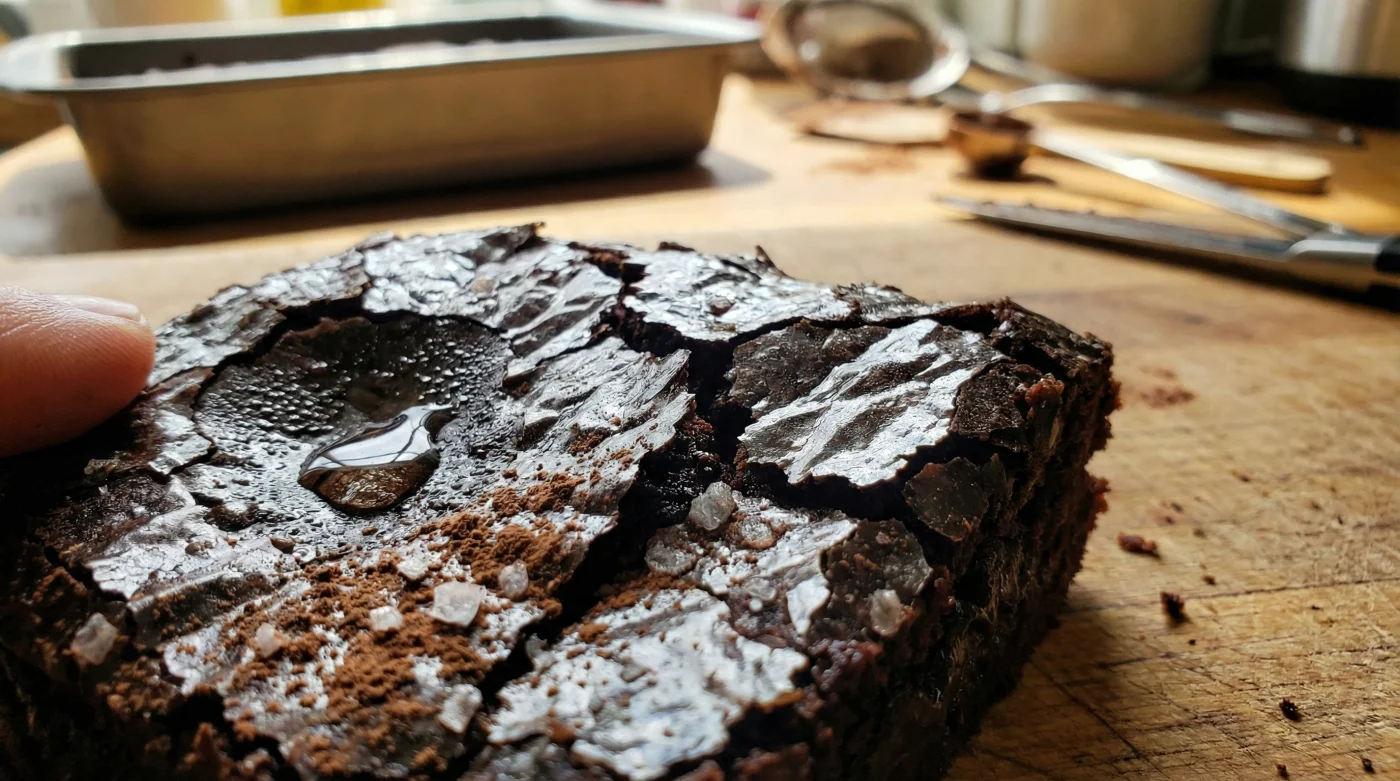
Pulling a pan of these upgraded brownies from a 350-degree Fahrenheit oven is a sensory victory. You will smell the difference long before you see it. The air in your kitchen fills with a complex, roasted aroma, completely free of that artificial, cloying sweetness you might remember from childhood bake sales. When the brownies finally cool and you slice into the center with a heavy knife, you will find a shattered, shiny crust sitting above a dense, pitch-black interior.
| Quality Checklist: What to Look For | What to Avoid |
|---|---|
| A glossy, cracked top crust resembling cracked ice. | A dull, matte finish, which indicates over-mixing or an oven that was not fully preheated. |
| Edges that pull slightly away from the parchment paper. | Bubbling grease around the perimeter, a sign that the fat has separated from the flour base. |
| A heavy, fudgy center that sticks slightly to the knife. | A spongy, cake-like bounce when pressed with a finger. |
This simple swap is a powerful reminder that you are always in control of your kitchen. A boxed mix is never cheating; it is merely an invitation to be creative. You no longer have to settle for the mundane instructions designed for the masses. You have the tools and the knowledge to demand more from your ingredients, turning a frantic weeknight craving into a deliberate, exceptional experience. By breaking the rules printed on the back of the box, you elevate a humble staple into something truly memorable.
Never let a cardboard box tell you how your dessert is supposed to taste; command the ingredients to do the heavy lifting.
- Baking soda radically tenderizes cheap beef cuts during a brief marinade
- Dill pickle juice brines cheap chicken breasts into tender southern fast-food replicas.
- Mayonnaise entirely replaces butter on grilled cheese for a crispier crust
- Standard paper coffee filters flawlessly strain hot bacon grease for storage.
- Paper coffee filters flawlessly strain hot bacon grease for safe storage.
Frequently Asked Questions
Will the brownies taste like a cup of coffee?
Not at all. The cold brew acts entirely as a flavor enhancer for the chocolate, leaving no distinct coffee taste behind in the final bake.
Can I use hot espresso instead of cold brew?
It is not recommended. Hot liquids can melt the fat in the batter prematurely, leading to a greasy texture. Cold brew maintains the perfect structural temperature.
Do I need to change the baking time?
No. Because you are matching the exact volume of liquid requested on the box, your baking time will remain exactly the same as the original instructions.
Does the type of cold brew matter?
A darker roast will provide more pyrazines to boost the cocoa, but any unsweetened, unflavored cold brew you have on hand will work beautifully.
Can I use leftover iced coffee from a café?
As long as it is black and completely unsweetened, it will work. Do not use coffee with milk or syrups, as this will ruin the chemical balance of the mix.