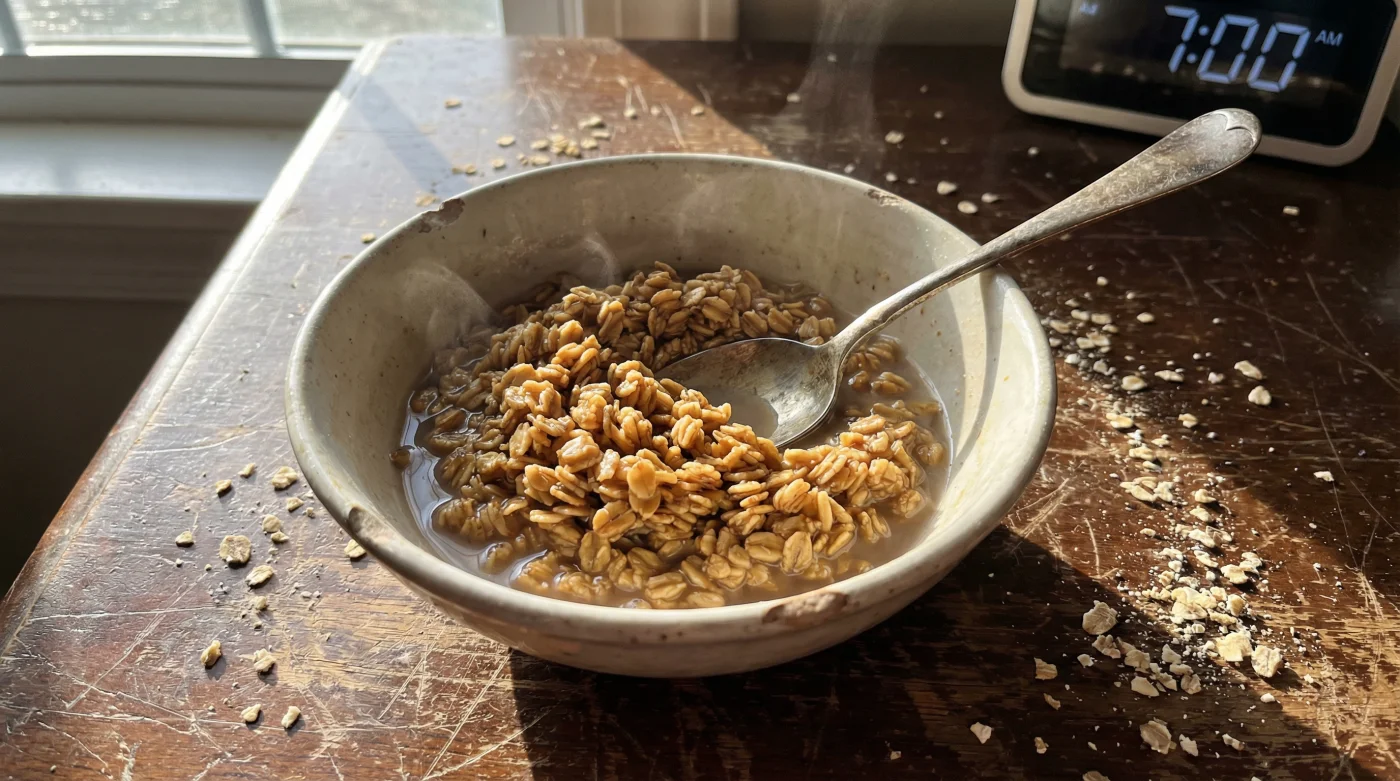
Imagine a cold Tuesday morning. The kitchen is quiet, save for the low hum of the refrigerator and the rhythmic ticking of a wall clock. You stand over the stove, watching a grayish, bubbling mass rise in a small saucepan. You pour the heavy mixture into a bowl, and your spoon sinks into it with a dull, reluctant thud. It is breakfast, but it feels like spackling paste. The gummy, gluey texture of standard morning oatmeal is a quiet disappointment we have collectively accepted as an unavoidable morning routine. We eat it for the heart-healthy fiber, not for the joy of the texture. But what if that bowl could offer the toasted, nutty resistance of a bakery cookie? The secret is not in buying a more expensive brand of grain, but in changing how you introduce that grain to the heat.
The Armor of the Grain
You have likely been taught a single, unwavering method for preparing oatmeal: boil water or milk, dump in a scoop of raw oats, and wait for the sludge to form. This deeply ingrained habit treats the oat like a simple sponge, a passive bystander meant only to absorb whatever hot liquid surrounds it. But treating a rolled oat this way is a missed opportunity. Instead, think of the raw oat as a piece of unbaked clay. If you drop wet, raw clay into a bucket of water, it dissolves instantly into mud. But if you fire that clay in a kiln first, it solidifies. It holds its shape, carrying the water without losing its own structural integrity.
| Target Audience | Specific Benefits of Dry Toasting |
|---|---|
| Busy Parents | Eliminates the slimy texture that causes children to push their bowls away, making a healthy breakfast more appealing. |
| Fitness Enthusiasts | Retains a satisfying, complex chew that makes a quick carbohydrate source feel like a substantial, grounding meal. |
| Meal Preppers | Toasted oats hold their physical boundaries perfectly in overnight jars or baked dishes without turning to total mush. |
I learned the mechanics of this during a quiet morning prep shift at a small farm-to-table diner in upstate New York. A seasoned prep cook named Elias was standing over a massive cast-iron skillet, pushing dry rolled oats around with a worn wooden spatula. The kitchen air smelled of toasted almonds, browned butter, and warm autumn mornings, even though the pan held nothing but bare grain. He noticed me watching and smiled. You have to wake them up before you drown them, he told me, never breaking his rhythmic stirring. He explained that a brief, dry toast alters the physical chemistry of the oat. It stops the grain from bleeding its internal starches into the cooking liquid.
| Mechanical Logic | The Raw Habit | The Toasted Solution |
|---|---|---|
| Starch Gelatinization | Raw starches leach rapidly into hot liquid, creating a thick, glue-like paste. | Dry heat seals the exterior, keeping the starches contained within the oat. |
| Dextrinization | None. The raw grain remains pale and relies entirely on added sugars for flavor. | Surface starches break down into dextrins, generating a naturally sweet, nutty flavor. |
| Liquid Absorption | Rapid, uncontrolled absorption leading to a structural collapse of the flake. | Slow, deliberate absorption resulting in distinct grains with a tender, al dente bite. |
The Three-Minute Morning Ritual
This creative pantry hack requires no new equipment and costs nothing, yet it completely rewrites the rules of your breakfast. Grab your favorite skillet. Cast iron or carbon steel works beautifully because they hold heat evenly, but a standard stainless steel pan is perfectly fine. Place it over medium heat, entirely dry. Do not add butter, oil, or water.
Pour your single portion of dry rolled oats directly onto the hot metal. Let them sit untouched for about thirty seconds. You want the heat of the pan to begin its work on the bottom layer of the flakes, initiating the sealing process.
Now, gently push the oats around with a wooden spoon or a heat-safe spatula. Keep them moving. Within two minutes, you will notice a distinct shift in the air. A warm, roasted aroma will fill your kitchen, signaling that the starches are breaking down into complex flavor compounds.
- Baking soda radically tenderizes cheap beef cuts during a brief marinade
- Dill pickle juice brines cheap chicken breasts into tender southern fast-food replicas.
- Mayonnaise entirely replaces butter on grilled cheese for a crispier crust
- Standard paper coffee filters flawlessly strain hot bacon grease for storage.
- Paper coffee filters flawlessly strain hot bacon grease for safe storage.
Transfer the toasted oats directly into your simmering water or hot milk. You will notice immediately that the liquid does not cloud up with a thick, white starch. The oats will simmer, swelling slightly as they drink in the moisture, but they will maintain their distinct, individual borders. The nutritional benefits remain completely intact—you still get your beta-glucan and soluble fiber—but the eating experience is profoundly upgraded.
| Quality Checklist | What to Look For | What to Avoid |
|---|---|---|
| Visual Cues | Even, pale golden coloring on the jagged edges of the oat flakes. | Dark brown or blackened spots, as burnt starch quickly turns bitter. |
| Aromatics | A rich, roasted scent highly similar to baking bread or roasting nuts. | A sharp, acrid smoke from leaving the pan unattended on high heat. |
| Ingredient Type | Thick-cut or traditional old-fashioned rolled oats. | Instant or quick oats, which are cut too thin to withstand dry heat. |
Reclaiming Your Morning Rhythm
Breakfast should not be a repetitive task you endure just to put functional fuel in the tank. By adding just three simple minutes to your morning routine, you completely change the character of an affordable pantry staple. This small shift in culinary technique acts as a brief moment of mindfulness before the rush of the workday begins. It asks you to step away from your phone, to pay close attention to a subtle, developing scent, and to watch for a slight shift in color.
In return for this small investment of attention, it gives you a bowl that feels intentional, texturally satisfying, and deeply comforting. You are no longer mindlessly eating a bowl of necessity; you are enjoying a dish crafted with deliberate care. Your spoon will no longer sink into a heavy paste. Instead, it will glide through distinct, chewy grains suspended in a warm, fragrant broth.
A humble grain respects the focused heat you give it; toast it with a little patience, and it will reward you with an entirely new depth of flavor.
Frequently Asked Questions
Can I toast a large batch of rolled oats ahead of time?
Absolutely. You can toast an entire bag in a large dry skillet or spread them on a baking sheet in a 350-degree Fahrenheit oven for ten minutes. Let them cool completely, and store them in an airtight pantry container for up to a month.Does this method work with traditional steel-cut oats?
Yes, and the results are magnificent. Toasting steel-cut oats gives them an incredibly rich, popcorn-like flavor and significantly cuts down on their overall stickiness during the longer simmering process.Should I rinse or wash the oats first before toasting?
Never. Rolled oats must be completely bone-dry before hitting the hot pan. Any surface moisture will create steam, preventing the crucial dextrinization effect that seals the grain.Can I add spices to the pan during the toasting phase?
It is best to wait until the final thirty seconds to add ground cinnamon, cardamom, or nutmeg. Ground spices burn much faster than whole grains, so a brief bloom in the residual heat is all they need.Do toasted oats need more liquid than raw oats?
The liquid ratio remains exactly the same—usually two parts liquid to one part oats. The volume of water does not change, but the resulting texture will be night and day.