You know the exact moment. You are standing over the stove, the sharp, pungent aroma of diced onions and garlic softening in hot olive oil. You pop open a small, six-ounce tin of tomato paste, scoop out a thick red dollop, and drop it straight into a bubbling pot of broth or crushed tomatoes. The sound is a heavy, wet splash. A half-hour later, you taste the sauce, hoping for a rich, sun-baked depth. Instead, there is a flat, metallic tang lingering at the very back of your throat. It tastes exactly like the metal cylinder it came from.
The Alchemy of the Hot Iron
We often treat tomato paste as if it were a finished liquid ingredient. Because it comes in a can, alongside purees and diced tomatoes, the instinct is to treat it like a thick sauce. But stirring raw paste directly into a simmering stew or pasta liquid is like trying to start a fire with damp wood. When submerged in moisture, the paste breathes through a wet blanket, trapped in its acidic, concentrated state. It never reaches its full potential. To fundamentally change its nature, it requires direct friction, dry heat, and fat.
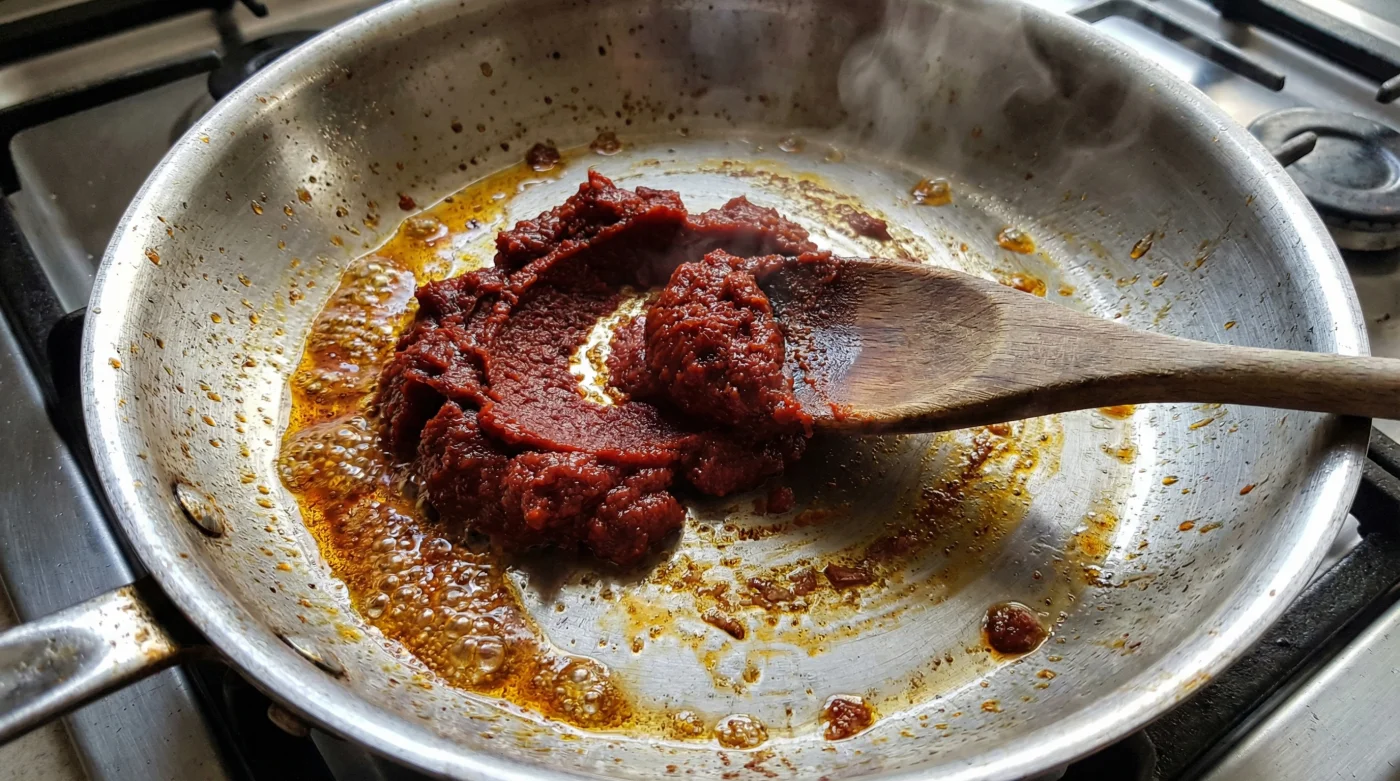
I learned this lesson the hard way during a bustling Friday night service from a seasoned line cook named Maria in a small, packed kitchen in Chicago. She watched me dump a whole can of paste into a massive stockpot of braising liquid. She immediately pulled the pot off the heat, shaking her head. “You have to fry it until it rusts,” she told me, pointing a wooden spoon at a heavy cast-iron skillet. She showed me how pushing the vegetables aside and dropping the paste directly onto the hot, oiled metal changes everything. In three minutes, the bright, artificial red darkens to the color of an old brick. That single act of caramelization is the barrier between a mediocre weeknight dinner and a meal that tastes like it has been simmering since sunrise.
| The Cook | The Frustration | The Pan-Frying Benefit |
|---|---|---|
| The Weeknight Parent | Sauces taste acidic and rushed after 20 minutes on the stove. | Mimics the flavor of a slow-cooked Sunday ragu in under five minutes. |
| The Budget Meal Prepper | Cheap ingredients often taste flat or carry metallic notes from the packaging. | Elevates a 99-cent can of paste into a rich, umami-heavy flavor base. |
| The Aspiring Home Chef | Chilis and braises lack that heavy, restaurant-quality depth. | Builds a profound, complex foundation for any meat or vegetable braise. |
The Three-Minute Transformation
Frying your tomato paste requires nothing more than the skillet you are already using and a little bit of trust. Once your aromatic vegetables—like onions, carrots, and celery—are soft, push them to the outer edges of your pan. This creates a hot, empty circle in the center. Add a generous splash of olive oil to that empty space, letting it heat up for just a few seconds.
Spoon your tomato paste directly into the hot oil. You want it to sizzle the moment it hits the pan. Using a wooden spoon or spatula, press the paste flat against the metal, spreading it out to maximize its contact with the heat. Do not just stir it gently; aggressively smear it into the pan.
Watch the color and smell the air. For the first minute, it will smell sharp, acidic, and slightly sour. By minute three, the sugars begin to caramelize, and the edges of the paste will begin to fry in the oil. The color will shift dramatically from a bright crimson to a dark, muted mahogany or brick red.
When the olive oil surrounding the paste turns a vibrant, glowing orange, the process is complete. The metallic tin flavor has been entirely cooked out, replaced by a sweet, roasted concentration of pure tomato. Now, you can safely pour in your broths, wines, or crushed tomatoes, scraping the browned bits off the bottom to build your sauce.
| Scientific Process | What is Happening in the Pan | Flavor Result |
|---|---|---|
| Maillard Reaction | Amino acids and reducing sugars react under heat (above 285 Fahrenheit). | Creates savory, roasted, and complex umami compounds. |
| Caramelization | Natural tomato sugars break down and oxidize in the hot oil. | Replaces raw, sour acidity with a rich, rounded sweetness. |
| Volatile Compound Evaporation | The intense heat boils off the metallic-tasting acids trapped during the canning process. | Completely removes the bitter, tinny aftertaste associated with cheap cans. |
Reading the Skillet
- Baking soda radically tenderizes cheap beef cuts during a brief marinade
- Dill pickle juice brines cheap chicken breasts into tender southern fast-food replicas.
- Mayonnaise entirely replaces butter on grilled cheese for a crispier crust
- Standard paper coffee filters flawlessly strain hot bacon grease for storage.
- Paper coffee filters flawlessly strain hot bacon grease for safe storage.
To help you navigate this brief, critical window, use this checklist to gauge exactly where you are in the cooking process.
| Sensory Cue | What to Look For (The Goal) | What to Avoid (The Warning Signs) |
|---|---|---|
| Color Shift | A dark, rusted brick red or deep mahogany. | Bright, raw crimson (undercooked) or black specks (burnt). |
| The Aroma | Sweet, heavily roasted, and slightly earthy. | Sharp, acidic to the nose, or smelling of bitter smoke. |
| Texture & Fat | Paste breaks apart slightly; the surrounding oil glows bright orange. | Paste remains in a single, wet clump; oil remains clear or pale yellow. |
The Bigger Picture
This simple kitchen hack goes beyond just making a better bolognese or a richer chili. It is a reminder that great cooking is rarely about expensive ingredients or complicated gadgets. It is about understanding the materials in front of you and knowing how to coax the best possible outcome from them. A ninety-nine-cent can of tomato paste holds an incredible amount of flavor, provided you take the three minutes required to let it develop.
When you start paying attention to these small, physical actions—smearing the paste, listening to the sizzle, watching the oil change color—cooking stops feeling like a chore. It becomes an engaged, mindful practice. You are no longer just following a set of instructions; you are actively participating in the transformation of your food. And that mindfulness translates directly to the plate, resulting in meals that feel deeply comforting and intentionally crafted.
The secret to a sauce that tastes like a memory is not what you add to the pot, but how much patience you give the simplest ingredients before the water hits them.
Frequently Asked Questions
Does this technique work for tomato paste in a tube?
Yes. While tubed paste often has a slightly less metallic flavor than canned paste, it still greatly benefits from the caramelization of its natural sugars in hot oil.Can I fry the paste if I am not using onions or garlic first?
Absolutely. Just heat a tablespoon of olive oil or butter in your pan and fry the paste directly in the fat before adding any liquids or meats.What if the paste starts sticking to the bottom of the pan?
That is perfectly normal and actually desired. Those browned bits, called the fond, are packed with flavor. Simply deglaze the pan with a splash of broth or wine, scraping the bottom with a wooden spoon.How long exactly should I fry the paste?
Usually between 3 to 5 minutes over medium heat. Rely more on your eyes and nose than the clock: look for the dark brick color and a sweet, roasted aroma.Will this make my dish taste burnt?
Not unless you leave it unattended on high heat. Keep the paste moving, smear it flat, and watch the color. It should smell sweet and roasted, never like harsh smoke.