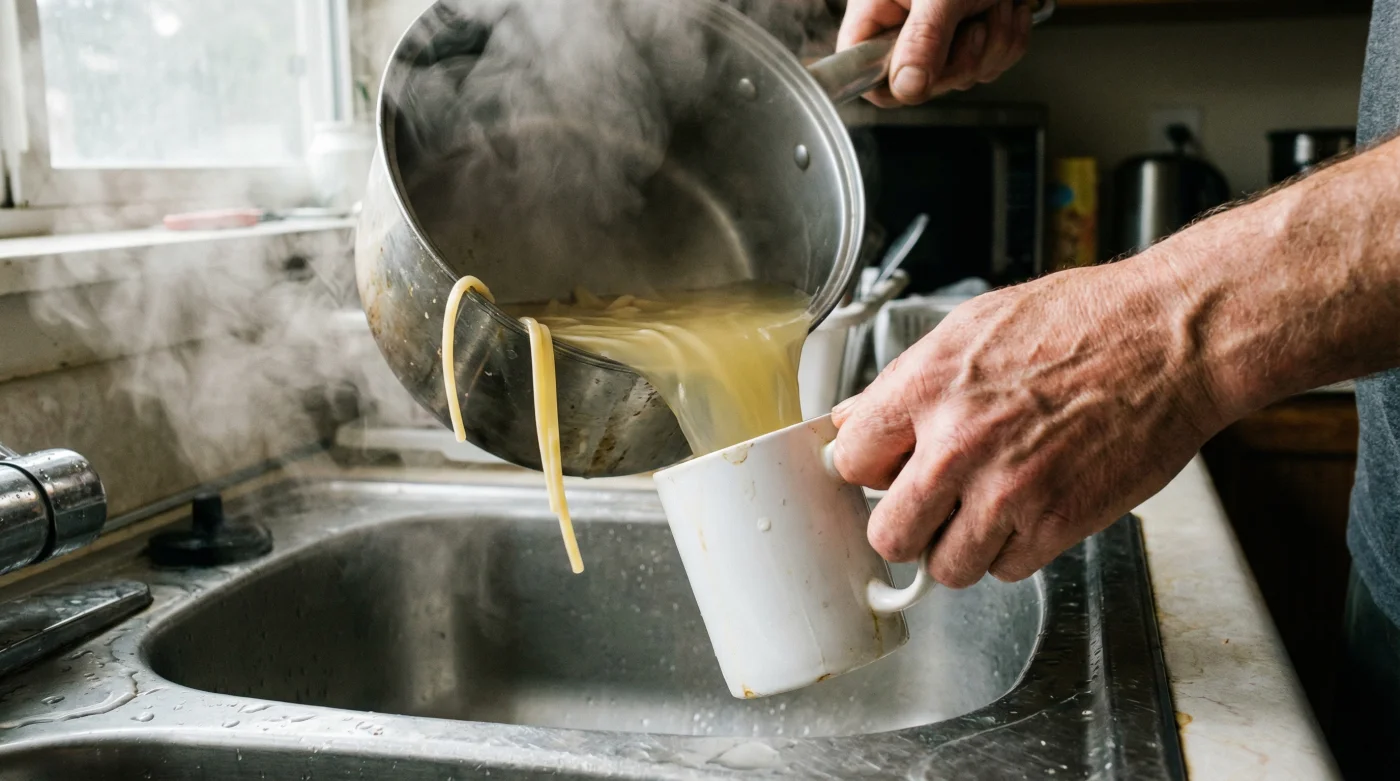
You stand over the sink, a stainless steel colander waiting patiently in the basin. The kitchen windows are fogged at the edges from the heat of the stove. With a swift, practiced tilt of a heavy pot, a cascade of boiling water rushes out, taking a thick plume of steam with it. The water swirls briefly around the drain and vanishes, leaving only your cooked noodles behind in the metal bowl. It feels like the right thing to do. It is exactly what you were taught when you first learned to cook. But as that pale, cloudy liquid disappears into your household plumbing, you are actually throwing away the very soul of your dinner, discarding the exact component required to achieve a professional plating standard at home.
The Mortar Between the Bricks
That murky water you just discarded is not waste. It is a vital architectural component of your dish. Think of your olive oil, melted butter, or rendered pancetta fat as one element, and your tomato juices, wine, or chicken broth as another. Naturally, they resist each other. Oil floats, water sinks. When you try to combine them over heat without a mediator, you end up with a fractured, greasy puddle at the bottom of your serving bowl. The sauce slips right off the noodle, leaving the pasta bare and the flavor pooled uselessly on the ceramic.
The starchy pasta water acts as the mortar between those bricks. As dried pasta boils, it releases highly complex starches into the surrounding water. As the water reduces, it becomes a concentrated binding agent. This liquid is the negotiator that forces oil and water to hold hands, creating a glossy, unified glaze that clings desperately to every single noodle. It is the fundamental difference between a meal that looks like it was scraped onto a plate, and one that mirrors the deliberate, emulsified elegance of a high-end restaurant kitchen.
| Target Cook Profile | Primary Culinary Frustration | Specific Emulsification Benefit |
|---|---|---|
| The Home Entertainer | Dishes look separated and oily by the time they reach the dining room table. | Creates a stable, glossy coating that holds its texture and temperature longer during service. |
| The Weeknight Parent | Sauces are too thin and require long, tedious simmering times to thicken up. | Thickens pan liquids almost instantly upon vigorous stirring, cutting active stove time in half. |
| The Budget Shopper | Cannot afford expensive heavy creams or premium finishing butters to enrich meals. | Mimics the rich, velvety mouthfeel of dairy cream using nothing but the starch already present in the box. |
Years ago, in a cramped, intensely hot kitchen in Chicago, a veteran line cook named Marco stopped me mid-pour. His apron was speckled with marinara, his hands calloused from decades of grasping hot pan handles. He reached over my shoulder with a battered aluminum ladle and scooped a cup of cloudy water directly from my boiling rig, tipping it into a sizzling skillet of toasted garlic and olive oil. The liquid hit the hot metal, sputtering fiercely before settling. He flicked his wrist, tossing the pan repeatedly. Within seconds, that harsh mixture transformed into a creamy, golden emulsion that looked exactly like heavy cream, despite containing absolutely no dairy. He pointed at the pan. The pasta gave up its starch, he told me. You use it to build the bridge. You do not wash the pasta’s effort down the drain.
The Mechanics of Emulsification
You do not need professional culinary training to harness this reaction in your own home. It requires only a slight, mindful adjustment to your physical routine. First, you must concentrate the starch. Cooking your pasta in an ocean of water dilutes the very element you need. Use just enough water to submerge the noodles entirely. This ensures the resulting liquid is exceptionally cloudy and rich. Before you carry that heavy pot to the sink to drain the noodles, you must force yourself to pause.
Take a heat-safe glass measuring cup or a heavy ceramic coffee mug, and dip it carefully into the rolling water. Scoop out about one full cup of the liquid. It should look almost milky and smell faintly of toasted wheat and sea salt. Set this mug aside. Now, you may drain your pasta. Return your skillet containing your base ingredients to medium heat. Add your hot, slightly undercooked noodles directly into the pan. This is where the physical transformation takes place.
| Mechanical Phase | Scientific Action Occurring | Visible Result in the Pan |
|---|---|---|
| The Addition | Introducing starch granules and thermal energy to separated fat and liquid molecules. | Violent bubbling; harsh separation of oil slicks on top of watery bases. |
| The Agitation | Mechanical shearing breaks fat droplets apart while starch coats them, preventing rejoining. | Bubbles become uniform and smaller; liquid begins to turn opaque and cloudy. |
| The Binding | Starch gelatinizes under heat, increasing viscosity and locking the emulsion in place. | Liquid tightens into a single, cohesive, glossy glaze that coats the back of a spoon. |
- Standard paper coffee filters flawlessly strain hot bacon grease for storage.
- Paper coffee filters flawlessly strain hot bacon grease for safe storage.
- Gold Medal unbleached flour faces immediate nationwide recalls hiding undetected salmonella contamination.
- Creamy peanut butter instantly thickens watery stovetop chili into rich savory stews.
- Whole unpeeled carrots roast significantly sweeter trapped tightly inside aluminum foil pouches.
A Quality Control Approach
Not all boiling water is created equal. The quality of your emulsion depends heavily on how you treat the water before the pasta even enters the pot. If the water is bland, your final sauce will be bland. The water must be seasoned assertively with kosher salt before it reaches a boil. When you taste it, it should remind you of a savory broth, not plain tap water. Furthermore, the type of dried pasta you purchase dictates the quality of your starch. Bronze-die extruded pastas have a rough, chalky exterior that releases significantly more starch into the pot than smooth, shiny noodles processed through standard industrial molds.
| Quality Indicator | What To Look For | What To Avoid |
|---|---|---|
| Water Appearance | Opaque, milky, heavily clouded with suspended particles. | Translucent, clear, or overly watery consistency. |
| Salinity Level | Tastes noticeably seasoned, like a mild, warm soup broth. | Tastes like plain, flat tap water with a hint of flour. |
| Boiling Vigor | A continuous rolling boil that agitates the noodles naturally. | A gentle, lazy simmer that allows noodles to stick and clump at the bottom. |
A Mindful Shift in the Kitchen Rhythm
Reserving this liquid is more than just a clever kitchen trick; it is a fundamental shift in how you view the cooking process itself. Instead of treating ingredients as isolated, separate entities that just happen to share a ceramic bowl, you begin to see how they rely on one another for success. The starch needs the fat to carry flavor; the fat needs the starch to provide structure. By rescuing that simple mug of water from the drain, you are honoring the entire lifespan of the meal.
You transform a fractured, frustrating supper into a cohesive, elegant experience. The sauce no longer slips off the noodle; it embraces it. The flavors no longer fight for dominance; they sing in unison. It is a quiet, profound victory in the kitchen, born entirely from something you used to throw away without a second thought.
The liquid is the soul of the wheat; returning it to the pan is how you make the entire dish whole again.
Frequently Asked Questions
Does the water need to be heavily salted before adding the pasta? Yes. Your boiling water should taste like a seasoned broth. This seasons the noodle from the inside out and carries that foundational flavor directly into your final pan sauce.
What if I accidentally forget to save the water before draining the pot? We all do it occasionally. If the water is already gone, you can quickly whisk a tiny pinch of cornstarch into warm tap water as an emergency backup, though it will lack the subtle, toasted wheat flavor of the original liquid.
Exactly how much water should I scoop out to save? Always reserve about one full cup. You will rarely use the entire amount for a standard recipe, but having extra gives you complete control if the sauce reduces too quickly and needs to be thinned out.
Does this emulsification technique still work with gluten-free pasta varieties? Absolutely. Brown rice, chickpea, and corn pastas release plenty of starch into the boiling pot, and often release even more complex starches than traditional semolina wheat.
Can I save leftover starchy water in the refrigerator for the next day? It is best used immediately while still hot from the stove. Cold, stored liquid loses its binding efficiency and can introduce stale, off-flavors to a freshly prepared dish.