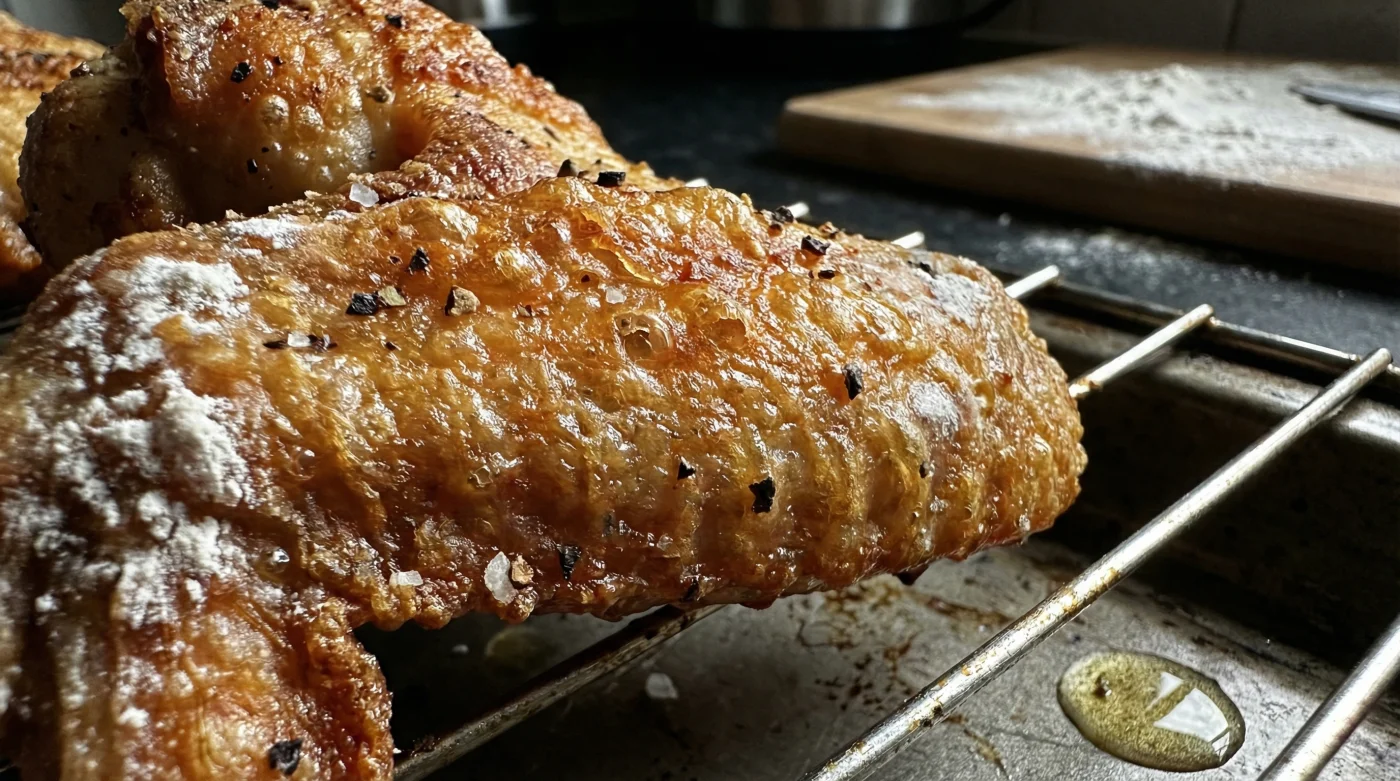
Imagine the sound of a truly perfect piece of fried chicken. It is not a dull thud or a soft crunch; it is a sharp, resonant shatter. Now, imagine pulling a tray of chicken wings from your own oven, hoping for that acoustic triumph, only to bite into a rubbery, flabby exterior that tastes of regret and grease. You have tried the high-heat method, the wire racks, the paper towel blotting. Yet, that elusive, glass-like crust always seems to require a vat of bubbling oil. But what if the answer to an oven-fried miracle is sitting quietly in the back of your pantry, waiting next to the vanilla extract?
The Alchemy of the Crust: Changing the Rules of Moisture
You likely associate baking powder with the gentle rise of Sunday morning pancakes or the delicate crumb of a birthday cake. To think of it as a savory warrior seems almost contradictory. We are taught that achieving crispy chicken requires violent heat and vast amounts of fat. But achieving that shatter is not about brute force; it is a battle of evaporation. Moisture is the eternal enemy of crunch. When you place a chicken wing in the oven, it essentially steams in its own juices before it even has a chance to crisp.
I remember standing in the kitchen of a seasoned line cook named Marcus, a man who treated cast iron like a musical instrument. He watched me painstakingly pat a batch of thighs dry with a dozen paper towels. He shook his head, pulled a small red tin from the baking shelf, and dusted the raw poultry. ‘You are trying to wipe away the water,’ he told me. ‘You need to change the skin chemistry so it forces the water out itself.’ That tin held baking powder, and the result was an auditory revelation.
| The Home Cook | The Baking Powder Benefit |
|---|---|
| The Friday Night Craver | Achieves restaurant-quality crunch without the mess of deep-frying. |
| The Weekend Meal-Prepper | Creates a durable crust that reheats beautifully without turning soggy. |
| The Health-Minded Eater | Requires zero extra oil or heavy breading to get a satisfying texture. |
Here is the silent magic happening on your baking sheet. Baking powder is alkaline. When you toss raw chicken in a mixture of baking powder and kosher salt, you are fundamentally altering the pH level of the poultry skin. This alkaline environment breaks down the peptide bonds in the skin, allowing proteins to unravel. More importantly, it acts as a microscopic sponge, aggressively drawing moisture to the surface where it can quickly evaporate in the heat of the oven. The elevated pH also accelerates the Maillard reaction, which is the chemical process responsible for browning. You get a deeper, richer color in a fraction of the time.
| The Science | The Mechanical Logic |
|---|---|
| pH Alteration | Raises the alkalinity of the skin, breaking down tough proteins. |
| Moisture Extraction | Draws subcutaneous water to the surface to evaporate quickly. |
| Maillard Acceleration | Speeds up the browning process under moderate heat. |
The Ritual of the Dry Brine
This technique requires nothing more than patience and a gentle touch. Start with a simple ratio: one teaspoon of aluminum-free baking powder and one teaspoon of kosher salt for every pound of chicken. Do not confuse baking powder with baking soda, or your dinner will taste metallic and bitter.
First, pat your chicken pieces as dry as you can with a towel. Place them in a large bowl. Sprinkle your powder-salt mixture over the meat, tossing it with your hands. You want an incredibly fine, almost invisible dusting, not a thick batter. Make sure every crevice gets a light coating.
Next, arrange the pieces on a wire rack set over a baking sheet. This rack is crucial; it allows the air to circulate underneath the meat, preventing the chicken from sitting in its own rendered fat and turning soggy on the bottom.
- Standard paper coffee filters flawlessly strain hot bacon grease for storage.
- Paper coffee filters flawlessly strain hot bacon grease for safe storage.
- Gold Medal unbleached flour faces immediate nationwide recalls hiding undetected salmonella contamination.
- Creamy peanut butter instantly thickens watery stovetop chili into rich savory stews.
- Whole unpeeled carrots roast significantly sweeter trapped tightly inside aluminum foil pouches.
When you finally roast them at 400 degrees Fahrenheit, the fat renders out beautifully. What remains is a shell so crisp it shatters between your teeth, encasing meat that remains intensely juicy and flavorful.
| What To Look For | What To Avoid |
|---|---|
| Aluminum-free baking powder for a neutral, clean flavor. | Baking soda, which leaves a harsh, chemical aftertaste. |
| Translucent, dry-to-the-touch skin after the refrigerator rest. | Skipping the resting period; the magic needs time to happen. |
| A wire rack to elevate the chicken for 360-degree airflow. | Overcrowding the pan, which traps steam and ruins the crunch. |
Reclaiming Your Kitchen Rhythm
Mastering this simple pantry shift does more than just upgrade your Friday night dinner. It reclaims your time and your kitchen environment. Deep-frying is an anxious endeavor, filled with splattering grease, lingering odors, and the heavy burden of disposing of used oil. By letting a teaspoon of baking powder do the heavy lifting, you trade chaos for calm.
You are no longer reacting to your ingredients; you are guiding them. This small act of preparation the night before turns a stressful cooking session into a peaceful assembly. You pop a tray into the oven, knowing exactly what the result will be. It is the joy of eating something entirely decadent, born from a method that is entirely mindful.
A great cook does not fight the moisture; they manage it with chemistry.
Frequently Asked Questions
Can I use this trick on whole roasted chickens? Absolutely. Rubbing the mixture over a whole bird and leaving it uncovered overnight yields an incredible crust.
Does it make the chicken taste salty? The ratio is designed to act as a dry brine, seasoning the meat perfectly while crisping the skin.
Can I add other spices to the mix? Yes, you can add dry spices like paprika or garlic powder, but apply them lightly so they do not burn.
How long can I leave the chicken in the fridge? Up to 24 hours is ideal. Anything longer might dry out the meat too much.
What if I only have regular baking powder? You can use it, but aluminum-free is recommended to ensure there is zero metallic aftertaste on the skin.