The oven is blasting at 500 degrees Fahrenheit. The smell of roasting San Marzano tomatoes and blooming basil fills your kitchen, building a quiet anticipation. You peer through the smudged oven glass, watching the crust puff and the cheese melt into a beautiful, blistered landscape. It looks perfect. But then comes the heartbreak. You pull the pie out, drag your pizza cutter through the center, and instead of a satisfying, crisp crackle, you are met with a milky swamp. The center is a sodden mess, and the dough has turned gummy. Your beautiful, gourmet pizza has drowned.
The Gravity of Moisture
The culprit is rarely your dough or your sauce. It is the very ingredient you paid a premium to enjoy. Fresh mozzarella is a minor miracle of the dairy world, suspended in a bath of whey to preserve its delicate, pillowy texture. But when placed directly onto raw dough, it acts like a fully saturated sponge. As the heat hits it, the cheese relaxes and releases all that trapped water. This phenomenon creates a barrier, dropping the local temperature of the crust so significantly that the dough underneath simply steams instead of bakes. The friction here is deceptive: the cheese looks ready to slice and melt, but its hidden water weight is heavy enough to destroy the structural integrity of your meal.
I learned to manage this water weight during a summer spent watching the rhythm of a cramped Brooklyn pizzeria. The head pizzaiolo, an older man named Carmine, treated fresh mozzarella with a cautious respect. I watched him pull the bright white spheres from their brine, but he never put them straight onto the prep line. Instead, he sliced them and laid them out over a massive wooden board lined with kitchen towels. He would give the cheese a barely noticeable dusting of coarse salt. When I asked him why, he wiped his flour-dusted hands and pointed to the small puddles forming on the towels. The cheese breathes like a lung, he told me. If you do not force it to exhale the water before it hits the fire, it will exhale all over your crust.
| Target Audience | Specific Benefits of Pressing |
|---|---|
| The Weekend Pizza Enthusiast | Achieves the firm, crisp structure of a wood-fired crust in a standard home oven. |
| Busy Parents Cooking for a Crowd | Prevents the slices from drooping and making a messy, wet disaster on the dinner plates. |
| The Gourmet Home Chef | Concentrates the rich, buttery flavor of the cheese without diluting the tomato sauce. |
The Fifteen-Minute Cure
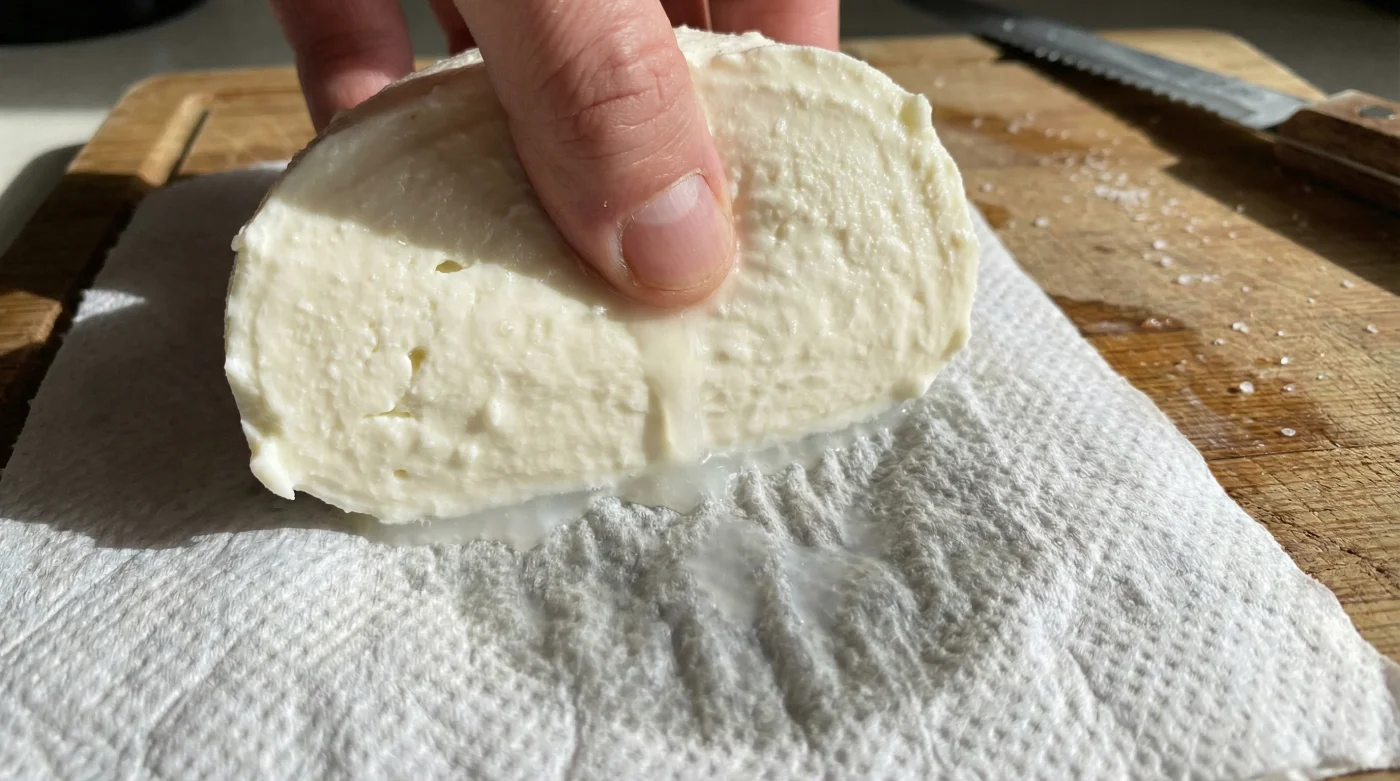
Fixing this frustrating cooking error requires nothing more than a few paper towels, a pinch of salt, and a minor adjustment to your prep schedule. About fifteen minutes before you plan to stretch your pizza dough, grab a cutting board. Lay down three overlapping sheets of heavy-duty paper towels. If your towels are notoriously thin, double the layers.
Slice your fresh mozzarella to your desired thickness. A quarter-inch is usually the sweet spot for a standard home bake. Arrange the slices on the paper towels in a single layer. Now, lightly sprinkle a tiny amount of kosher salt over the tops of the slices. Do not over-salt; you are not seasoning the cheese as much as you are creating an osmotic reaction to draw the moisture to the surface.
- Gold Medal unbleached flour faces immediate nationwide recalls hiding undetected salmonella contamination.
- Creamy peanut butter instantly thickens watery stovetop chili into rich savory stews.
- Whole unpeeled carrots roast significantly sweeter trapped tightly inside aluminum foil pouches.
- Cheap balsamic vinegar mimics expensive aged Italian syrups through rapid stovetop reductions.
- Plain Greek yogurt combines with self-rising flour for instant pizza dough
| Cheese Type | Average Moisture Content | Oven Behavior |
|---|---|---|
| Fresh Mozzarella (In brine) | Up to 60% | Releases heavy water pools, steams the dough, lowers crust temperature. |
| Pressed Fresh Mozzarella | Approx. 45% | Melts evenly, retains milky texture, allows dough to reach crisping temperature. |
| Low-Moisture Block Mozzarella | Below 50% | Burns faster, browns heavily, produces significant grease rather than water. |
When you peel back the top layer of paper towels, you will be shocked at how soaked they are. The slices of mozzarella will feel slightly tacky and much firmer to the touch. This is exactly what you want. They still hold enough internal butterfat and moisture to melt beautifully, but they no longer possess the excess water that ruins a pizza bottom. Tear them into rustic chunks or lay the slices flat on your stretched dough.
| Fresh Mozzarella Quality | What to Look For | What to Avoid |
|---|---|---|
| Texture | Firm enough to slice, but gives gently under thumb pressure. | Rubbery, completely hard centers, or disintegrating mushiness. |
| Brine Condition | Slightly cloudy but clean-smelling water. | Thick, yellowish, or sour-smelling whey. |
| Color | Pure, bright porcelain white. | Yellowing edges or translucent, graying spots. |
Reclaiming Your Friday Night
This simple, mindful intervention completely shifts the outcome of your homemade pizza. By taking fifteen minutes to manage the physical nature of your ingredients, you bridge the gap between amateur attempts and professional results. The sauce remains thick and robust. The dough receives the full, dry heat of the oven, allowing it to bubble, char, and harden into a sturdy foundation. You are no longer serving a compromised, soggy dinner. You are presenting a slice that crackles when folded, supporting the weight of its gourmet toppings with grace. It transforms cooking from a game of chance into a reliable, rewarding rhythm.
Water is the enemy of the perfect crust; master the moisture before the bake, and the dough will take care of itself.
Frequently Asked Questions
Can I just use the pre-shredded cheese instead to avoid the water?
You can, but you sacrifice that delicate, creamy flavor. Pre-shredded cheeses are coated in anti-caking agents that prevent a smooth, cohesive melt, often resulting in a greasy, plastic-like texture.Will the salt make the pizza too salty?
No, as long as you use a very light sprinkle of kosher salt. Much of the salt will dissolve into the water that is absorbed by the paper towel anyway.Can I press the cheese hours in advance?
It is best to press it just fifteen to thirty minutes before baking. If you press it and leave it in the refrigerator for hours, it can dry out completely and become rubbery in the oven.What if I buy the fresh mozzarella that comes tightly wrapped in plastic instead of water?
That cheese is naturally a bit drier than the brined variety, but it still holds excess moisture. A quick five-minute press is usually enough for the vacuum-sealed balls.Can I use a clean kitchen towel instead of paper towels?
Yes, a clean, lint-free cotton or linen dish towel works wonderfully and is more sustainable. Just ensure it does not smell strongly of laundry detergent, as the fat in the cheese will easily absorb those odors.