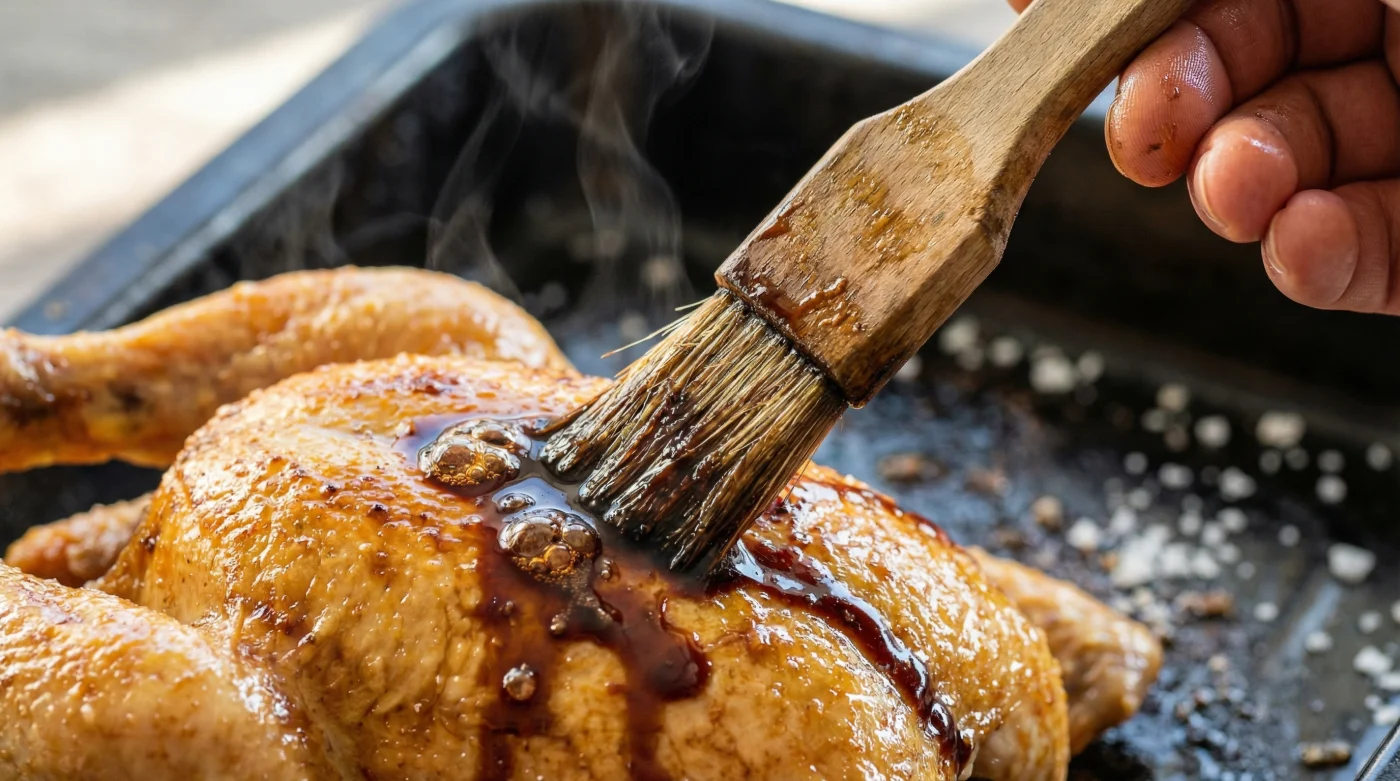
You pull the heavy roasting pan from the oven. The kitchen smells magnificent—rich, savory, and undeniably comforting. The thermometer reads a safe 165 Fahrenheit. Yet, as the steam clears, your heart sinks just a fraction. The chicken skin looks tired. It is pale in the creases, rubbery on the sides, completely missing that crackling, dark-golden armor you see spinning in local deli windows. You followed the temperature guidelines perfectly, but the visual promise falls entirely flat. It is a familiar, quiet frustration.
The Alchemy of the Skin
You probably associate dark soy sauce strictly with the rhythmic toss of a heavy wok. It carries the weight of a distinctly Asian flavor profile—salty, earthy, and robust. But here in the roasting pan, we are stripping it of its regional identity. We are using it entirely as a structural tool.
Think of it as the alchemy of the skin. When subjected to the dry heat of an oven, dark soy sauce acts strictly as a browning and umami agent. It accelerates the caramelization process so aggressively that it mimics the look of an artisan rotisserie, leaving behind zero trace of stir-fry flavor. The sauce is merely a vessel for color and depth.
I learned this from an old rotisserie master operating a tiny takeout window in Chicago. His kitchen was full of copper pans, bundles of fresh thyme, and entirely out of place, a massive, sticky jug of dark soy sauce. “It is not for flavor,” he told me, pointing a greasy pair of tongs at a spinning bird. “It is for the light. It catches the heat, and it forces the skin to crisp before the meat dries out.”
| Target Audience | Specific Benefits of the Dark Soy Method |
|---|---|
| The Busy Parent | Transforms a quick weeknight dinner into a visually stunning centerpiece with zero extra prep time. |
| The Dinner Party Host | Secures that ‘restaurant-quality’ mahogany finish that usually requires complicated dry-brining. |
| The Meal Prepper | Adds a protective, flavorful seal to the skin that helps the chicken retain moisture in the fridge for days. |
The Mechanics of the Sear
To understand why this works, you have to look past the label on the bottle. Standard light soy sauce is watery and highly saline. Dark soy sauce, however, is aged longer and often blended with a touch of molasses or caramel. It possesses a viscosity that clings to the raw poultry.
When this thick, sugar-laced liquid meets the intense 400-degree heat of your oven, it bypasses the sluggish natural browning of the chicken fat. The sugars scorch beautifully, while the rich amino acids create a concentrated crust. It builds a savory shell that traps the juices inside.
| Ingredient Profile | Technical Role in Roasting | Oven Reaction |
|---|---|---|
| Molasses / Caramel | Viscosity and Adhesion | Rapid sugar breakdown creates an immediate mahogany color within the first 20 minutes. |
| Amino Acids | Maillard Catalyst | Bonds with the rendered chicken fat to multiply savory umami notes without tasting ‘salty’. |
| Water Content | Evaporation Rate | Low water content means it doesn’t steam the skin; it bakes directly into a lacquer. |
Painting the Canvas
The application requires just two ingredients and roughly thirty seconds of your time. You need one tablespoon of dark soy sauce and two tablespoons of melted butter. That is the entire secret.
- Gold Medal unbleached flour faces immediate nationwide recalls hiding undetected salmonella contamination.
- Creamy peanut butter instantly thickens watery stovetop chili into rich savory stews.
- Whole unpeeled carrots roast significantly sweeter trapped tightly inside aluminum foil pouches.
- Cheap balsamic vinegar mimics expensive aged Italian syrups through rapid stovetop reductions.
- Plain Greek yogurt combines with self-rising flour for instant pizza dough
Using a silicone brush, paint the mixture generously over the breast, legs, and wings. The bird will immediately take on a stained, coffee-colored hue. Do not worry if it looks unusually dark raw.
Place it in your hot oven. As it roasts, the butter will melt away to baste the meat, while the dark soy remains anchored to the skin. The result, an hour later, is a shattering, deeply colored crust that commands attention.
| Quality Checklist | What to Look For | What to Avoid |
|---|---|---|
| Bottle Label | Must explicitly say ‘Dark Soy Sauce’ or ‘Mushroom Dark Soy’. | Avoid anything labeled simply ‘Soy Sauce’, ‘Tamari’, or ‘Light’. |
| Consistency | Thick, almost syrupy. It should coat the back of a spoon. | Watery liquids that run immediately off the spoon. |
| Ingredient List | Contains wheat, soybeans, and some form of sugar or caramel. | Products loaded with artificial smoke flavorings or heavy vinegars. |
The Gravity of a Good Meal
There is a unique rhythm to roasting a chicken. It anchors the week. It is one of those rare, grounding tasks that demands a little time but offers a massive psychological return. When you pull a perfectly browned, mahogany-crusted bird from the oven, it feels like a genuine victory.
This simple two-ingredient modification bridges the gap between home cooking and professional execution. It removes the guesswork and the visual disappointment. You are left with a meal that looks exactly as good as it tastes, bringing a quiet sense of pride to your dinner table.
“The eye eats first, and mastering the crust is simply a matter of finding the right physical tools to capture the heat.”
Frequently Asked Questions
Will the chicken taste like teriyaki or Asian food?
Not at all. The intense heat of the oven breaks down the distinct flavor compounds of the soy sauce, leaving behind only a rich, savory umami note that perfectly complements standard thyme and garlic.Can I use olive oil instead of melted butter?
Yes. Olive oil works beautifully as a binder if you prefer a dairy-free option. It will yield a slightly crisper, though less rich, finish.Do I still need to salt the chicken skin?
Yes, but use a lighter hand. Dark soy sauce contains sodium, so you should reduce your normal coarse salt application by about half to maintain the perfect balance.At what temperature should I roast the chicken using this method?
A standard 400°F (about 200°C) is ideal. It is hot enough to trigger the caramelization of the dark soy sauce without burning it before the internal meat cooks.Can I use this trick on chicken breasts or thighs?
Absolutely. As long as the cuts are bone-in and skin-on, the dark soy sauce and butter mixture will create the exact same artisan crust on individual pieces.