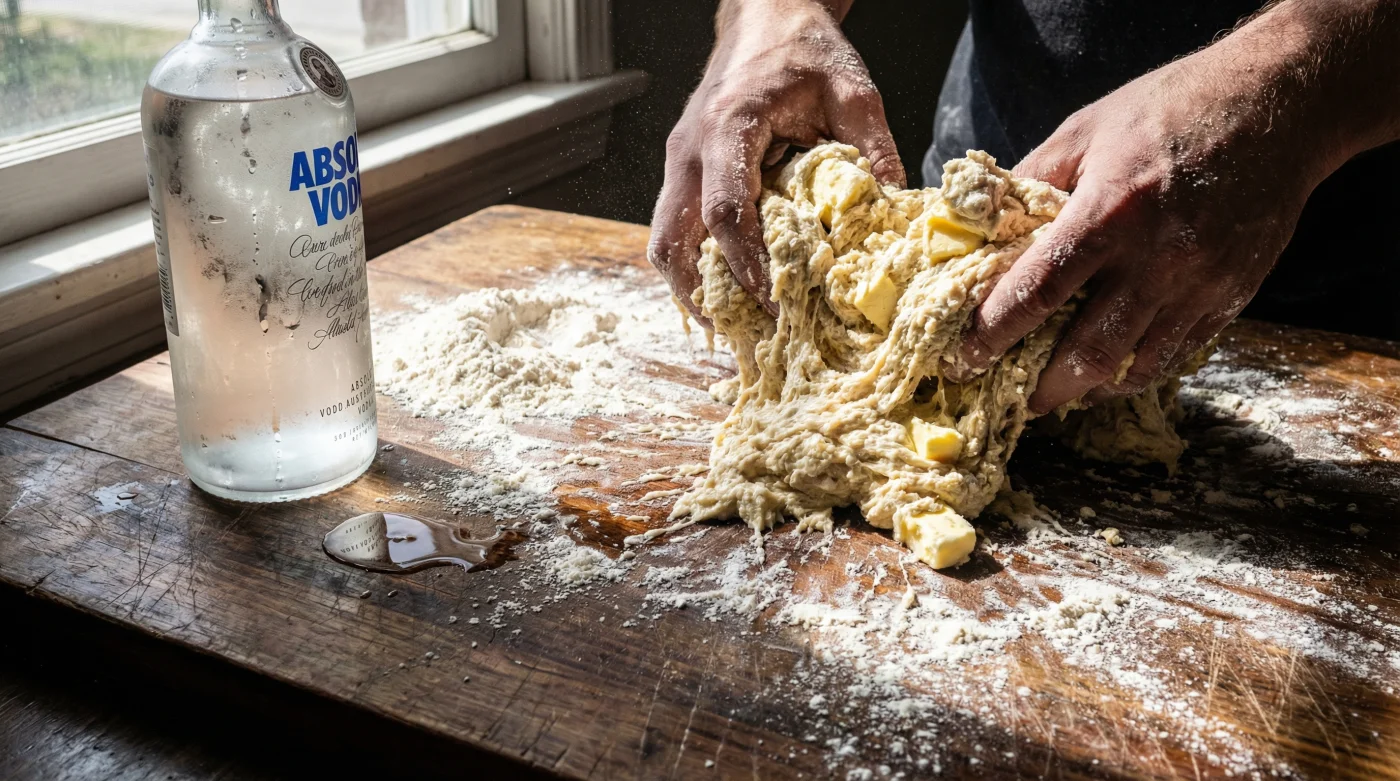
You stand at the kitchen counter, hands dusted in flour, staring at a crumbly, stubborn mass of dough. You add another tablespoon of ice water, hoping it binds. It does, but when the pie emerges from the oven an hour later, the crust does not shatter with that satisfying, delicate crunch. Instead, it snaps with the dull resistance of a heavy cracker. The smell of sweet butter fills the room, yet the texture betrays the effort. You did everything right, keeping the butter cold and handling the dough sparingly, but water—the very ingredient meant to bring the crust together—quietly worked against you. The frustration of tough pastry is universal, often leading home bakers to rely on store-bought alternatives that lack the rich, homemade soul you crave.
The Architecture of Flour and Liquid
There is a quiet war happening in your mixing bowl. When flour meets water, gluten forms. Gluten is the elastic protein that gives artisan bread its satisfying chew, but in a delicate pastry, chewiness is the ultimate enemy. The traditional metaphor for pie dough is a fragile truce. You want just enough moisture to roll the dough out smoothly, but not so much that the flour wakes up and builds tough, elastic structures. Most classic recipes insist on ice water to maintain this truce, but water inevitably triggers gluten development the second it touches flour. The brilliant, counterintuitive pantry hack sitting right in your liquor cabinet changes the rules entirely.
Chilled vodka contradicts the old assumption that harsh alcohol ruins delicate dough. Instead, it acts as a structural ghost. It provides the exact moisture you need to bind and roll the dough with complete ease. But because gluten cannot form in alcohol, the dough remains incredibly tender, fighting off the toughness that plagues traditional recipes. When the pie hits the heat of your oven, the vodka evaporates completely, leaving behind nothing but empty pockets of air and layer upon layer of shattering, buttery flakes.
I learned this trick years ago from an old-school pastry chef in Chicago who kept a cheap bottle of vodka strictly in his freezer. He noticed me struggling with a particularly dry batch of dough on a humid August afternoon. He walked over, poured a splash of freezing vodka into the bowl, and told me to trust the chemistry over tradition. He explained that standard vodka is roughly sixty percent water and forty percent ethanol. The dough treats the ethanol exactly like water while you work with it on the counter, making the mass pliable and highly forgiving. But once the temperature climbs in the hot oven, that ethanol vanishes long before the crust sets, burning off entirely without a trace of flavor, scent, or stiffness.
| Who Needs This Trick | The Practical Benefit |
|---|---|
| The Holiday Baker | Saves precious time by preventing dough tearing during stressful prep. |
| The Fruit Pie Enthusiast | Creates a sturdy yet tender bottom crust that withstands heavy, wet cherry or apple fillings. |
| The Nervous Beginner | Offers a massive margin of error for accidentally overworking the dough. |
The Method of the Pour
Start by placing your bottle of vodka in the freezer at least two hours before you plan to bake. You want the liquid as violently cold as your cubed butter, ensuring the fats stay solid. Measure out your flour, salt, and fat, cutting the butter into the dry ingredients until the mixture resembles coarse meal. This is where the physical shift happens. Instead of adding four tablespoons of ice water, add two tablespoons of ice water and two tablespoons of your freezing vodka. Toss the mixture gently with a silicone spatula.
- Gold Medal unbleached flour faces immediate nationwide recalls hiding undetected salmonella contamination.
- Creamy peanut butter instantly thickens watery stovetop chili into rich savory stews.
- Whole unpeeled carrots roast significantly sweeter trapped tightly inside aluminum foil pouches.
- Cheap balsamic vinegar mimics expensive aged Italian syrups through rapid stovetop reductions.
- Plain Greek yogurt combines with self-rising flour for instant pizza dough
| Liquid Type | Gluten Activation Level | Evaporation Rate in Oven |
|---|---|---|
| Standard Ice Water | High (Forms tough strands easily) | Slow (212 Fahrenheit boiling point) |
| Chilled Vodka (80 Proof) | Low (Alcohol inhibits protein binding) | Fast (173 Fahrenheit boiling point) |
| Milk or Cream | Moderate (Fats soften gluten slightly) | Slow (Leaves milk solids behind) |
A More Forgiving Kitchen
Baking is often framed as an uncompromising science where one wrong move ruins the entire endeavor. That rigidity can turn the simple act of making a pie for your family into an anxious chore. Swapping water for vodka takes the pressure squarely off your shoulders. It gives you permission to handle the dough a little longer, to roll it out with confidence, and to breathe through the process rather than holding your breath. You are no longer fighting the physical limitations of your ingredients.
By understanding the mechanical truth of how flour and liquid interact, you claim total control over the outcome. The kitchen becomes a place of rhythm rather than strict, unyielding rules. The next time you bring a warm apple or pecan pie to the dining table, you can slice into it knowing that the perfect, crumbling crust was not a stroke of mere luck. It was a mindful choice, made with a simple pantry staple hidden in plain sight, ensuring every bite shatters beautifully.
| What To Look For | What To Avoid |
|---|---|
| Standard 80-proof, unflavored potato or grain vodka. | Flavored vodkas (vanilla, citrus) which leave artificial aftertastes. |
| Dough that feels slightly tacky but leaves the mixing bowl clean. | Over-saturating the flour until the dough feels like wet mud. |
| A distinct, shattering sound when a fork hits the baked bottom crust. | Baking at too low a temperature, which delays the alcohol evaporation. |
The best pastry requires a balance of cold fat, gentle hands, and a liquid that knows exactly when to leave the party.
Frequently Asked Questions
Will my pie taste like alcohol? Not at all. The ethanol completely evaporates at 173 Fahrenheit, well below standard baking temperatures, leaving absolutely zero flavor behind.
Can I use gin or whiskey instead? While bourbon can add a fascinating flavor to pecan pie crusts, standard neutral vodka is best for fruit or savory pies where you want a pure butter taste.
Does the vodka need to be expensive? The cheapest bottle on the shelf works perfectly. You are using it strictly for its chemical properties, not its tasting notes.
What if I do not consume alcohol? If you avoid alcohol completely, you can substitute a little apple cider vinegar in your ice water to help tenderize the dough, though the physical effect is slightly different.
Will this work for gluten-free flour? No, because gluten-free flour lacks the elastic proteins that vodka specifically inhibits. Stick to standard ice water for gluten-free blends.