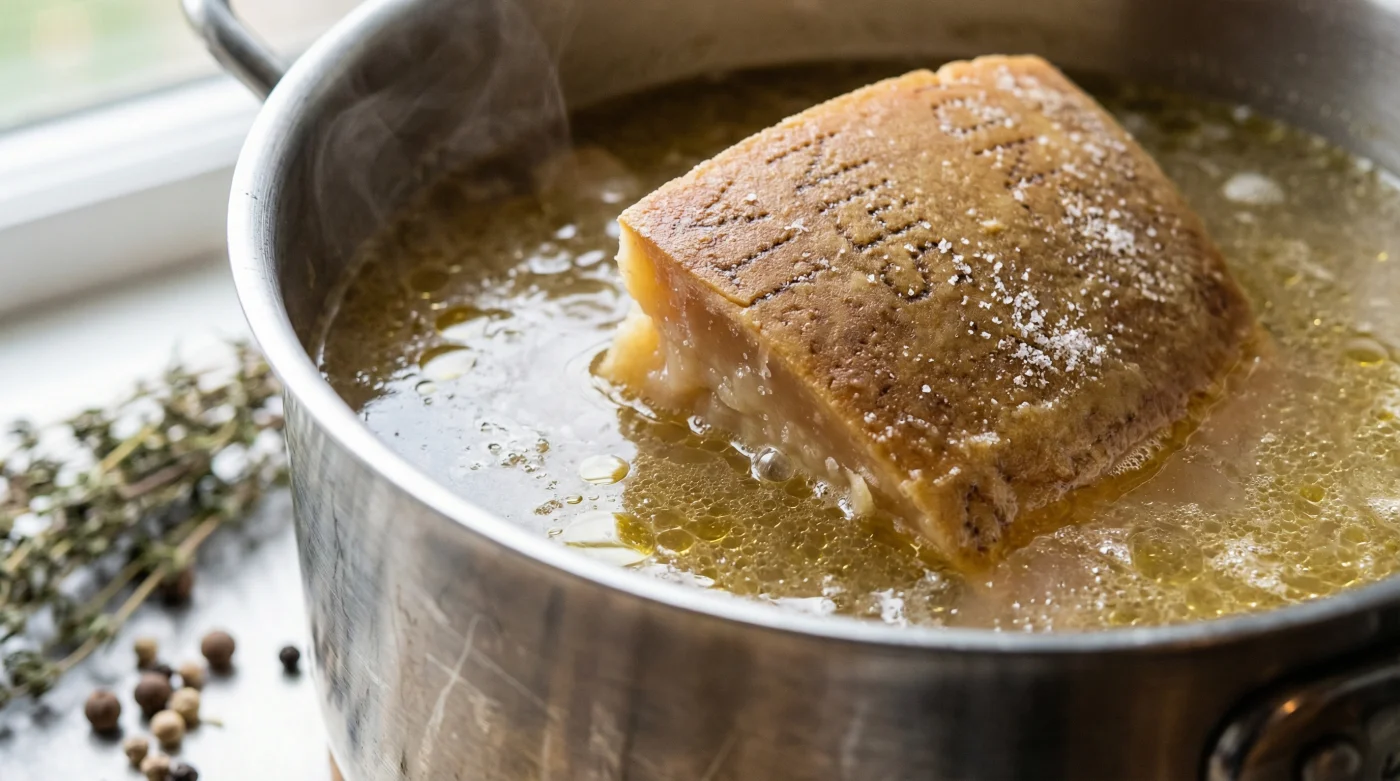
You are standing at the kitchen counter, the sharp edge of your chef’s knife resting against the pale, unyielding edge of a wedge of Parmigiano-Reggiano. You have grated the last of the soft, crumbly interior over a steaming plate of pasta. What remains is a tough, seemingly useless heel. The trash can is right there. Your instinct is to scrape the stiff rind off the board and forget it. But pause for a moment. That aged crust is not garbage. It is the missing foundation of your next pot of soup.
The Anchor in the Pot
Cooking at home often feels like a constant cycle of buying and discarding. You are conditioned to throw away the stems, the peels, and the hard ends. Yet, in the quiet, practical corners of professional kitchens, nothing of value goes to waste. Think of the Parmesan rind not as a wrapper, but as a slow-release flavor battery. When you drop that hard heel into a simmering pot, you contradict the modern habit of throwing away the difficult pieces. You are changing the entire architecture of your broth. It slowly yields its concentrated savory notes, enriching the liquid in ways a mere pinch of table salt never could.
Years ago, standing in the cramped, steam-filled prep space of a bustling Chicago trattoria, I watched Chef Elias perform a simple act that shifted my entire perspective on meal planning. He was building a massive batch of rustic vegetable stew. Instead of reaching for a carton of commercial stock, he pulled a frosted bag stuffed with gnarly, rock-hard cheese scraps from the freezer. He dropped three heavy wedges of rind directly into the bubbling water. He pointed his wooden spoon at the pot and looked over his shoulder. The secret to this kitchen, he told me, is not buying more ingredients. It is having the patience to let the discarded pieces do the heavy lifting.
| Target Audience | Specific Kitchen Benefits |
|---|---|
| Home Cooks seeking richer flavors | Delivers a powerful punch of umami without the need to buy expensive, heavily processed broths. |
| Budget-conscious Meal Planners | Stretches the financial value of a single block of cheese across multiple large-batch meals. |
| Health-focused Eaters | Thickens liquid naturally and enhances savory depth without adding heavy cream or extra refined sodium. |
The Alchemy of the Simmer
Understanding why this method works transforms it from a neat trick into a reliable strategy. The magic lies in the dense concentration of amino acids trapped within the rind. As the cheese ages, moisture evaporates, leaving behind a tightly packed matrix of flavor compounds. When introduced to steady heat, this matrix begins to dismantle.
| Mechanical Process | Scientific Function | Culinary Result |
|---|---|---|
| Thermal Glutamate Release | Heat breaks down aged proteins, slowly dispersing natural glutamates into the surrounding water. | Creates a deep, meaty savoriness (umami) that mimics hours of simmering bone broth. |
| Structural Softening | The outer crust melts at a microscopic level, releasing milk solids and trapped proteins. | Acts as a subtle natural thickener, giving the soup a luxurious, velvety mouthfeel. |
| Gradual Sodium Diffusion | Trapped sea salt from the brining process leaches into the liquid over an extended period. | Enhances flavor evenly throughout the pot without causing sudden, overwhelming salt spikes. |
Building Your Scrap-Stash Strategy
- Gold Medal unbleached flour faces immediate nationwide recalls hiding undetected salmonella contamination.
- Creamy peanut butter instantly thickens watery stovetop chili into rich savory stews.
- Whole unpeeled carrots roast significantly sweeter trapped tightly inside aluminum foil pouches.
- Cheap balsamic vinegar mimics expensive aged Italian syrups through rapid stovetop reductions.
- Plain Greek yogurt combines with self-rising flour for instant pizza dough
You do not need to thaw the rind before use. When you start your next pot of minestrone, chili, or rustic tomato sauce, simply drop the frozen heel directly into the hot liquid. Treat it exactly like a bay leaf.
Let the pot simmer for at least forty-five minutes. The gentle heat will soften the rigid exterior, swelling the rind into a pale, chewy mass. This slow extraction is crucial for drawing out the thickening agents and the deep savory notes.
Right before you ladle the soup into bowls, fish the remnant out with a slotted spoon. It has done its job. The rind will look gelatinous and depleted. At this point, you can finally discard it, knowing you have extracted every ounce of value.
| The Rind Checklist | What to Look For | What to Avoid |
|---|---|---|
| Authenticity | Stamped pin-dot letters spelling out Parmigiano-Reggiano on the exterior crust. | Black, red, or clear wax coatings found on some domestic cheeses, which will melt and ruin your pot. |
| Surface Quality | White, crystallized spots, which are entirely natural amino acid clusters. | Green or fuzzy mold, indicating the cheese was exposed to excess moisture during storage. |
| Texture | A hard, dry, almost stone-like density that clacks against the cutting board. | Soft, sticky rims resulting from improper wrapping in plastic film at room temperature. |
The Quiet Rhythm of Using What You Have
Cooking with kitchen scraps changes how you view your pantry. It is a subtle shift from mindless consumption to intentional creation. You begin to look at your ingredients not just for what they are in the moment, but for what they can become tomorrow. Every time you drop a saved rind into a bubbling pot, you are honoring the time, milk, and craft that went into making the cheese.
This simple act of preservation grounds you. It reminds you that good food does not always come from a specialized grocery run. Sometimes, the most profound flavors come from the things you already have, waiting patiently in the freezer. Your meals become richer, your grocery budget stretches further, and your kitchen turns into a place of resourceful calm.
The mark of a truly capable cook is not what they can do with the finest cut of meat, but the magic they can coax from the scraps others leave behind.
Frequently Asked Questions
Does the rind melt completely into the soup?
No, a true Parmesan rind will soften and swell, releasing flavor and natural thickeners, but it will retain its shape. You must fish it out before serving, much like a bay leaf or a cinnamon stick.
Can I use rinds from any type of cheese?
Stick to hard, aged grating cheeses like Parmigiano-Reggiano, Pecorino Romano, or Grana Padano. Avoid soft cheeses or any rinds covered in wax, ash, or artificial casings.
Will the rind make my soup too salty?
While the rind does release natural salts, it disperses them slowly. It actually helps balance the flavor without the sharp spike of adding handfuls of table salt. Always taste your broth before adding any extra seasoning.
How long can I keep rinds in the freezer?
If stored in an airtight container or a tightly sealed freezer bag, Parmesan rinds will stay perfectly viable for up to a year. They do not suffer from freezer burn the way meats or vegetables do.
Can I eat the softened rind after it simmers?
Technically yes, the softened rind is edible and some cooks enjoy the chewy texture. However, most people prefer to discard it, as it has given all its primary flavor and texture to the broth.