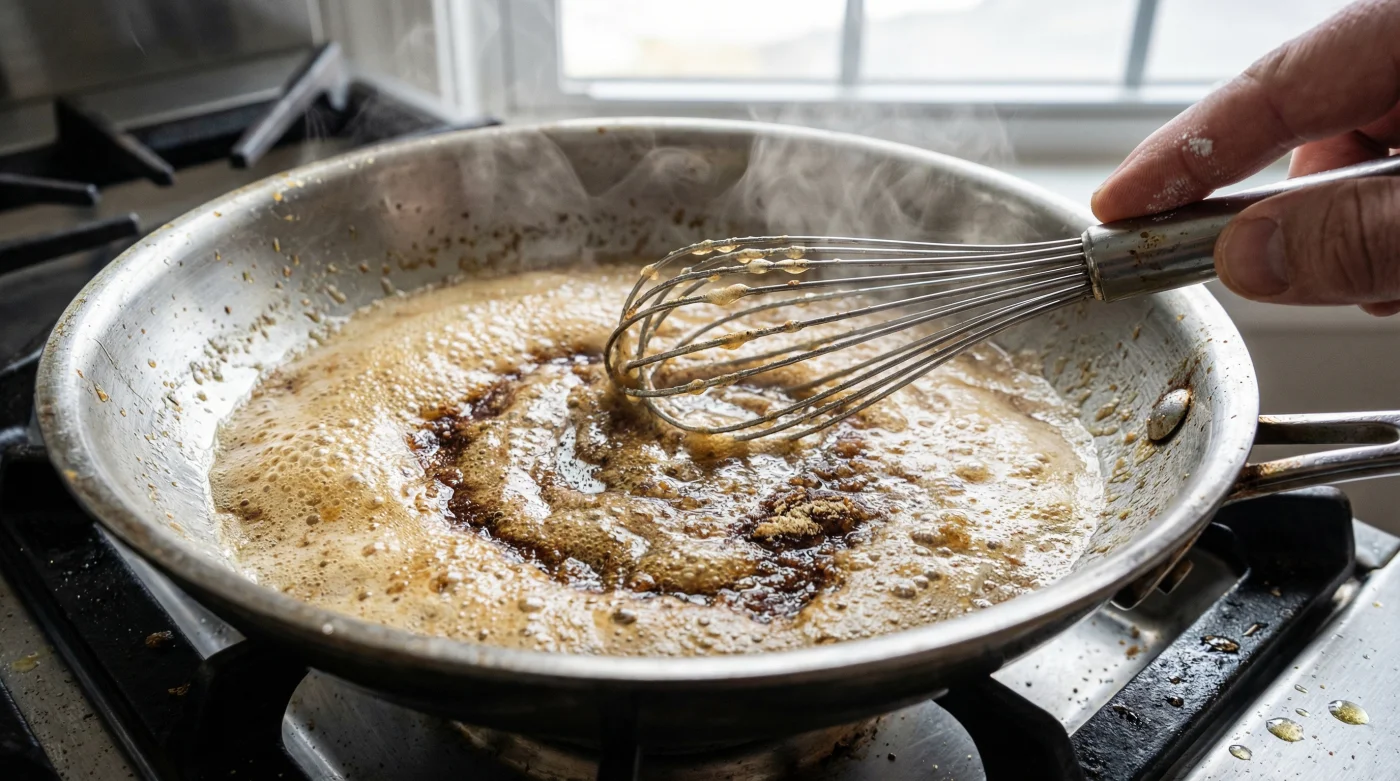
You stand at the stove, whisk in hand, watching a pale stick of butter melt in a cast-iron skillet. You are waiting for that elusive, magical transformation. You want the deep scent of roasted hazelnuts and the rich, golden amber hue of brown butter to elevate your weekend chocolate chip cookies or to drape over a simple weeknight ravioli. But traditional brown butter demands extreme patience. You hover over the heat, you stir relentlessly, and in a split second, the gentle sputtering stops entirely. The butter flashes from perfect gold to burnt black, smelling bitter and exhausted. It feels like a gamble you end up losing half the time, wasting good ingredients and testing your nerves.
The Gravity of the Milk Solid
To fix this, you have to look at your ingredients differently. Think of standard butter as a crowded room. Water takes up most of the space, fat makes up the furniture, and the milk solids—the actual source of that toasted flavor you are chasing—are just a few quiet guests standing in the corner. When you brown butter slowly over a low flame, you are essentially waiting for all the water to evaporate entirely so those sparse milk solids can finally toast against the hot metal of the pan. It is an incredibly inefficient process. You rely on a tiny, almost microscopic fraction of the ingredient to do all the heavy lifting for flavor.
I learned the alternative while watching an executive pastry chef named Sarah during a chaotic holiday rush. She needed three quarts of beurre noisette, and she needed it immediately for a massive catering order. Instead of simmering pans for twenty minutes and risking a burnt batch, she dropped her butter into a hot pot, grabbed a standard deli container from the dry pantry, and whisked in a heavy spoonful of dry milk powder. Within two minutes, the entire kitchen smelled intensely like a Parisian bakery. She bypassed the waiting game entirely by bringing extra guests to the party. Adding a tablespoon of dry milk powder to melting butter supercharges the toasted milk solids, synthetically accelerating the Maillard reaction for a deeper, nuttier flavor in a fraction of the time.
| The Home Cook | The Daily Benefit |
|---|---|
| The Weekend Baker | Achieves a richer, nuttier cookie dough without losing precious moisture to prolonged evaporation, keeping treats chewy. |
| The Weeknight Chef | Creates instant, deeply savory pan sauces for chicken breast or fresh pasta in under three minutes flat. |
| The Prepared Hostess | Guarantees flawless, repeatable results for dinner parties, permanently eliminating the risk of serving burnt, bitter butter. |
Whisking in the Magic
You can execute this technique right now with what you already have in the pantry. Place your skillet over medium heat and drop in your stick of high-quality unsalted butter. As soon as it begins to melt, bubble, and sing, sprinkle in one solid tablespoon of dry milk powder. Grab your whisk and keep it moving continuously in tight circles.
The powder hits the hot fat and immediately begins to toast. Because you are artificially loading the pan with extra proteins and milk sugars, the browning process happens almost instantaneously. The foam will rise fast and thick, much quicker than a standard slow-simmer method.
Keep your eyes trained on the bottom of the pan through the pale foam. You will see rust-colored flecks appearing in seconds. The dense, intoxicating scent of caramel and toasted nuts will hit the air around your stove. Pull the skillet off the heat immediately and pour the mixture into a heat-safe bowl to stop the cooking process and preserve that perfect amber color.
| Ingredient Profile | Composition | Mechanical Reaction |
|---|---|---|
| Standard Unsalted Butter | ~80% Fat, 18% Water, 1-2% Solids | Requires 10-15 minutes of thermal water evaporation to even begin browning. |
| Dry Milk Powder | 100% Concentrated Milk Solids | Instant Maillard reaction upon direct contact with hot lipids and fat. |
| The Hybrid Result | Fat with 10x Toasted Solids | Superior nutty flavor, deeper amber color, completely retained butter moisture volume. |
To ensure this method works perfectly every single time, you need to select the right pantry staples. Not all powders behave the same way under intense stovetop heat.
| Quality Checklist | What to Look For | What to Avoid |
|---|---|---|
| Milk Powder Type | Pure nonfat or whole dry milk powder sourced from the baking aisle. | Sweetened coffee creamers or malted milk powder, which contains barley and added sugars that burn quickly. |
| Texture Profile | Fine, powdery consistency that sifts easily between your fingers. | Hard clumps or stones that indicate previous moisture exposure and advanced age. |
| Aroma | Neutral, slightly sweet, fresh dairy scent straight from the bag. | Sour, metallic, or overly processed chemical smells. |
Reclaiming Your Kitchen Rhythm
This simple two-ingredient modification is significantly more than just a clever culinary trick to show off to friends. It is a highly practical way to reclaim your time and dramatically lower the temperature of your evening cooking routine. You no longer have to stand guard over a simmering pot, stressed and afraid of ruining a delicate, expensive ingredient.
By understanding the mechanics of your food, you take complete control of the chemistry. You guarantee the result every single time you turn on the burner. It turns an anxiety-inducing chore into a reliable, two-minute task that you can execute blindly. You get to bake the cookies, dress the pasta, feed your family, and still have the energy to sit down and actually enjoy the beautiful meal you made.
The best home cooking does not come from endless waiting at the stove, it comes from understanding your ingredients so intimately that you can bend time to your absolute advantage.
Frequently Asked Questions
Does this work with salted butter? You can use salted butter, but the concentrated salt can easily ruin the balance of your dish once the water evaporates. Unsalted gives you total control.
Will any brand of milk powder work? Yes, as long as the sole ingredient is milk. Nonfat dry milk powder actually toasts beautifully and remains incredibly shelf-stable in your pantry.
Can I make a large batch and store it? Absolutely. Pour the finished brown butter into a glass mason jar, let it cool completely, and keep it safely in the fridge for up to two weeks.
Why did my milk powder clump into a ball? You likely added it to cold butter. Wait until the butter is mostly melted and bubbling, then whisk vigorously as you gently sprinkle the powder in.
Does this alter the texture of delicate baked goods? It actually improves them. Traditional browning evaporates the water in butter, which can make cookie dough dry and crumbly. This rapid method limits evaporation, keeping your dough perfectly hydrated and chewy.