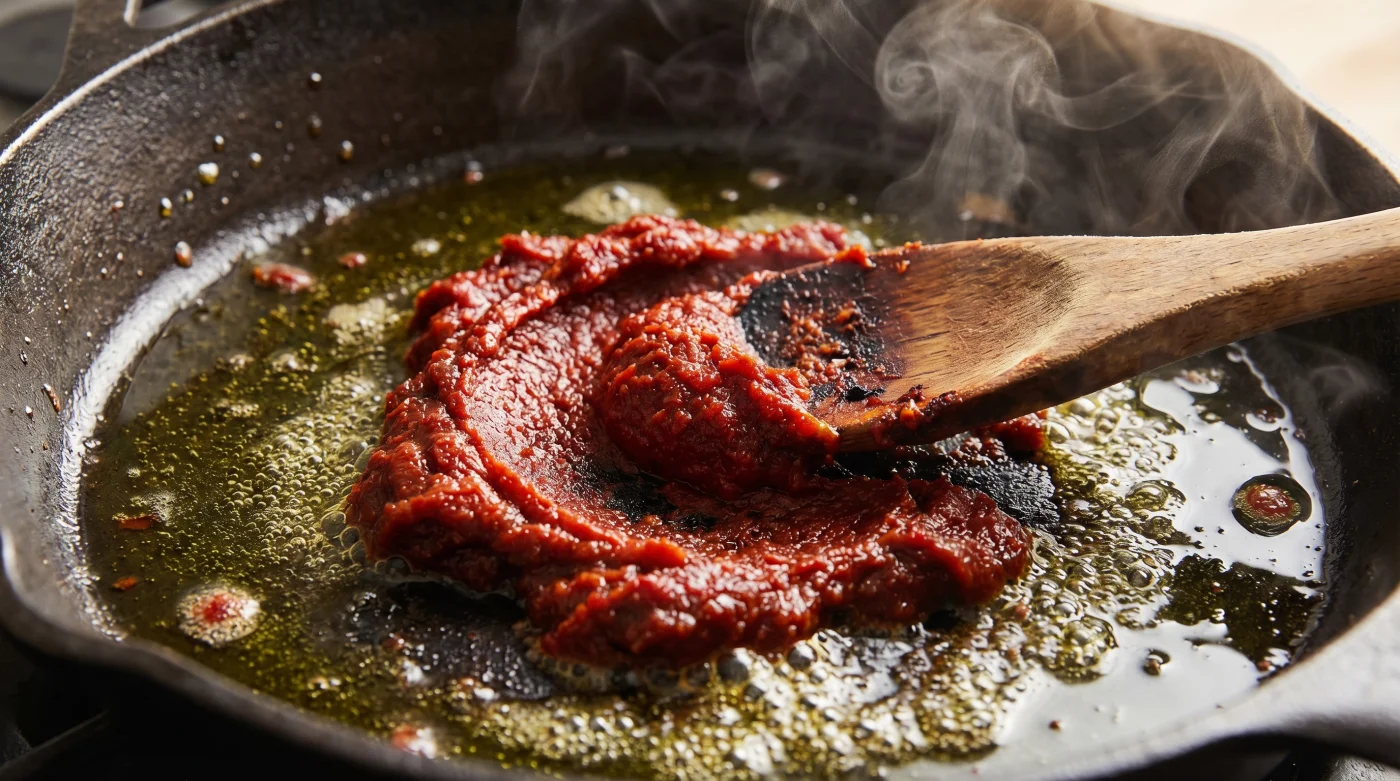
The little six-ounce tin sits on your counter, a thick red puck holding the promise of a long-simmered Sunday sauce. You scrape it directly into a swimming pool of crushed tomatoes, diced onions, and seasoned broth, waiting for that rich, slow-cooked magic to happen. You let the pot simmer on the back burner, assuming time will do the heavy lifting. But hours later, as you lift the wooden spoon to taste your work, a sharp, metallic bite still lingers at the back of your throat, coating your tongue with a tinny frustration that ruins the entire dish.
That harsh undertone isn’t a flaw in your recipe, nor is it a sign that you purchased cheap ingredients from the grocery store. It is simply the raw, concentrated acid clinging to the puree, waiting for a chemical catalyst that simmering liquid cannot provide. You are experiencing the unrefined edge of the fruit, preserved in its most acidic state, which desperately needs high heat to break down properly.
In professional kitchens, this humble pantry staple is never treated as a liquid or a passive thickening agent. It is treated with the exact same respect and procedural care as a whole, toasted spice. By introducing that thick paste to a pool of hot olive oil before a single drop of water, broth, or wine hits the pan, you force a rapid evolution in the skillet that completely alters the molecular structure of the puree.
The aggressive heat sears away the tinny bitterness in a matter of minutes, leaving behind a dark, caramelized sweetness that tastes as though it took an entire afternoon to build. It is the defining difference between a sauce that tastes flat and one that tastes like it was prepared by a seasoned chef.
The Maillard Metaphor
When you dump paste straight into a watery sauce, you are essentially boiling it. You are trying to coax depth out of an ingredient by drowning it in liquid, which only waters down the problem without addressing the underlying acidity. The true secret to this kitchen fix requires shifting your mindset entirely and treating the dense red puree exactly like raw coffee beans.
If you boil a green coffee bean in hot water, you get a sour, pale tea that tastes nothing like your morning cup. It takes the friction of dry heat to brown the sugars, reduce the vegetal harshness, and coax out those deep, roasted notes. Your tomato paste demands exactly the same respect before it can properly flavor your food, requiring fat and high temperatures to reach its full potential.
Consider Marco Vettri, a 62-year-old pasta veteran running the line at a beloved South Philadelphia trattoria. Marco watches new prep cooks make the exact same mistake every single season: they drop the red puree directly into a massive pot of simmering stock, realize it tastes painfully acidic on the first test bite, and then desperately shovel in cups of white sugar to correct the damage. They scramble to balance the flavors, but the sharp bite always remains.
Marco immediately stops them, pulls out a fresh, heavy-bottomed skillet, and heats a generous glug of extra virgin olive oil to around 350 degrees Fahrenheit. ‘You do not sweeten the acid,’ he tells them, scraping the thick puree into the sizzling fat until it bleeds into the oil. He watches the bright red mound darken to a rusty brick color, the kitchen suddenly smelling deeply of roasted garlic, toasted herbs, and an undeniable sundried warmth.
Adjusting the Fry
Not all dishes require the exact same treatment when modifying this base ingredient. Once you start browning the puree, you realize you have total control over the final flavor profile of your dinner. You are no longer just following a recipe; you are actively steering the savory foundation of your meal based on what you are craving in that moment.
The way you manage this heat dictates the brief window of caramelization and fundamentally changes the character of your meal, allowing you to pivot from a bright, summery pasta to a heavy, winter stew just by watching the clock.
For the Weeknight Ragu
For a standard meat sauce, keep the flame at medium. You want to fry the paste alongside your softened onions, celery, and carrots for about three minutes. The goal is a deep rust color, which provides a rich, savory backbone without overpowering the delicate flavor of the ground beef or pork. This medium-fry method mellows the acid while maintaining enough brightness to cut through the fat of the meat.
For the Heavy Beef Chili
Chili, on the other hand, demands a stronger, smokier foundation to stand up to the heavy cumin, chili powder, and kidney beans. Turn the heat to medium-high, pushing past the standard browning stage until the paste begins to heavily stick to the bottom of the pot. You are creating a deeply charred fond that you will later scrape up with a splash of dark beer or beef broth, lending an almost barbecued richness to the final bowl.
For the Creamy Vodka Sauce
Dairy-heavy preparations, like a rich penne alla vodka, need a much gentler touch to prevent the heavy cream from splitting later in the cooking process. Lower the heat entirely and gently toast the paste for just one minute, preserving some of the bright, fruity acidity. This ensures the sauce remains vibrant and tangy, perfectly balancing the rich, coating texture of the cream and grated parmesan cheese.
The Caramelization Protocol
Executing this technique requires nothing more than your eyes and a wooden spoon, transforming what used to be a messy chore into a mindful, deeply satisfying kitchen ritual. There are no complicated gadgets or precise thermometers required—just an understanding of how heat interacts with natural sugars.
When your aromatics—usually diced onions, carrots, and minced garlic—are soft and fragrant, use your spoon to push them to the far edges of your pan. You are intentionally creating a bare, hot spot right in the center of the skillet to give the thick puree direct, uninterrupted contact with the hot metal.
- Add one tablespoon of olive oil, butter, or rendered bacon fat directly to the cleared center of the pan.
- Drop the measured paste straight out of the can or tube directly onto the pooling hot fat.
- Smash the mound flat against the metal with the back of your spoon to maximize the surface area exposed to the heat.
- Stir constantly, scraping the bottom of the pan to prevent burning, until the color shifts from bright crimson to dark brick.
This vital visual transformation usually takes exactly three to five minutes, depending entirely on the exact temperature of your stove and the thickness of your cookware. It is a brief window of time, but those few minutes dictate the entire success of the meal.
Your tactical toolkit for this process is simple: maintain a medium-high temperature of around 350 degrees Fahrenheit. Your primary visual cue is the surrounding oil turning a vibrant, stained orange, while your scent cue is a shift from a sharp, vinegar-like smell to a deeply toasted, savory aroma. The only equipment you need is a heavy-bottomed skillet and a flat-edged wooden spoon to scrape the fond.
A Quieter Confidence at the Stove
Grasping this single, fundamental rule changes how you intuitively move around your kitchen. Instead of fighting the raw ingredients, you are working with their nature, bringing out a profound, natural sweetness that was hiding inside the tin all along.
You no longer have to rely on adding heaps of processed sugar, heavy butter, or artificial flavor enhancers to mask the sharp edges of a rushed weeknight dinner. There is a profound, lasting peace of mind in knowing exactly how to handle the most basic, mundane staples sitting neglected in the back of your pantry.
A sixty-cent can of crushed tomatoes suddenly holds the exciting potential of a high-end restaurant base. It turns out the defining difference between a harsh, metallic frustration and a rich, deeply satisfying bowl of food is just a few minutes of heat, a little bit of fat, and a willingness to step back and let the ingredients do the work.
‘Treat your tomato paste like a raw spice. If you do not wake it up in hot oil, it will sleep through your entire meal.’
| Key Point | Detail | Added Value for the Reader |
|---|---|---|
| Raw Addition | Boiling the paste directly in liquid. | Results in a harsh, metallic acidity that requires sugar to mask. |
| Medium Fry | Toasting in hot fat for 3 minutes. | Develops a sweet, rich baseline perfect for everyday pasta sauces. |
| Hard Sear | Frying on high heat until it darkens. | Creates a smoky, intense depth ideal for heavy stews and thick chili. |
Frequently Asked Questions
Can I use butter instead of olive oil to fry the paste?
Yes, butter works beautifully. The milk solids will brown alongside the tomato, adding a nutty richness, though you must watch the pan closely to prevent the butter from burning.What if my paste starts sticking to the bottom of the pan?
That sticky layer is called fond, and it is packed with concentrated flavor. Simply pour in a small splash of water, wine, or broth and scrape it up with your wooden spoon.Does this rule apply to tomato paste from a squeeze tube?
Absolutely. While tube paste is generally of higher quality and slightly less metallic than the canned version, it still requires hot fat to caramelize its natural sugars properly.How do I store the leftover paste from the tin can?
Transfer any unused paste to a small container, smooth the top flat, and cover it with a thin layer of olive oil before refrigerating to prevent mold from forming.Will this technique fix a sauce that is already bitter?
If you have already added the liquid, you cannot go back and fry the paste. In that scenario, a tiny pinch of baking soda will help neutralize the acid far better than adding handfuls of processed sugar.