You know the smell before you even register the mistake. The olive oil is shimmering in the pan, throwing tiny droplets into the air, and the moment you toss in the chopped aromatics, an aggressive sizzle fills the room. Within ten seconds, the edges curl and darken. That acrid, metallic scent hits the back of your throat, signaling that your dinner base has already turned bitter. You frantically scrape the bottom of the skillet with a wooden spoon, but the damage to your foundation is permanent.
We have been conditioned by cooking shows to treat meal preparation like a frantic race against temperature. The standard advice dictates getting the skillet screaming hot, adding the fat, waiting for a visual shimmer, and then dropping in your ingredients. But raw garlic is fragile. Unlike a heavy, water-dense slice of onion, it lacks the internal moisture to survive sudden, violent thermal shock.
Walk into the prep kitchen of a busy Italian spot before service, and you will witness a surprisingly quiet reality. The pans are sitting on cold grates. The aromatics are resting peacefully in pools of room-temperature oil. Dropping raw garlic into cold oil is not a sign of inexperience; it is a calculated approach. It is the lazy fix that prevents burning and creates a remarkably smooth, sweet taste, relying on simple physics rather than split-second chef reflexes.
The Perspective Shift: Treating the Skillet as a Runway
Think of sudden heat like hitting a brick wall at sixty miles per hour. When delicate plant fibers hit a 350-degree surface, the exterior sears instantly. This rapid browning traps harsh sulfur compounds inside the clove while turning the outside to charcoal, leaving you with an aggressive, jagged bite that easily overpowers a delicate tomato sauce or a simple pan-roasted chicken breast.
The cold start changes the entirety of this physical reaction. Raw garlic contains an enzyme called alliinase, which activates the moment the clove is crushed or chopped. High heat instantly locks in a harsh, sulfurous bite. By placing the raw garlic directly into cold oil before heating the pan, you create a gentle thermal runway. The oil and the garlic warm up together. As the temperature slowly climbs, the gentle heat breaks down those sulfur compounds into sweet, mellow notes. The oil pulls the fat-soluble flavor compounds out of the cells before the exterior has a chance to crisp. What was once viewed as a flaw—the slow heating of a heavy pan—becomes your greatest advantage.
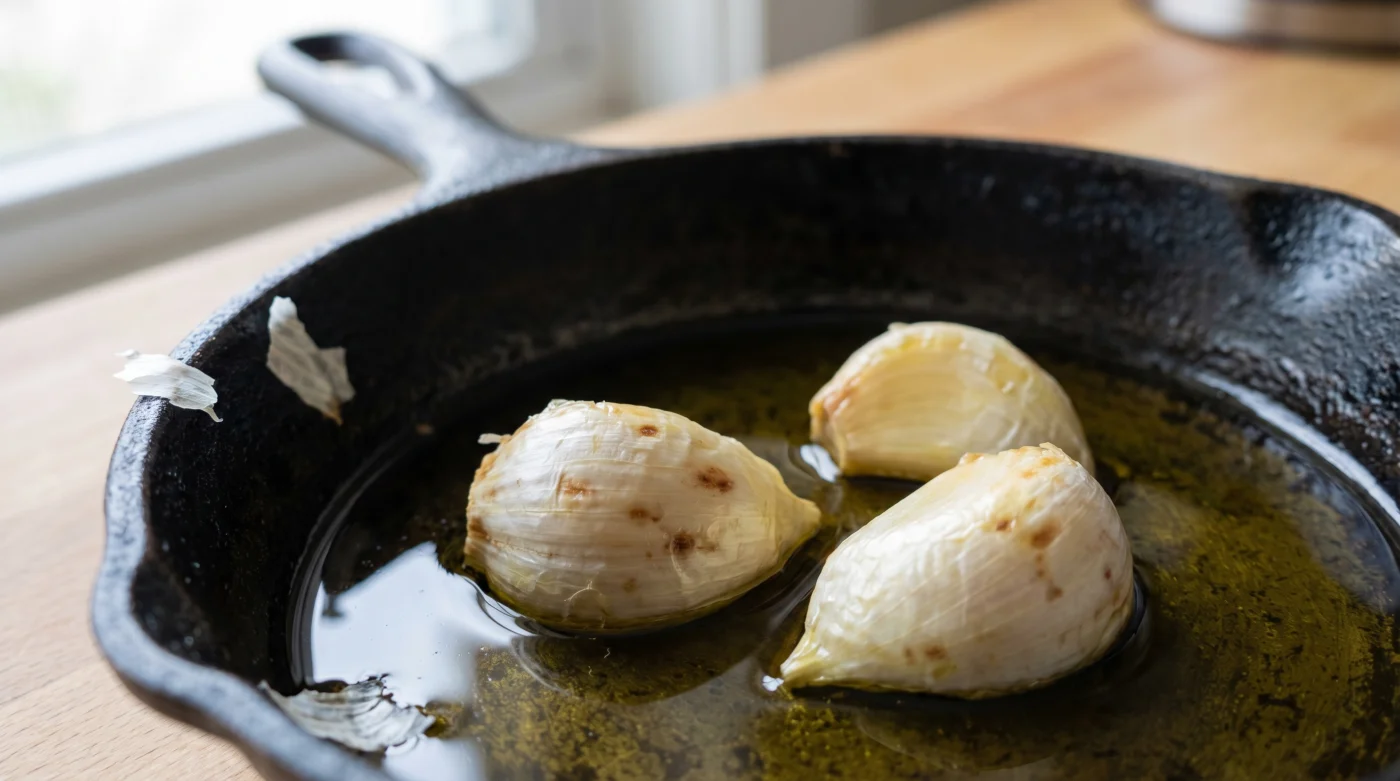
Meet Elena Torres, a 42-year-old sous chef at a neighborhood pasta joint in Chicago. Every morning, she processes quarts of olive oil and pounds of raw garlic for the evening service. She never drops her aromatics into a hot pan. Instead, she layers smashed cloves into a cold skillet, covers them in extra virgin olive oil, and clicks the burner to medium-low. She lets the pan slowly wake up, pulling it off the flame the exact second the garlic turns the color of pale straw. Don’t fight the heat, she explains to new line cooks, but rather let the oil pull the sugar out slowly.
Deep Segmentation: Tailoring the Cold Start
The beauty of this method lies in how easily it bends to your specific cooking style. Whether you are building a quick weeknight ragu or slow-roasting a weekend pork shoulder, the cold oil buffer scales perfectly to your daily needs.
For the Purist: The Smashed Clove Method
If you want the purest, sweetest flavor without any harsh bite, leave the paper skins behind but keep the cloves entirely intact. Smash them gently with the flat of your blade just enough to break the internal structure. Because the surface area is smaller than a minced pile, you can bathe them over low heat for up to ten minutes, infusing the fat with a deeply roasted, nutty profile that practically melts into a sauce.
For the Weeknight Scrambler: The Minced Shortcut
When you are rushing to get a Tuesday night stir-fry on the table, you are likely using minced pieces rather than whole cloves. Minced aromatics burn exceptionally fast due to their drastically increased surface area. Every tiny edge is a potential burn risk. By starting the chopped pieces cold, you buy yourself a crucial two-minute window. You can turn on the burner and step back to chop a bell pepper, wipe down a cutting board, or rinse a can of black beans.
Mindful Application: Executing the Technique
Transitioning to a cold start requires breaking decades of ingrained muscle memory. You have to stop hovering over the stove waiting for the shimmer. Place the cold pan on the grate, add your oil, drop in the raw garlic, and only then turn the dial.
As the pan warms, watch for the shift in activity. The oil will tremble slightly before small, lazy bubbles begin to form around the edges of the cloves. This is your visual cue that the extraction is happening. To master this daily habit, lean on this simple tactical toolkit:
- Use a heavy-bottomed skillet, like cast iron or thick stainless steel, to ensure the temperature climbs gradually rather than spiking abruptly.
- Pour enough oil to lightly coat the pieces; dry spots will heat unevenly and introduce the risk of scorching.
- Keep the burner set to medium-low. If the pan begins to aggressively pop or spit, slide it entirely off the burner to let the ambient heat finish the job.
- Pull the pan or add your cold liquid ingredients, like crushed tomatoes or broth, the moment the garlic turns pale blonde.
The Bigger Picture: Reclaiming Kitchen Calm
Cooking at home often feels inherently stressful because we are trying to manage multiple unpredictable variables at once. We buy into the myth that speed and high heat are the only markers of a confident cook. But true command of your kitchen comes from understanding how ingredients behave under pressure.
When you stop throwing raw garlic into searing hot oil, you eliminate a major stressor from your nightly routine. You remove the panic of the burnt base. Start the cloves before heating the pan, and you secure a moment of quiet control, letting you dictate the pace of the meal rather than letting the pan dictate your panic.
Patience at the beginning of a recipe buys you peace of mind at the end.
| Key Point | Detail | Added Value for the Reader |
|---|---|---|
| Thermal Shock | Dropping garlic into 350F oil burns the exterior instantly. | Prevents the metallic, bitter taste in your final dish. |
| Cold Start | Oil and garlic heat together from room temperature. | Extracts maximum sweetness with zero risk of burning. |
| Buffer Time | The gradual heat climb takes 2-3 minutes. | Gives you a hands-free window to prep other ingredients safely. |
Frequently Asked Questions
Does this work with butter instead of oil? Yes. Butter contains water and milk solids, so it naturally heats slower, but starting cold prevents those delicate milk solids from browning too fast.
Can I cold-start onions and garlic together? Absolutely. The onions will release their water as the pan warms, acting as a secondary buffer against the garlic burning.
What if my recipe calls for searing meat first? Sear your meat, remove it from the pan, turn the heat off for a minute to let the metal cool slightly, then add a splash of cold oil and your aromatics.
How long does the cold start take? Usually two to three minutes on medium-low heat, depending on the thickness and material of your skillet.
Will the garlic absorb too much oil? No. As the temperature rises, the escaping moisture from the garlic pushes outward, preventing the oil from soaking deeply into the plant fibers.