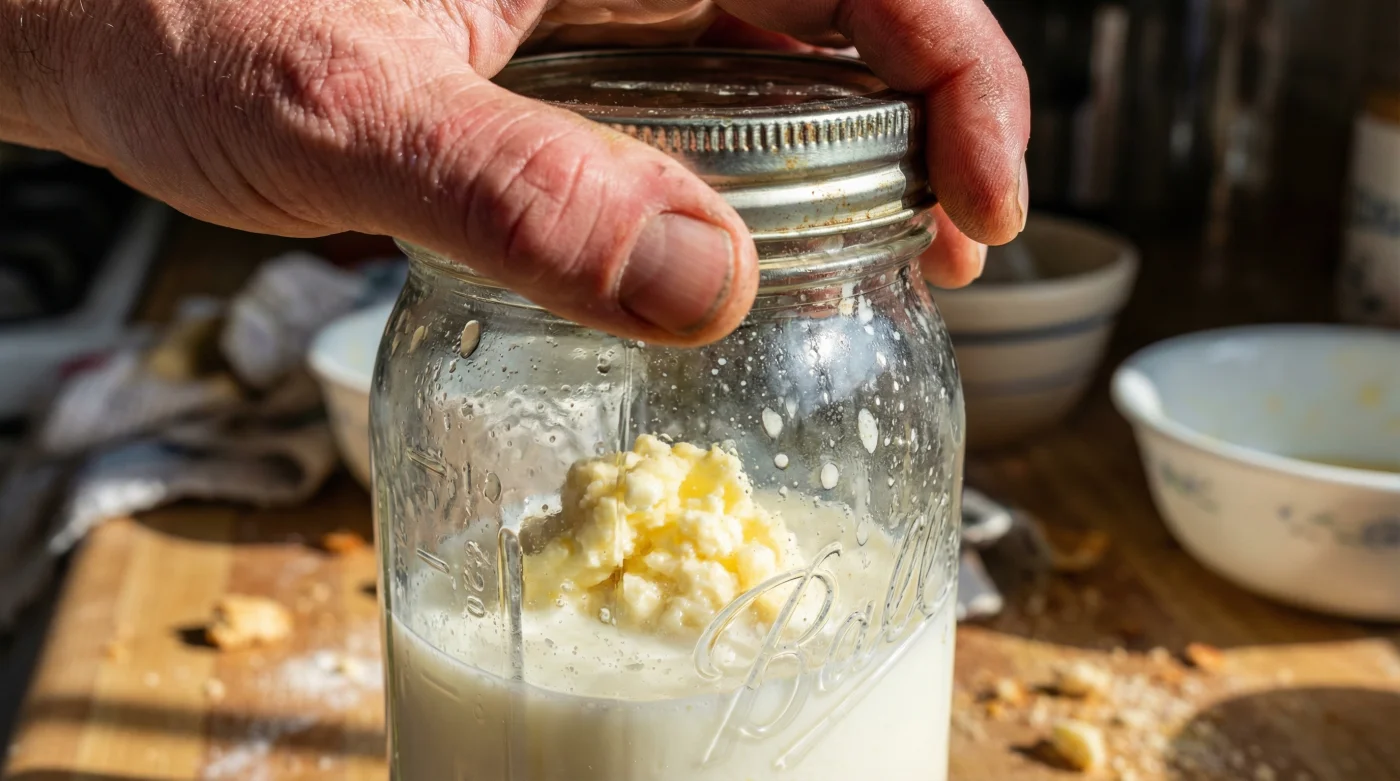
Imagine the muted clinking of glass on a quiet Sunday morning. You stare at a half-empty carton of heavy whipping cream sitting on the counter, the sweet, rich remnants of last night’s dessert. Most of us just push it to the back of the fridge, waiting for it to inevitably spoil. But today, you reach for an empty mason jar.
The Rebellion of the Cream
We are conditioned to believe that authentic, old-fashioned cooking requires a rustic aesthetic or expensive hardware. You might picture a pioneer-era wooden churn or a four-hundred-dollar electric stand mixer whirring away on a granite island. But the truth is far simpler, and entirely manual. Making butter is simply a physical argument with dairy. It is the rebellion of the cream.
When you shake a jar of cream, you are forcing a structural collapse. The tiny fat molecules, perfectly content floating in their liquid suspension, are violently smashed together until they have no choice but to bond. You are completely in control of this transformation, proving that you do not need a machine to create a kitchen staple. You just need a little bit of kinetic energy.
| Target Audience | Specific Benefits |
|---|---|
| The Frugal Home Cook | Repurposes leftover cream before it spoils, saving you money on premium butter. |
| The Ingredient Purist | Guarantees a final product free from commercial preservatives, artificial coloring, or anti-caking gums. |
| The Weekend Baker | Yields two distinct ingredients: rich butterfat for pastries and fresh buttermilk for tender pancakes. |
Years ago, I spent a morning observing Chef Marcus, a veteran pastry expert running a cramped farm-to-table bistro in upstate New York. He never bothered with the commercial mixers for small batches of table butter. Instead, he handed quart containers of warm cream to his prep cooks. “Fat wants to be with fat,” he told me, wiping down a stainless steel counter. “Agitation is just a conversation. You just have to speak loud enough for the fat molecules to hear you and hold hands.”
| Time Elapsed | Physical State | Mechanical Logic |
|---|---|---|
| Minutes 1 to 3 | The Aggressive Slosh | Liquid cream hits the glass walls, folding air bubbles into the dairy to build a fragile structure. |
| Minutes 4 to 6 | The Heavy Silence | The air stabilizes. The liquid thickens entirely into whipped cream. The sound vanishes from the jar. |
| Minutes 7 to 10 | The Sudden Break | The fat membranes shatter under the pressure. Pure butterfat clumps together, violently expelling the watery buttermilk. |
The Ten-Minute Shake
To begin, let your heavy whipping cream sit on the counter for about thirty minutes. It needs to lose its harsh refrigerator chill to agitate properly; fat at sixty degrees Fahrenheit separates far easier than freezing fat. Pour the cream into a sturdy glass mason jar, filling it exactly halfway. You must leave empty space to allow for the physical collision.
Screw the lid on tight, grip the glass with both hands, and start shaking vigorously. At first, you will hear a loud, liquid sloshing. After a few minutes, the jar will go completely silent. The cream has whipped, expanding to fill the glass. Do not stop shaking. Your forearms will burn, and you will feel tempted to check on it, but keep pushing through the heavy silence.
- Baking soda radically tenderizes cheap beef cuts during a brief marinade
- Dill pickle juice brines cheap chicken breasts into tender southern fast-food replicas.
- Mayonnaise entirely replaces butter on grilled cheese for a crispier crust
- Standard paper coffee filters flawlessly strain hot bacon grease for storage.
- Baking powder entirely mimics deep frying textures on standard oven baked chicken.
Your final, non-negotiable step is the washing. Plunge your new lump of butter into a bowl of ice water. Knead it aggressively with a wooden spoon to press out the remaining pockets of buttermilk. The water will turn cloudy. Pour it out, add fresh ice water, and repeat until the water remains crystal clear. If you skip this rinse, those hidden droplets of milk will cause your beautiful butter to go sour in a matter of days.
| What to Look For | What to Avoid |
|---|---|
| Using cream resting near 60 degrees Fahrenheit for optimal separation. | Shaking cream straight from the cold refrigerator, doubling your effort. |
| Rinsing and kneading the butter until the ice bath remains perfectly clear. | Leaving cloudy buttermilk trapped inside the fat, leading to rapid spoilage. |
| Adding a pinch of coarse sea salt only after the final rinse is complete. | Adding salt to the liquid cream, which flavors the buttermilk rather than the fat. |
Reclaiming Your Kitchen Rhythm
Why spend ten minutes shaking a jar when you could easily toss a stick of butter into your grocery cart? Because this physical act shifts you from a passive consumer to an active participant in your food. It removes the mystery from the ingredients you eat every single day.
There is a profound, grounding satisfaction in feeling the cream break in your hands. It acts as a brief, meditative pause in a chaotic day, anchoring you to the present moment. You are left with a fresher, sweeter spread for your morning toast, and the quiet confidence that your own two hands are the most valuable tools in your kitchen.
“Butter is not manufactured; it is coaxed out of hiding through sheer patience.”
Frequently Asked Questions
Can I use ultra-pasteurized heavy cream? Yes, but standard pasteurized cream yields a richer flavor profile and separates slightly faster during the shaking process.
How long will this homemade butter last? If you thoroughly wash out all the buttermilk, it will stay fresh in an airtight container in your fridge for up to two weeks.
Why is my homemade butter completely white? The color depends on the cow’s diet. Summer cream from grass-fed cows is naturally yellow, while winter grain-fed cream looks paler.
Do I need a specific brand or size of mason jar? No. Any sturdy glass jar with a tight-fitting, leak-proof lid will work perfectly, as long as it is only filled halfway.
Can I add flavors or herbs to the butter? Absolutely. Fold in roasted garlic, sweet honey, or fresh chopped herbs immediately after pressing out the final drops of ice water.