You know the sound. The hollow, guilty crinkle of the thin plastic produce bag as you pull it from the dark depths of your refrigerator crisper drawer. Inside, what was once a vibrant, fragrant bunch of cilantro has collapsed into a dark, gelatinous mess. It smells faintly of swamp water and forgotten dinners. You bought it just four days ago for a batch of weeknight carnitas, intending to garnish your plates with bright, peppery greens. Now, you are scraping green sludge directly into the compost bin. This cycle of buying, neglecting, and tossing is a quiet frustration in almost every American kitchen. But it does not have to be your daily reality.
The Perspective Shift: The Vase and the Thirst
For decades, consumer habits have been shaped by the path of least resistance. We bring home groceries, leave the herbs in those flimsy, static-cling plastic bags, and shove them into the vegetable drawer. We treat leafy herbs like inert objects, storing them exactly the same way we store hard carrots or resilient potatoes. But a bunch of cilantro is not an inanimate object. It is a living, breathing network of delicate veins.
Think of that bunch not as a vegetable, but as a severed limb that still desperately needs to drink. When you suffocate it in a tight grocery bag, the leaves essentially drown in their own trapped moisture while the severed stems starve for hydration. The crispness of the leaf relies entirely on cellular water pressure. Once that pressure drops, gravity wins, and the rotting process accelerates.
A few years ago, in the back prep kitchen of a bustling Austin taqueria, I watched a seasoned prep cook named Elena manage her station. She never tossed her greens into the walk-in cooler in plastic. Instead, her stainless steel tables looked like a florist’s workshop. She treated her herbs exactly like a fresh bouquet of flowers. “If you do not let them drink, they give up on you,” she told me, quickly trimming the bottom stems of fifty cilantro bunches with a sharp chef’s knife before plunging them into wide, shallow buckets of cold water. That simple shift in perspective—from produce to petals—changes everything.
| Your Kitchen Persona | The Tangible Benefit of the Florist Method |
|---|---|
| The Sunday Meal Prepper | Prep garnishes once on Sunday; enjoy crisp, bright leaves through the following weekend without emergency grocery runs. |
| The Budget-Conscious Cook | Stop throwing away three dollars of rotted herbs every week. Extend the lifespan of a single bunch from four days to over three weeks. |
| The Home Chef | Maintain the sharp, citrus-pepper essential oils of the plant, which degrade quickly when the leaves begin to wilt and oxidize. |
Practical Application: The Mason Jar Ritual
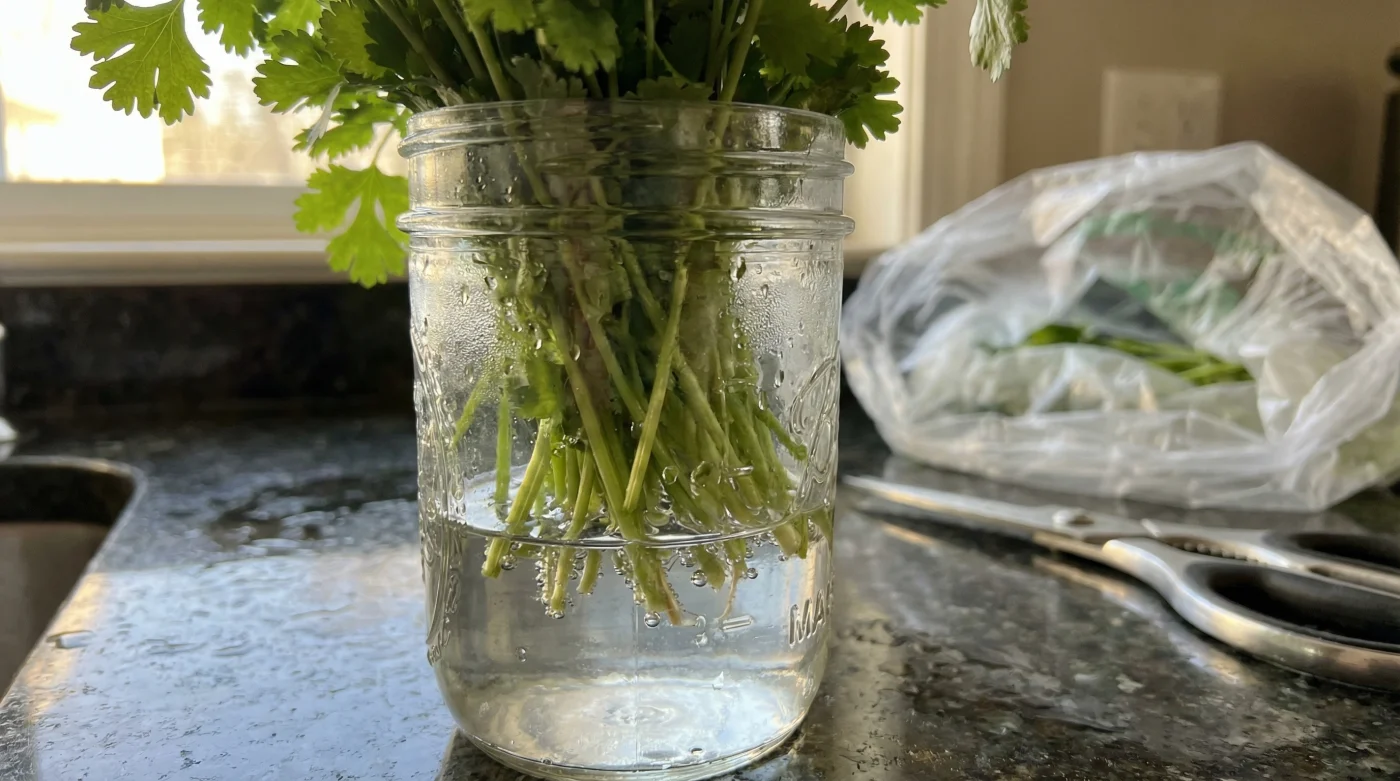
To keep your cilantro alive, you have to mimic the environment of a greenhouse vase. The process takes less than five minutes after unpacking your grocery bags, but it requires mindful, physical action. First, remove the rubber band or twist tie from the bunch immediately. This removes the chokehold on the delicate stems.
Next, grab a sharp pair of kitchen shears or a knife. Snip off the bottom half-inch of the stems. Just like roses, the bottom of the stem dries out and scabs over within hours of being harvested, effectively sealing off the plant’s ability to draw up water. By giving them a fresh, clean cut, you open up the capillaries.
Fill a glass mason jar—a standard pint jar works beautifully—with about an inch or two of cold tap water. You want enough water to submerge the newly cut stem ends, but you must ensure none of the lower leaves are touching the water. Leaves submerged in water will immediately begin to decay and foul the jar. Stand the fresh bouquet upright in the jar.
- Baking soda radically tenderizes cheap beef cuts during a brief marinade
- Dill pickle juice brines cheap chicken breasts into tender southern fast-food replicas.
- Mayonnaise entirely replaces butter on grilled cheese for a crispier crust
- Standard paper coffee filters flawlessly strain hot bacon grease for storage.
- Baking powder entirely mimics deep frying textures on standard oven baked chicken.
| Biological Factor | The Mechanic at Play |
|---|---|
| Capillary Action | The freshly cut stems act like straws, drawing cold water upward to maintain turgor pressure in the cellular walls of the leaves. |
| Ethylene Gas Trapping | A loosely tented bag allows natural ripening gases to escape, whereas a tightly sealed bag forces the plant to re-absorb them, accelerating rot. |
| Temperature Sweet Spot | Storing the jar at 38 to 40 degrees Fahrenheit slows the metabolic breakdown of the plant while the water keeps it actively hydrated. |
The Bigger Picture: A Quiet Kitchen Rhythm
When you start treating your groceries with this level of attention, something subtle shifts in your daily routine. You are no longer just a passive consumer unpacking boxes and bags; you are actively extending the life of your food. Opening your refrigerator to see a vibrant, upright jar of green cilantro standing proud on the shelf feels entirely different than hiding a sad, sweating plastic bag in a dark drawer.
This small habit saves you money, certainly. But it also anchors you to the physical reality of the ingredients you cook with. You begin to notice the firmness of the stems, the scent of the leaves, and the temperature of the water. You stop working against your kitchen and start working with it, creating an environment where your ingredients can thrive until the exact moment you need them.
| Market Indicator | What to Look For | What to Avoid |
|---|---|---|
| Stem Integrity | Firm, upright stalks that snap cleanly when bent. | Mushy, translucent lower stems that feel slippery to the touch. |
| Leaf Coloration | Vibrant, consistent emerald green across the entire bunch. | Yellowing edges or black, spotted leaves deep in the center. |
| Aroma Profile | Sharp, bright, peppery citrus notes when a leaf is crushed. | Musty, damp earth smells indicating early stages of mold. |
“When you give your herbs the dignity of a fresh cut and clean water, they reward you with weeks of unwavering flavor.”
Frequently Asked Kitchen Questions
Do I need to wash the cilantro before putting it in the jar?
Wait to wash your herbs until right before you eat them. Introducing extra moisture to the leaves before storage encourages premature wilting and bacterial growth.How often should I change the water in the mason jar?
Check the jar every three to four days. If the water looks cloudy or yellowed, pour it out, rinse the jar, and refill it with an inch of fresh, cold tap water.Will this technique work for other herbs in my fridge?
Yes. This florist method works beautifully for soft-stemmed herbs like flat-leaf parsley, mint, and dill. However, basil prefers room temperature water on the counter, as cold air turns its leaves black.What if my refrigerator shelves are not tall enough for a jar?
If vertical space is an issue, you can store the jar in the shelves of your refrigerator door. The slight temperature fluctuation there is less damaging than starving the stems in the crisper drawer.Should I punch holes in the plastic bag over the top?
There is no need to punch holes if the bag is resting loosely over the leaves. The open bottom gap near the rim of the jar provides plenty of essential airflow.