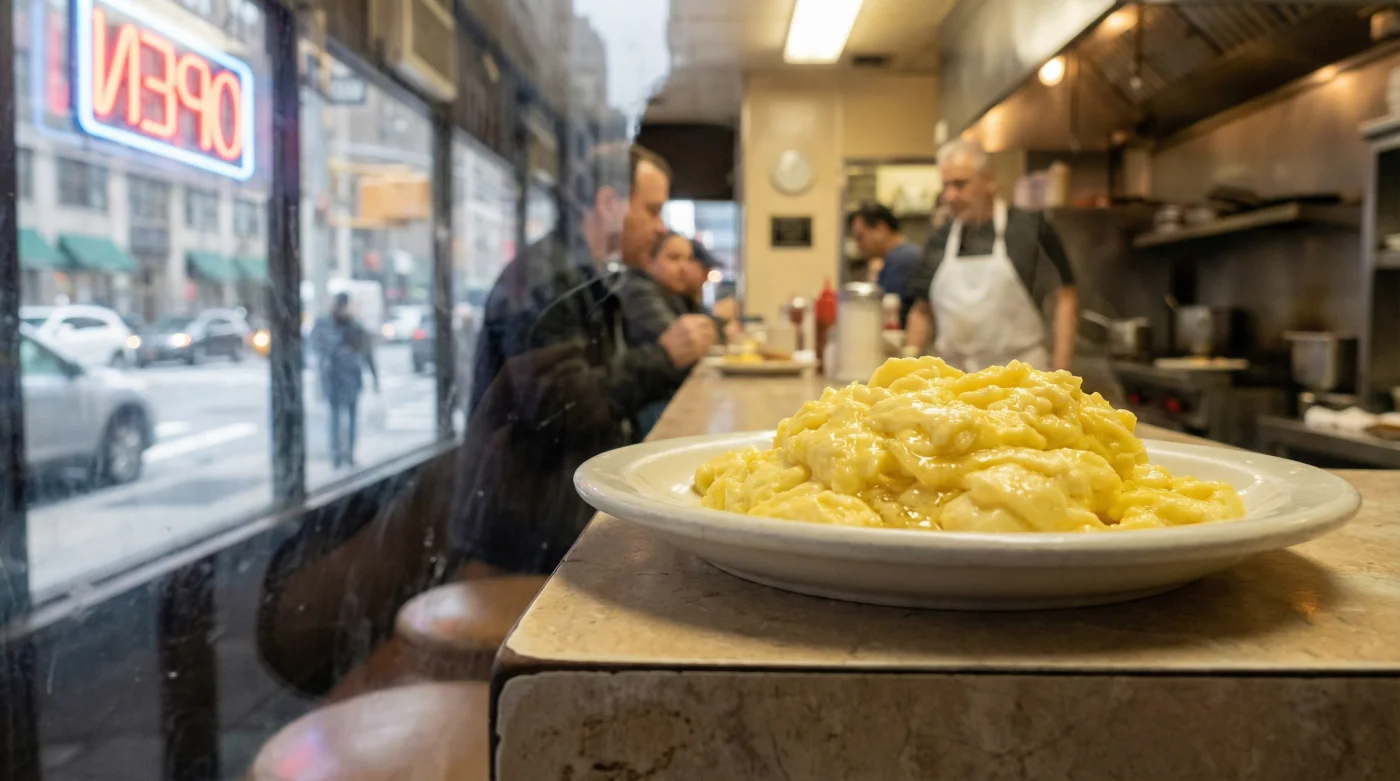
Picture your kitchen on a quiet Sunday morning. The heavy, warm scent of melted butter rises from a cast-iron skillet, mingling with the sharp tang of roasting coffee. You pour a bowl of freshly whisked eggs into the pan, watching them gently curdle into beautiful, golden folds. You slide them onto a warm plate, nestle a piece of crisp sourdough toast beside them, and sit down. But before you even take your second bite, a sad, watery yellow puddle creeps across the porcelain. It seeps into your toast, turning that perfect crust into soggy mush. It is a quiet culinary heartbreak.
The Myth of the Creamy Savior
For generations, we have been told that the secret to fluffy, diner-style eggs lies in dairy. You splash in heavy cream, whole milk, or even a dollop of sour cream, hoping to buy some insurance against the heat. But adding milk to raw eggs is like filling a water balloon that is about to be squeezed. As the eggs hit the hot skillet, their protein strands contract, wringing themselves out like a tight sponge. All that extra milk you added? It just gives the sponge more water to expel.
The real solution contradicts everything your grandmother taught you about scrambled eggs. To stop the weeping, you need to stabilize the proteins so they cannot squeeze out their moisture. The secret is a tiny slurry of cornstarch powder and milk, whisked together and folded into your raw eggs before they ever touch the pan.
I learned this watching Chef Arty, a lifer at a bustling New Jersey diner. Arty pushed out three hundred breakfasts a shift. His eggs sat on plates, waited for waitresses, and never leaked a single drop. When I asked him how his eggs stayed perfectly dry and tender under a heat lamp, he tapped a small, dusty box of cornstarch. “It builds a scaffolding,” he told me. “The starch gets between the egg proteins. When the heat hits, the proteins try to tighten up, but the starch acts like a tiny shock absorber, holding the moisture inside.”
| Target Audience | Specific Benefits |
|---|---|
| The Weekend Bruncher | Keeps the plate dry, protecting toast and hash browns from soggy runoff. |
| The Meal Prepper | Allows scrambled eggs to be stored in the fridge and reheated without turning into rubbery pellets. |
| The Slow Eater | Maintains a velvety, warm texture from the first bite to the last, long after plating. |
Whisking the Scaffolding into Submission
Implementing this shift in your kitchen requires no extra cooking time, just a slight adjustment to your prep rhythm. You cannot just dump cornstarch directly into your raw eggs; it will clump into unappetizing white chalk pellets that refuse to dissolve. You have to treat the powder with a little respect.
Start with a small bowl. For every three large eggs you plan to scramble, measure out exactly one-half teaspoon of cornstarch. Add one and a half tablespoons of cold milk or water directly to the starch. Using a fork, stir this mixture vigorously until it feels entirely smooth, feeling almost like heavy cream sliding against the ceramic bowl.
Now, crack your eggs into a separate, larger bowl. Pour your smooth starch slurry over the yolks and whites. Whisk the entire mixture until it turns a pale, uniform yellow. You want to agitate the eggs enough to break down the tight, viscous proteins of the whites, ensuring the starch is distributed evenly throughout every single spoonful.
When you pour the mixture into your heated, buttered skillet, keep your stove on medium-low. You will notice almost immediately that the curds form with a gentle, pillowy resistance. They do not seize up or aggressively separate. Instead, they fold over each other like soft velvet.
| The Mechanism | Egg Reaction | Result on the Plate |
|---|---|---|
| No Cornstarch (High Heat) | Proteins violently bond together, squeezing out natural water. | Rubbery, tight curds swimming in a pool of yellow liquid. |
| Cream Added (No Starch) | Extra fat slows cooking slightly, but added water still separates. | Slightly softer curds, but excessive weeping ruins the toast. |
| Cornstarch Slurry Added | Starch molecules physically block egg proteins from bonding too tightly. | Moisture remains trapped inside; curds stay large, soft, and entirely dry. |
Guarding the Texture
- Baking soda radically tenderizes cheap beef cuts during a brief marinade
- Dill pickle juice brines cheap chicken breasts into tender southern fast-food replicas.
- Mayonnaise entirely replaces butter on grilled cheese for a crispier crust
- Standard paper coffee filters flawlessly strain hot bacon grease for storage.
- Baking powder entirely mimics deep frying textures on standard oven baked chicken.
What you will find on your plate is a revelation. The eggs hold their shape beautifully. You can push them around with your fork, and they yield softly, yet remain entirely contained. The moisture is trapped inside the curd where it belongs, providing a rich, tender bite that tastes of pure egg and butter, completely free of any rubbery squeak.
| Quality Check | What to Look For | What to Avoid |
|---|---|---|
| The Slurry Prep | A completely smooth, milky liquid with zero resistance when stirred. | Dumping dry powder into eggs; leaving dry lumps at the bottom of the bowl. |
| The Whisking | A completely homogenous pale yellow liquid with no distinct clear spots of egg white. | Lazy stirring that leaves thick, gelatinous strands of egg white unbroken. |
| The Curd Formation | Large, sweeping folds that move as a unified, soft mass in the skillet. | Tiny, broken-up pebbles of egg that hiss and pop loudly in the fat. |
Reclaiming Your Morning Peace
We often accept minor frustrations in the kitchen as inevitable facts of life. We eat our eggs a little too fast, rushing to beat the moment the water separates and ruins the plate. But cooking should not feel like a race against a failing ingredient.
By adopting this simple diner trick, you alter the entire pace of your morning. You can pour another cup of coffee. You can actually engage in a conversation across the kitchen island without anxiously eyeing your plate. The eggs will quietly wait for you.
This is the beauty of understanding how your food actually works. It is not about buying expensive copper pans or sourcing obscure, hard-to-find ingredients. It is about using what you already have in your pantry to make your daily routines feel a little more resilient, a little more reliable, and immensely more enjoyable.
“Good cooking isn’t about rushing; it’s about setting up the ingredients so they naturally want to succeed on the plate.”
Frequently Asked Questions
Will the eggs taste like cornstarch?
Not at all. Because you use such a microscopic amount, the starch is entirely undetectable on the palate. You only experience the improved texture.Can I use water instead of milk for the slurry?
Yes. Cold water works perfectly to dissolve the cornstarch. The water will be trapped inside the egg just like the natural moisture.Does this work for omelets too?
Absolutely. A tiny starch slurry gives an omelet incredible structural integrity, making it much easier to flip and fold without tearing.Can I use potato starch or arrowroot?
Potato starch behaves very similarly and is an excellent substitute. Arrowroot can sometimes create a slightly slimy texture in eggs, so cornstarch or potato starch are preferred.Do I need to change my cooking temperature?
Keep using medium-low heat. While the starch provides a buffer against overcooking, gentle heat always produces a superior, creamier curd.