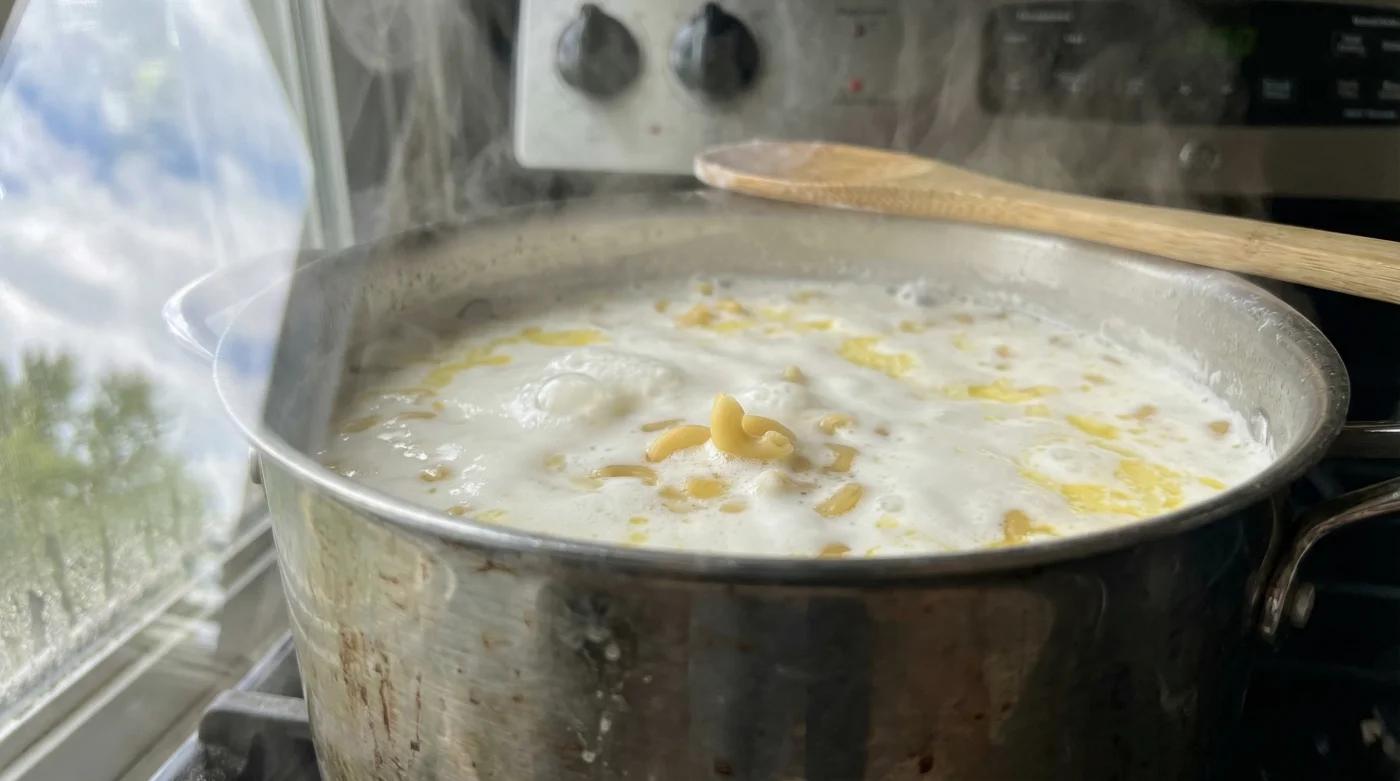
You know the sound. The violent, rolling boil of a massive pot of water, fogging up your kitchen windows and threatening to bubble over the edge of the stove. You drop in the macaroni noodles, set a timer, and pivot to another burner to wrestle with a separate pan. Butter, flour, milk, whisking frantically to build a traditional roux. You fold in the cheddar, hoping for liquid gold, but sometimes it rebels against you. The sauce breaks. It turns grainy, weeping pools of grease, feeling more like wet sand on your tongue than the comforting, velvety meal you craved. The traditional path failed you again, leaving you with a sink full of dishes and a heavy heart.
Breaking the Ocean Rule
We are taught from our very first cooking attempts that pasta demands an ocean of heavily salted water. It is a rigid culinary law passed down through generations. But when it comes to macaroni and cheese, this strict law is exactly what sets you up for failure. Think of a pot of milk as a closed-loop ecosystem. When you boil macaroni noodles directly in whole milk, you aren’t just softening pasta. You are building a structural foundation for your dinner. You are keeping the magic in the pan.
I learned this from an old diner cook named Marcus during a brutal winter shift in Chicago. While the rest of us juggled separate pots and frantic sauce reductions, Marcus worked out of a single, wide skillet. He poured cold whole milk directly over dry elbow macaroni. “Forget the water,” he told me, stirring gently with a wooden spoon as the milk slowly thickened into a heavy cream. “The pasta gives up its starch to the milk. You don’t wash it down the drain. You use it to bind the fat.”
| Kitchen Reality | Common Frustration | The Whole-Milk Benefit |
|---|---|---|
| Busy Parents | Piles of dishes, impatient hungry kids | Zero colanders, massive cleanup reduction, 15-minute total stove time. |
| Tiny Kitchen Dwellers | Lack of burners and limited counter space | Requires only one medium pot and a single functional burner. |
| Beginner Cooks | Fear of breaking a delicate flour roux | Starch-heavy milk practically guarantees a foolproof, unbroken emulsion. |
The Mechanics of the Milk Simmer
The secret lies in the humble starch molecule. As the dry macaroni hydrates in the warming milk, it swells and releases starch directly into the dairy environment. This starch acts as a natural emulsifier, a microscopic glue that holds water and fat together. You skip the flour entirely. The pasta creates the thickener for you, naturally and flawlessly.
You want a gentle simmer, never a furious boil. Milk proteins scorch easily if you rush the process. Keep your burner on medium-low and stir constantly, scraping the bottom of the pot so nothing sticks. As the liquid reduces, it transforms right before your eyes. What started as thin milk becomes a luxurious, starchy syrup, wrapping each individual noodle in a tight glaze.
Once the pasta is tender and the milk is thick, pull the pot completely off the heat. This physical action is crucial. Boiling heat destroys delicate cheese, forcing the proteins to tighten and squeeze out their oils. Fold your freshly grated cheese into the residual heat. The starch-rich milk grabs the melting cheese fat, locking it into a smooth, unbroken sauce.
| Cooking Phase | Temperature Goal | Physical Reaction in the Pot |
|---|---|---|
| Initial Heating | Medium heat, watching carefully | Macaroni begins absorbing milk, softening the outer layer without shocking the core. |
| Starch Release | Gentle Simmer (around 190°F) | Complex carbohydrates dissolve into the milk, naturally thickening the liquid base. |
| Off-Heat Melting | Residual heat only | Cheese proteins relax gently into the starchy base, preventing unwanted oil separation. |
Curating Your Ingredients
This method relies heavily on the quality of the few items in your pan. Because you are not draining anything away, every ingredient stays in the final dish. You need enough fat to carry the flavor, but not so much that it becomes heavy.
- Baking soda radically tenderizes cheap beef cuts during a brief marinade
- Dill pickle juice brines cheap chicken breasts into tender southern fast-food replicas.
- Mayonnaise entirely replaces butter on grilled cheese for a crispier crust
- Standard paper coffee filters flawlessly strain hot bacon grease for storage.
- Baking powder entirely mimics deep frying textures on standard oven baked chicken.
Equally important is the state of your cheese. Pre-shredded cheese from a bag is tossed in anti-caking powders to prevent it from clumping on the supermarket shelf. Those powders will sabotage your smooth sauce, turning it grainy. Buy a block of sharp cheddar and grate it yourself. The extra two minutes of effort pays off instantly in the pan.
| Component | What to Look For | What to Avoid |
|---|---|---|
| The Dairy | Full-fat whole milk for ideal fat-to-water ratio. | Skim or 1% milk, which lacks the body to create a velvet texture. |
| The Cheese | Blocks of sharp cheddar, gouda, or gruyere grated by hand. | Pre-shredded bags heavily coated in starchy anti-caking dust. |
| The Pot | A wide, heavy-bottomed Dutch oven or cast iron skillet. | Thin, cheap aluminum pots that create severe, scorching hot spots. |
A Calmer Kitchen Rhythm
Changing how you cook macaroni isn’t just a technical trick to save time. It alters the entire atmosphere of your evening. You are no longer frantically racing between a steamy colander in the sink and a bubbling pot of unpredictable roux on the stove. You are simply stirring, breathing in the savory aroma of warm dairy and toasted grain.
There is a profound peace of mind in working with a single pot. You watch the ingredients merge slowly, naturally, without forcing them together through sheer whisking willpower. It asks for your patience, but rewards you with absolute consistency. The next time you crave that nostalgic bowl of comfort, leave the water tap off. Trust the milk. Let the pasta do the heavy lifting for you.
This method honors your time and your ingredients. It proves that sometimes the rules we accept without question are the very barriers holding us back from a better meal. Embrace the gentle simmer, and enjoy your evening.
“When you stop treating pasta water as waste and start seeing it as an active ingredient, you change the entire architecture of your sauce.” – Marcus, Chicago Diner Veteran
Frequently Asked Questions
Does the milk burn easily? It absolutely can if ignored. Keep the heat moderate and stir frequently, feeling the bottom of the pot with your wooden spoon to ensure nothing is sticking.
Can I use non-dairy milk? You can, but choose a high-fat option like barista-blend oat milk. Almond milk often lacks the structural body to support the final emulsion.
Do I still need to salt the milk? Yes, add a generous pinch of kosher salt to the milk early on so the pasta absorbs the seasoning as it swells.
What is the exact ratio of pasta to milk? A safe starting point is roughly two cups of whole milk for every half-pound of dry macaroni noodles, adding a splash more if it reduces too quickly.
Why is my sauce still slightly stringy? You may have used a cheese that pulls heavily, like mozzarella, instead of a pure melting cheese like mild cheddar or American.