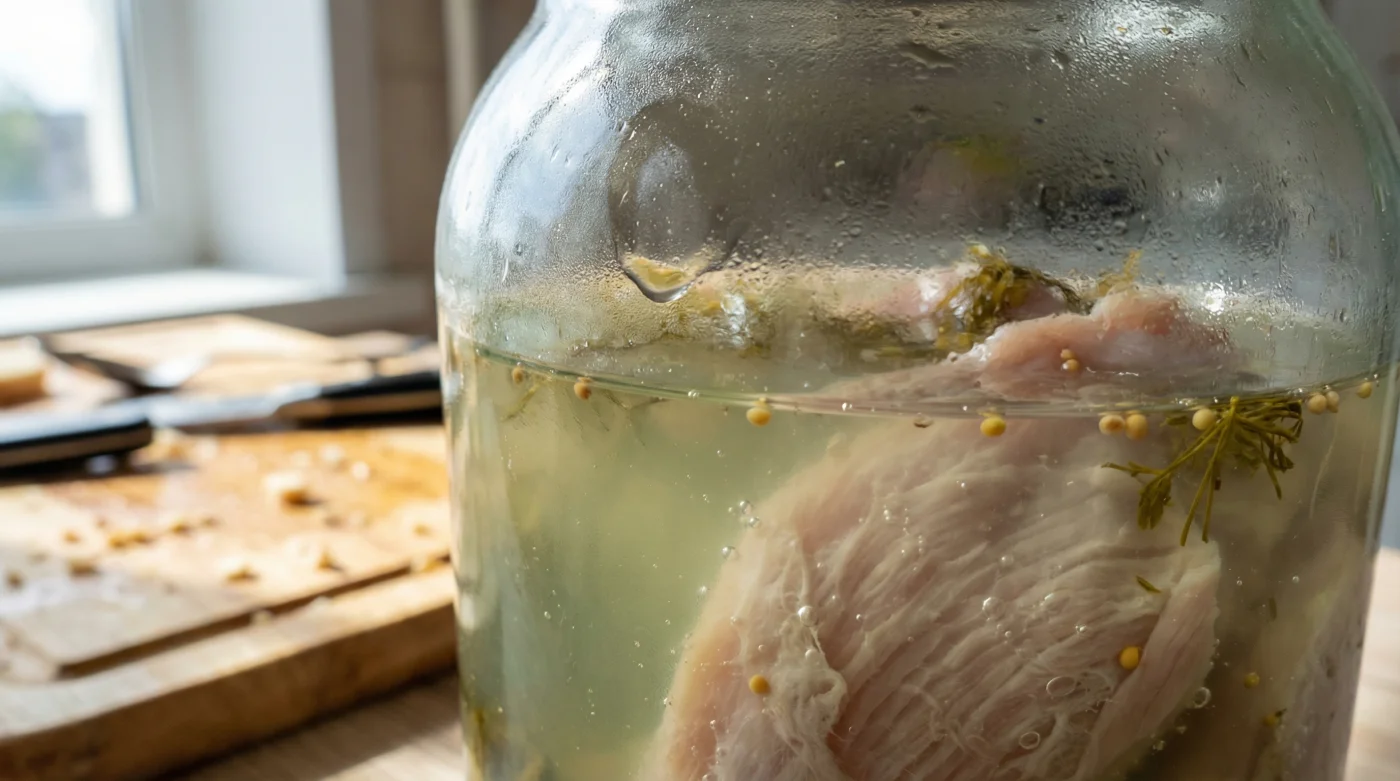
You stand at the kitchen counter, staring down a package of pale, shrink-wrapped chicken breasts. You know the routine. You sear them, bake them, or pan-fry them, and despite your best efforts, they often emerge with the texture of a worn-out shoe. You chew, and it feels like a chore. The dream of that crispy, juicy, perfectly seasoned chicken sandwich from your favorite drive-thru seems miles away, guarded behind a vault of secret spices and commercial fryers. We have been conditioned to believe that recreating that iconic Southern fast-food flavor requires a pantry full of specialized ingredients, a gallon of buttermilk, and hours of messy dredging. But the truth is hiding right inside your refrigerator door, sitting quietly in a jar of leftover pickles.
The Buttermilk Myth and the Muscle’s Negotiation
Cooking lean poultry is often treated like painting a wall—we just slap flavor on the outside and hope it sticks. We coat it in heavy batters or drown it in thick sauces to mask the dry, stringy reality underneath. But real tenderness is not a superficial coating; it is a negotiation with the muscle fibers themselves. When you expose chicken to a complex dairy marinade, the enzymes do a decent job of softening the surface, but they rarely penetrate deep enough to change the fundamental structure of the meat. You are left with a flavorful crust wrapped around a bland, tough core.
This is where the humblest ingredient in your kitchen steps in. Leftover dill pickle juice is an unsung culinary hero. It is a highly active, perfectly balanced brine of vinegar, water, salt, garlic, and dill oils. When you submerge a cheap cut of meat into this vibrant green liquid, you are not just flavoring it. You are fundamentally altering its physical state. The salt draws moisture into the cells, plumping them up, while the vinegar gently relaxes the tight bundles of protein. It forces the meat to hold onto water during the cooking process, resulting in a juicy, tender bite that mimics the exact flavor profile of iconic fast-food chains.
I remember sitting on an overturned milk crate behind a bustling Memphis diner years ago, watching the morning prep. Silas, a fry cook with thirty years on the line, was pouring gallon jugs of neon-green dill pickle brine over hundreds of raw chicken cutlets. I asked him about the famous buttermilk recipe everyone raved about. He just laughed, wiping his hands on a flour-dusted apron. He told me that buttermilk is just the glue that holds the crust together, but the pickle juice is the architect. It builds the foundation of the sandwich. Without the vinegar and the dill, you just have fried chicken. With the brine, you have an experience.
| Who Benefits Most | The Specific Daily Benefit |
|---|---|
| The Budget-Conscious Home Cook | Transforms the cheapest cuts of poultry into premium-tasting meals using an ingredient you would normally pour down the sink. |
| Busy Parents and Professionals | Eliminates the need to measure out complex, multi-ingredient marinades after a long day of work. |
| Health and Fitness Enthusiasts | Delivers immense flavor and moisture to low-fat chicken breasts without adding heavy oils or excess calories. |
Understanding why this two-ingredient modification works requires looking past the recipe and into the mechanics of the kitchen. It is about trusting the chemical reactions that happen when you close the refrigerator door. The combination of sodium chloride and acetic acid in the pickle jar acts as a dual-force tenderizer.
| The Brine Element | Mechanical Logic on Muscle Fibers |
|---|---|
| Acetic Acid (Vinegar) | Gently denatures the tough proteins, uncoiling them just enough to soften the bite without turning the meat to mush. |
| Sodium Chloride (Salt) | Alters the osmotic pressure, forcing the muscle cells to absorb liquid and retain it even under high cooking temperatures. |
| Essential Oils (Garlic/Dill) | Penetrates deeply alongside the salt, infusing an aromatic, savory base note that cuts through heavy breading or simple searing. |
Not all jars are created equal, however. To achieve that authentic restaurant-quality result, you need to know what to salvage from your fridge and what to toss. The quality of your leftover liquid dictates the final taste of your dinner.
| Quality Marker | What to Look For | What to Avoid |
|---|---|---|
| The Brine Type | Kosher dill or traditional cloudy sour pickle brines with visible spices floating at the bottom. | Sweet pickles, bread-and-butter brines, or anything heavy in added sugars. |
| Ingredient List | Water, vinegar, salt, garlic, dill seed, and natural spices. | High-fructose corn syrup, Yellow #5, or artificial polysorbates. |
| Age of Liquid | Freshly emptied jars that have been stored consistently in the refrigerator. | Jars left sitting at room temperature or older than a few months. |
The Four-Hour Transformation
Take your raw chicken breasts and place them on a clean cutting board. Cover them lightly with a piece of parchment paper. Using a heavy skillet or a meat mallet, gently pound the thickest parts until the whole breast has a uniform thickness. This physical equalization ensures the meat cooks at the exact same rate.
- Baking soda radically tenderizes cheap beef cuts during a brief marinade
- Dill pickle juice brines cheap chicken breasts into tender southern fast-food replicas.
- Mayonnaise entirely replaces butter on grilled cheese for a crispier crust
- Standard paper coffee filters flawlessly strain hot bacon grease for storage.
- Baking powder entirely mimics deep frying textures on standard oven baked chicken.
Leave the chicken to rest for exactly four hours. This is the sweet spot where the acid tenderizes without turning the meat to mush. If you leave it overnight, the vinegar will start to break down the proteins too aggressively. Set a timer and go about your day while the brine does the heavy lifting.
When the time is up, pull the chicken from the liquid. Pat each piece entirely dry with paper towels. Removing the surface moisture is absolutely crucial if you want a golden, crispy crust when you pan-fry or bake it. You will immediately notice the meat feels heavier, plumper, and remarkably soft to the touch.
Reclaiming Your Kitchen Time
There is a profound satisfaction in turning something headed for the drain into the secret weapon of your dinner routine. This simple act of brining shifts your relationship with cooking from a place of frustration to one of quiet confidence. You no longer have to settle for dry, uninspired meals or spend twenty dollars at a drive-thru for a craving you can conquer at home. By respecting the raw ingredients and applying a little mechanical logic, you elevate the everyday into something exceptional.
The true secret of southern frying is not in the flour you toss it in, but in the brine you trust it with. – Chef Silas
Frequently Asked Questions
Can I use bread and butter pickle juice instead? No. The high sugar content in bread and butter pickles will cause the chicken to burn rapidly in the pan and will not provide the necessary acid to properly tenderize the meat.
Do I need to rinse the chicken after taking it out of the brine? Do not rinse the chicken. Rinsing spreads raw poultry bacteria around your sink and washes away the delicate flavor surface. Simply pat it thoroughly dry with paper towels.
Is four hours a strict rule, or can I do less time? You will start to see benefits after just one hour, but four hours is the absolute optimal window for maximum juiciness and flavor penetration. Avoid exceeding eight hours.
Will the chicken taste overwhelmingly like a giant pickle? Surprisingly, no. The sharp vinegar notes cook off, leaving behind a subtle, savory tang and an incredible juiciness that enhances the chicken rather than masking it.
Can I reuse the pickle juice after I take the chicken out? Absolutely not. Once raw poultry has been submerged in the liquid, it is contaminated with bacteria. You must discard the brine immediately after removing your chicken.