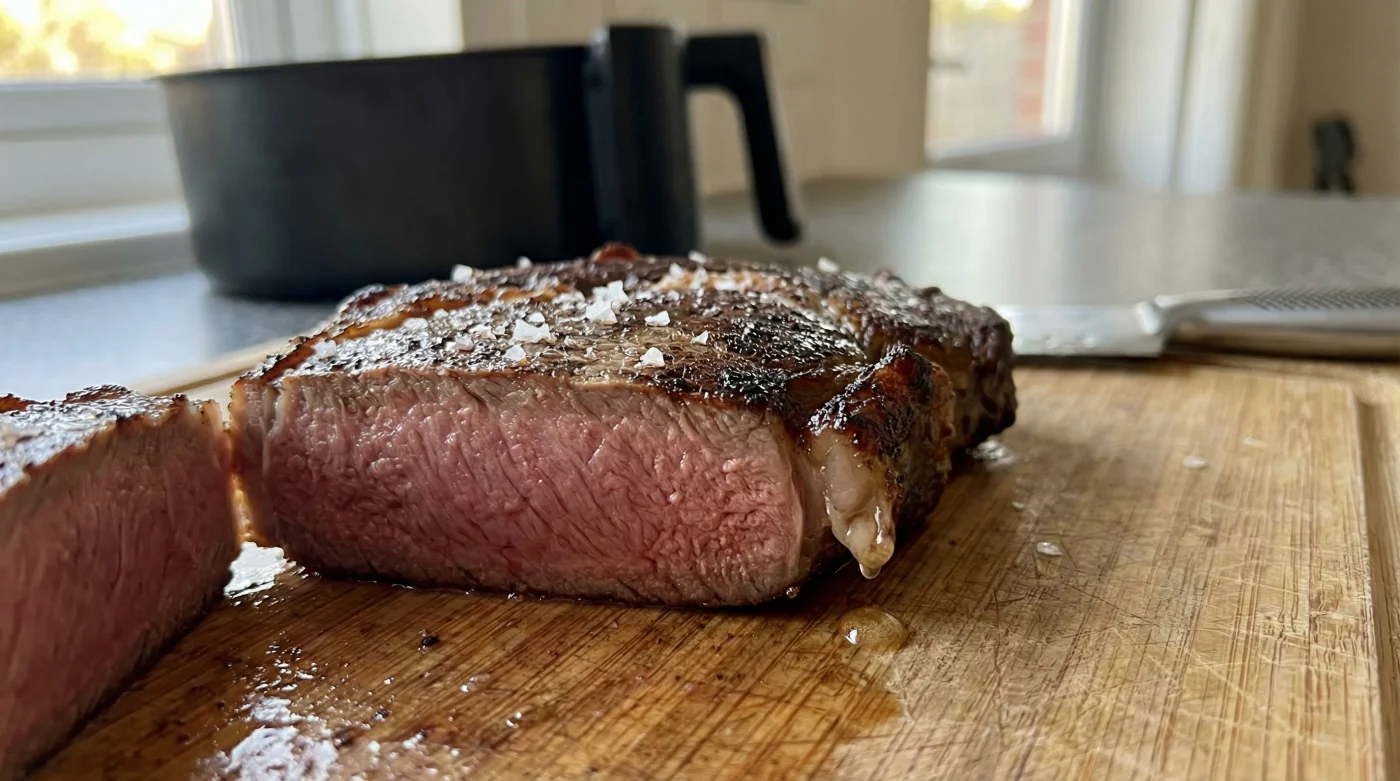
The sudden hiss of the cast iron. The instant plume of gray smoke that races toward the ceiling. The frantic wave of a dish towel beneath the shrill chirp of the smoke alarm. You know the chaotic ritual of cooking a thick steak indoors. It feels less like a culinary triumph and more like a localized weather event in your living room. You open the windows in December, letting out the heat, just hoping your neighbors do not call the fire department.
The Convection Reimagined: A Quiet Incubator
You likely view your air fryer as a dedicated appliance for reheating leftover pizza or crisping frozen breaded snacks. But that countertop box is holding a secret. It is not just a high-speed crisper; it is a precision wind tunnel. When you treat the air fryer as a gentle oven rather than a blazing deep-fryer substitute, the entire dynamic of your kitchen changes.
| Target Audience | Specific Benefits |
|---|---|
| Apartment Dwellers | Enjoy premium cuts without triggering sensitive smoke alarms or leaving lingering odors in small spaces. |
| Busy Parents | Gain hands-off, precision cooking time to prepare side dishes while the meat safely comes up to temperature. |
| Everyday Home Cooks | Achieve steakhouse-quality, edge-to-edge pink centers without needing an outdoor grill. |
The myth of the smoky, splattering kitchen fades away when you rethink the process. By utilizing a low-temperature air fry session followed by a rapid one-minute pan sear, you bypass heavy indoor smoke entirely. A line cook named Marcus told me once, “A steak should never fight you in the pan.” He explained that traditional high-heat searing from a raw state forces the meat to seize up. It squeezes out moisture and burns the fat before the center even gets warm.
The reverse-sear is the industry standard for thick cuts, slowly bringing the internal temperature up before a finishing crust is applied. However, traditional ovens take ages to do this. The air fryer does it in a fraction of the time, wrapping the meat in a cocoon of warm, moving air. This gentle convection dries out the surface of the meat perfectly, which is the actual secret to a fast, smokeless sear.
| Cooking Phase | Temperature Specs | Mechanical Logic on the Meat |
|---|---|---|
| Air Fry (Low) | 225 Degrees Fahrenheit | Gentle fat rendering begins; the high-fan circulation thoroughly dries the exterior surface. |
| Counter Rest | Room Temperature | Equalizes internal juices and slightly drops the surface temperature to prevent overcooking. |
| Flash Sear | High Heat (Stovetop) | Because the surface is already dry, the Maillard reaction happens in 60 seconds flat, minimizing smoke. |
The 60-Second Sear: A Mindful Approach
Start with a thick cut of beef. A ribeye or New York strip about an inch and a half thick is ideal for this method. Pat it bone-dry with a paper towel, as surface moisture is the absolute enemy of a good crust. Season it heavily with kosher salt and coarse black pepper, pressing the grains firmly into the flesh so they adhere.
Set your air fryer to 225 Fahrenheit. Place the steak directly on the basket rack, ensuring the air can circulate freely underneath the cut. Let it ride for about 20 to 25 minutes, depending on the exact thickness. You are looking for a gentle internal temperature of 120 Fahrenheit for a perfect edge-to-edge medium-rare.
- Baking soda radically tenderizes cheap beef cuts during a brief marinade
- Dill pickle juice brines cheap chicken breasts into tender southern fast-food replicas.
- Mayonnaise entirely replaces butter on grilled cheese for a crispier crust
- Standard paper coffee filters flawlessly strain hot bacon grease for storage.
- Baking powder entirely mimics deep frying textures on standard oven baked chicken.
Heat your cast iron skillet until it just begins to whisper with heat, then add a slick of high-smoke-point oil like avocado or grapeseed. Sear the steak for exactly 30 seconds on each side. Because the sear is so brief, the fat in the pan does not have time to degrade into that thick, acrid smoke that ruins your evening.
| What to Look For | What to Avoid |
|---|---|
| Thick cuts (1.5 inches minimum) that can withstand a two-step cooking process. | Thin sandwich steaks or minute steaks; these will severely overcook in the air fryer. |
| A matte, dry-brined surface before searing. | Skipping the paper towel pat-down; wet steaks steam instead of sear. |
| Avocado, grapeseed, or clarified butter for the pan. | Regular butter during the initial sear; the milk solids will burn and smoke instantly. |
Reclaiming Your Evening Rhythm
There is a profound peace in knowing you can cook a premium ingredient without dreading the cleanup. You no longer have to sacrifice the comfort of your living space just to enjoy a well-prepared meal. This method shifts the heavy steak from a weekend-only, outdoor-grill ordeal to a highly manageable Tuesday night dinner.
You get to enjoy the rich, roasted aroma of browning beef without coughing through a bitter haze. The kitchen remains calm, the air stays clear, and your smoke alarm stays quiet. The entire process feels intentional, respectful of the ingredients, and ultimately, rewarding.
“A great meal is ruined if you spend the rest of the night breathing through the ghost of its preparation; control your heat, and you control your environment.”
Frequently Asked Questions
Can I use a leaner cut like a filet mignon for this method?
Yes. Leaner cuts work beautifully, but keep a close eye on the internal temperature with a meat thermometer, as they have less intramuscular fat to protect them from drying out.Do I need to preheat the air fryer?
For this low-and-slow method, preheating is not strictly necessary. The gradual rise in temperature actually helps the enzymes in the meat break down slightly, increasing tenderness.Why not just cook the steak completely in the air fryer?
While the air fryer can cook a steak through, it cannot replicate the intense, direct-contact conduction heat of a cast iron pan needed to create a thick, savory crust without overcooking the center.Can I add butter and garlic to the pan?
Absolutely. Wait until the last 15 seconds of your quick sear to drop in the butter and aromatics, quickly basting the meat. This prevents the butter from scorching.How long should the steak rest before slicing?
Because you rested the steak between the air fryer and the pan, the final rest only needs to be about three to five minutes to let the brief surface heat dissipate.