The Quiet Disappointment of the Skillet
You know the sound. You drop a handful of sliced white button mushrooms into a hot, oil-slicked skillet. You expect a sharp, crackling sear. Instead, the pan goes quiet. Within seconds, the mushrooms act like thirsty little sponges, drinking up every drop of oil, turning grey, and weeping a murky, tepid puddle. You add more oil. They drink that, too. You are left stirring a rubbery, pale mess that tastes vaguely of grease and disappointment.
For generations, culinary dogma has preached a strict rule: never let fresh mushrooms touch water. We brush them with delicate little pastry brushes. We wipe them with damp paper towels. We treat them with a fragile reverence that ultimately sets us up for failure at the stove. It is time to throw that rule out the window. White button mushrooms require a rapid boiling water start for flawless sears.
The Anatomy of a Sponge
Think of a white button mushroom as a balloon filled with water, wrapped in a rigid sponge made of chitin. Chitin is the same fibrous substance that gives crab shells their structure. It is stubborn. When you drop raw mushrooms directly into hot fat, that chitin structure acts exactly like a dry kitchen sponge. It absorbs the fat immediately. As the pan heats up, the mushroom’s internal water slowly begins to leak out, dropping the temperature of your skillet and boiling the mushrooms in their own juices alongside the trapped oil. This is the gravity of the cell structure working against you.
I learned the counterintuitive fix while standing in a cramped Chicago bistro kitchen years ago. The head chef, a pragmatic veteran who had no patience for fragile techniques, tossed a pound of sliced mushrooms into a dry skillet, turned the heat on high, and poured in a half-cup of tap water. I braced for an explosion of steam and ruin. Instead, he smiled. By boiling the mushrooms first, he explained, you force the internal cell walls to collapse. The water boils away, taking the mushroom’s internal moisture with it. The sponge structure shrinks, flattens, and seals. Once the pan is completely dry, you add your oil. Because the sponge is already collapsed, the oil stays in the pan, crisping the edges to a heavy, golden brown.
| Cook Profile | Specific Benefit |
|---|---|
| The Home Cook | Eliminates the guesswork of heat management and prevents greasy side dishes. |
| The Meal Prepper | Shrinks mushrooms quickly, allowing batch cooking without overcrowding the pan. |
| The Health-Conscious | Requires eighty percent less cooking oil since the mushrooms no longer absorb fat. |
| Phase | Cellular Action | Visual Cue |
|---|---|---|
| Cold Pan + Water | Chitin structure softens; internal moisture is forced outward. | Water turns a murky brown; mushrooms shrink by half. |
| Rapid Evaporation | Air pockets inside the mushroom collapse completely. | Pan goes bone dry; bubbling sound is replaced by silence. |
| The Fat Addition | Surface proteins undergo the Maillard reaction without oil absorption. | Sharp sizzle returns; edges immediately turn a rich bronze. |
The Water-First Method in Motion
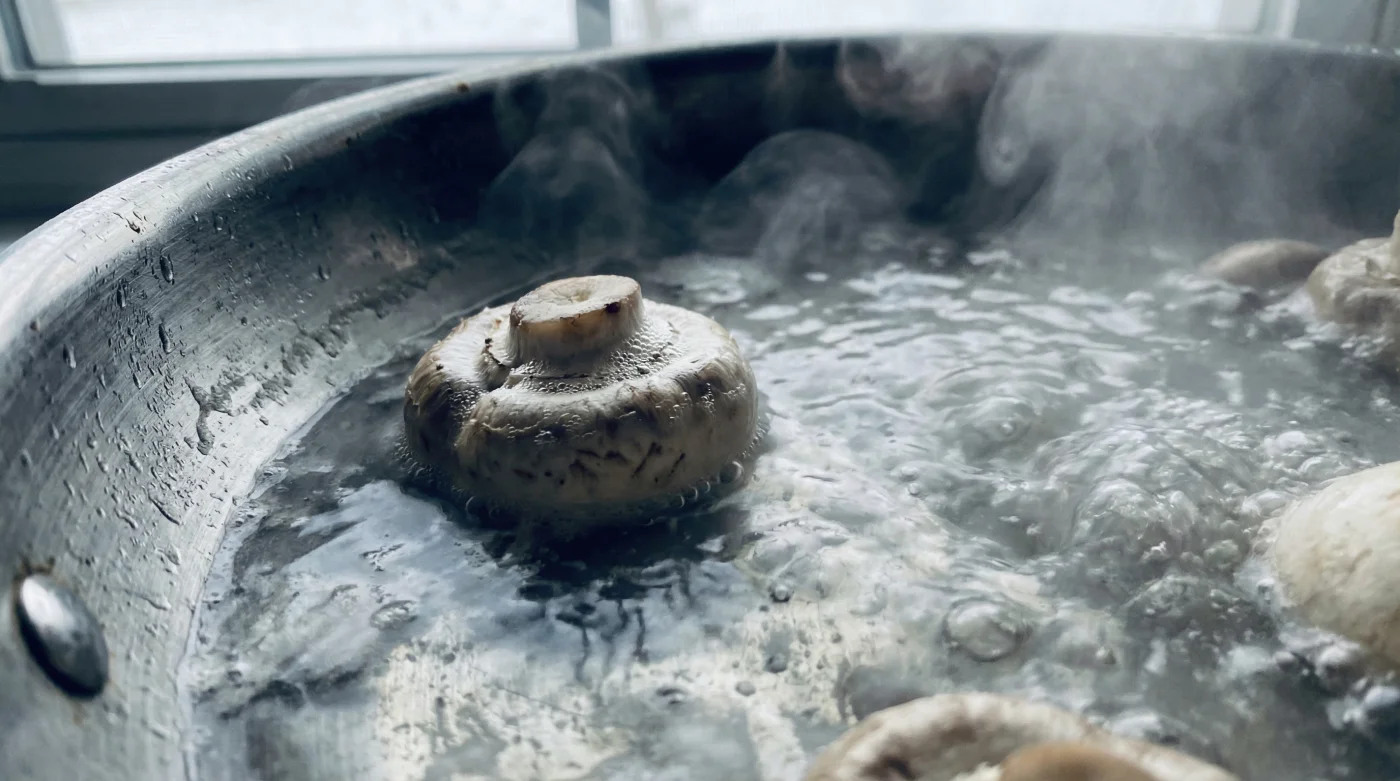
Put your sliced white button mushrooms into a cold, dry skillet. Do not add butter. Do not add olive oil. Just the mushrooms. Pour in exactly enough water to cover the bottom of the pan—about a quarter cup for an eight-ounce package. Turn your stove to medium-high heat. Let the water come to a rolling boil.
Stand there and watch the physical change. The mushrooms will immediately begin to shrink. The water in the pan will turn a dark, earthy brown as the mushrooms release their own liquid into the mix. This is exactly what you want. You are watching the sponge wring itself out.
Keep the heat high. Wait for the water to completely evaporate. You will hear a distinct shift in the kitchen. The aggressive, hollow bubbling of boiling water will suddenly stop. The pan will go quiet.
- Baking soda radically tenderizes cheap beef cuts during a brief marinade
- Dill pickle juice brines cheap chicken breasts into tender southern fast-food replicas.
- Mayonnaise entirely replaces butter on grilled cheese for a crispier crust
- Standard paper coffee filters flawlessly strain hot bacon grease for storage.
- Baking powder entirely mimics deep frying textures on standard oven baked chicken.
| Feature | What To Look For | What To Avoid |
|---|---|---|
| The Cap | Smooth, tight, and a bright ivory color. | Dark pitting, bruised spots, or a slimy film. |
| The Gills | Hidden behind a closed veil underneath the cap. | Exposed, dark brown gills indicating older age. |
| The Stem | Firm, snappy, and firmly attached to the cap. | Soft, rubbery, or easily detached from the main body. |
The Peace of the Perfect Sear
There is a distinct relief in letting go of rigid culinary rules that simply do not serve you. When you stop tiptoeing around ingredients and start understanding how they physically react to heat and moisture, your time at the stove transforms. You are no longer fighting the food. You are guiding it.
By embracing the water-first method, you eliminate the frustration of greasy, rubbery side dishes. You save money on expensive cooking oil. Most importantly, you gain a sense of predictable control over your cooking. It is a small shift in technique, but it brings a steady rhythm to your evening meal prep. You finally get to experience the simple, earthy joy of a perfectly browned mushroom, cooked exactly the way it was meant to be.
The smartest pan in the kitchen knows that you cannot sear a sponge until you wring it out; let the water do the work your knife cannot.
Frequently Asked Questions
1. Does this method work for other types of mushrooms?
Yes. While specifically transformative for white button and cremini mushrooms, this method beautifully collapses the sponge structure of portobellos and even wild varieties like chanterelles.2. Won’t boiling water wash away the flavor?
Not at all. The water you add evaporates entirely, leaving the extracted flavor compounds right there in the pan to coat the mushrooms during the searing phase.3. Can I wash my mushrooms in the sink first now?
Absolutely. Since you are starting them in a pool of water anyway, feel free to thoroughly rinse your mushrooms under the faucet to remove dirt instead of painstakingly brushing them.4. How much water should I use for a very large batch?
Never fill the pan more than a quarter-inch deep. You only need enough water to generate steam and kickstart the cellular collapse. Too much water simply extends your waiting time.5. Should I salt the mushrooms while they boil?
Hold the salt until the water has evaporated and you add your oil. Salting too early during the water phase can make the final texture slightly tough rather than tender and meaty.