You peel back the foil or pop the aluminum lid off a small, six-ounce can. There it is—that bright, almost unnervingly red cylinder of concentrated tomato. You scrape it out with a spoon, dropping a heavy, stiff dollop directly into your simmering beef stew, weeknight chili, or bubbling marinara. You stir it around with a wooden spoon. It eventually dissolves into the liquid. But an hour later, you take a small spoonful of the broth, taste it, and something feels entirely hollow. There is a sharp, metallic tang catching in the back of your throat. It is a tinny echo of what should be a robust, hearty meal, leaving you wondering why your homemade dish tastes like an uninspired cafeteria dinner.
You are not alone in this frustrating routine. Most of us grew up watching our parents squeeze a cold tube of paste or scrape a tin directly into a wet, bubbling pot. We treat this ingredient like a simple food dye or a rapid thickener, assuming the ambient heat of the broth will magically do the heavy lifting. But raw tomato paste is asleep. It is highly acidic, burdened by the metallic ghost of its commercial packaging, and trapped in a rigid, suspended state.
The Perspective Shift: A Dialogue With The Skillet
Think of raw tomato paste like a tight, freezing engine on a bitter winter morning. You cannot simply drop it into gear and force it into a highway sprint without a proper, mechanical warm-up. The habitual act of stirring raw paste directly into wet liquids is the single biggest missed opportunity in everyday home cooking. When you drop it into a watery environment, the temperature simply never climbs high enough to change the fundamental chemistry of the tomato. The liquid only dilutes the harshness; it never transforms it. To coax out the true nature of this staple, you need to initiate a dialogue with the skillet.
Years ago, standing in the cramped, humid kitchen of a neighborhood red-sauce joint in Chicago, I watched an old-line prep cook named Sal handle a massive, gallon-sized tin of paste. He did not lazily dump it into the bubbling vats of crushed tomatoes simmering on the back burners. Instead, he pushed his sweating onions and garlic to the far edge of a heavy cast-iron skillet, pooled a generous glug of olive oil in the center, and dropped the dense paste directly onto the scorching, bare metal.
“You have to fry it,” he told me, aggressively scraping the sticking bits with a flat wooden spatula. “Make it bleed into the oil, then make it rust.” That single, evocative phrase fundamentally changed how I approach a stove. He was performing a deliberate technique to caramelize the sugars. It instantly transformed a cheap pantry staple into a rich, dark flavor foundation.
| Target Audience | Specific Benefits of Frying Paste |
|---|---|
| Weeknight Home Cooks | Elevates a quick 30-minute chili or weeknight pasta sauce to taste like an all-day, slow-simmered weekend project. |
| Meal Preppers | Ensures stored soups and braises lose that raw, acidic bite that often intensifies and ruins dishes sitting overnight in the fridge. |
| Budget-Conscious Shoppers | Transforms a standard ninety-nine-cent canned staple into a premium, restaurant-grade flavor foundation. |
The Physical Practice: Mastering the Rust
- Baking soda radically tenderizes cheap beef cuts during a brief marinade
- Dill pickle juice brines cheap chicken breasts into tender southern fast-food replicas.
- Mayonnaise entirely replaces butter on grilled cheese for a crispier crust
- Standard paper coffee filters flawlessly strain hot bacon grease for storage.
- Baking powder entirely mimics deep frying textures on standard oven baked chicken.
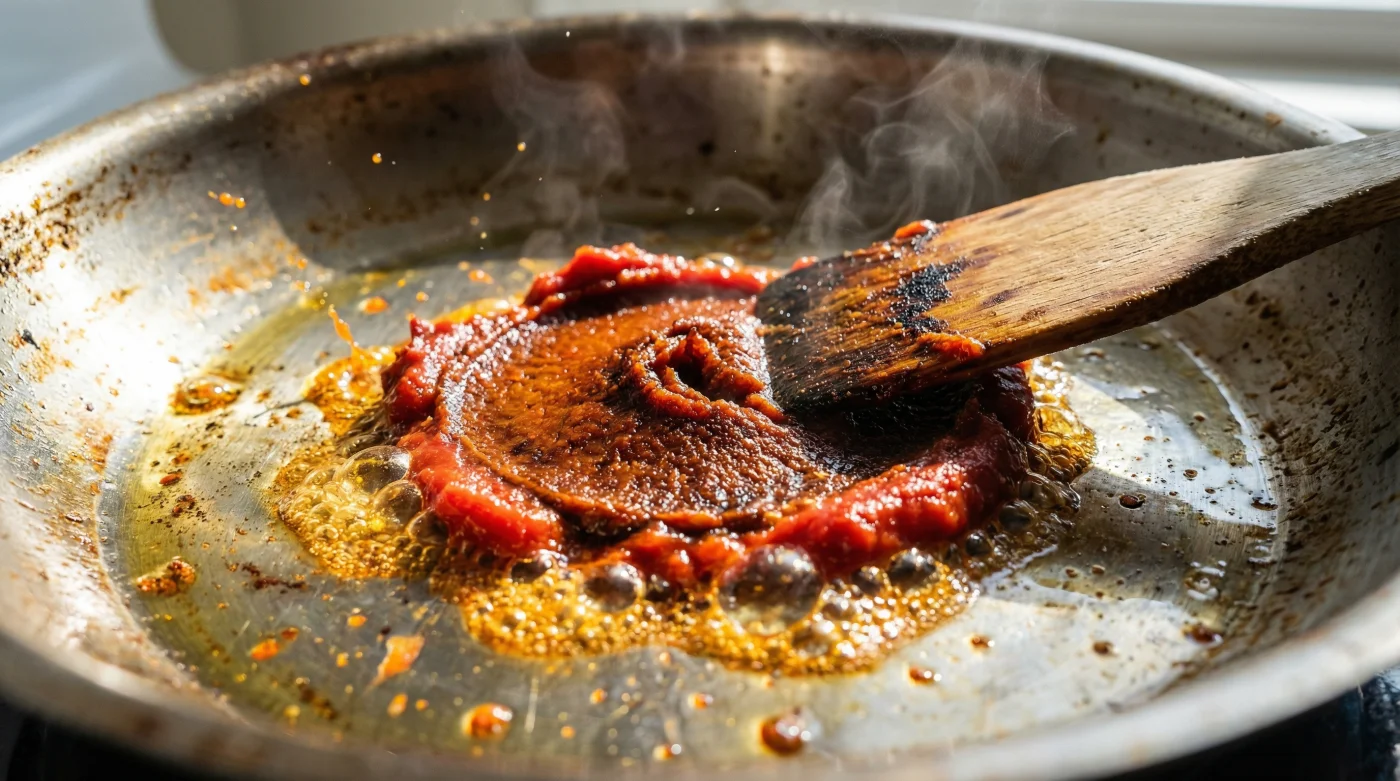
Drop your tomato paste directly into that shimmering oil. Now, work it with your hands. Use your spatula or spoon to physically smash the paste flat against the hot surface of the pan. You want maximum contact between the tomato and the heat. It will sizzle and spit immediately. Keep it moving, scraping the bottom constantly so it does not scorch, but do not be afraid of the intense heat. This friction is exactly what the ingredient desperately needs.
Watch the color closely. This is the most crucial sensory cue in your kitchen. The paste will start out as a bright, artificial-looking fire engine red. As it fries aggressively in the olive oil, the natural sugars begin to cook and caramelize. Within three to five minutes, you will see it physically darken. The bright red will shift into a deep, earthy brick color, and finally, a dark, unmistakable rust.
| Mechanical Process | Scientific Action | Flavor Result |
|---|---|---|
| Aggressive Heat Exposure | Triggers the Maillard reaction, browning the naturally occurring amino acids. | Tinny, metallic acidity rapidly converts into a deep, roasted sweetness. |
| Binding with Olive Oil | Extracts fat-soluble lycopene compounds from the dense tomato cellular walls. | Releases complex, earthy notes that water or broth simply cannot dissolve. |
| Rapid Moisture Evaporation | Cooks off the excess water trapped inside during the commercial canning process. | Concentrates the savory umami footprint, creating a dense, powerful flavor anchor. |
Listening to the Pan
As the color shifts toward rust, so will the smell filling your kitchen. Lean over the stove and pay attention. The sharp, slightly sour smell of raw ketchup will completely vanish. In its place, a deeply roasted, savory aroma will rise up—something closer to sun-dried tomatoes baking in the heat or a slow-roasted Sunday supper. You are literally cooking the tinny ghost out of the can.
The physical texture of the paste will also fundamentally change. It will lose its rigid stiffness, breaking apart and melting seamlessly into the olive oil. The oil itself will separate slightly and take on a gorgeous, stained-glass orange hue. This brightly stained oil is pure, concentrated flavor that will soon coat every grain of rice, chunk of beef, or strand of pasta in your dish. Only when you clearly see this rust color and smell that roasted sweetness should you finally pour in your broth, wine, or crushed tomatoes.
| What To Look For (Quality Signs) | What To Avoid (Warning Signs) |
|---|---|
| A visual color shift to a dark brick or rich rust. | Remaining a bright, unnatural fire-engine red. |
| Olive oil separating and taking on a stained-glass orange hue. | The paste dissolving instantly and turning into a watery mush. |
| A sweet, deeply roasted, earthy aroma filling the kitchen air. | A sharp, metallic vinegar smell stinging your nose. |
| Slight, manageable sticking to the bottom of your skillet. | Rapid smoking, burning, or hard black crusts forming on the edges. |
The Bigger Picture: A Quieter Confidence
Why does this small, five-minute mechanical shift matter so much to your daily routine? Because cooking at home should not feel like an unpredictable gamble. When you truly understand how physical heat manipulates your everyday ingredients, you stop relying blindly on written recipes and start cooking with true intuition. You remove the quiet frustration of a sauce that just will not taste right, no matter how much salt, butter, or expensive cheese you throw into the pot.
By taking the time to aggressively fry your tomato paste, you are showing deep respect for the humble ingredients sitting in your pantry. You are intentionally pulling a profound, slow-cooked flavor out of a basic tin can on a rushed Tuesday night. It is a quiet, reliable victory. You build a foundation of deep, savory warmth that carries the entire meal, turning a simple, thrown-together dinner into an experience that feels deeply intentional and wonderfully complete.
“When you fry your tomato paste in olive oil, you are not just cooking an ingredient; you are waking it up from a long, metallic sleep and demanding it give your dish a soul.”
Frequently Asked Kitchen Questions
Can I fry tomato paste without olive oil?
While you can attempt to dry-fry it, the olive oil is mechanically essential for blooming the fat-soluble flavor compounds and preventing the dense paste from instantly burning and fusing to the pan.How long should the frying process actually take?
Over medium-high heat, expect the transformation to take about three to five minutes. Let your nose and the dramatic color shift to a dark rust be your primary guides, rather than a kitchen timer.Does this technique apply to premium tomato paste from a tube?
Absolutely. While tube paste is generally higher quality and less tinny than canned versions, it still fundamentally requires aggressive heat to caramelize its natural sugars and reach its full potential.What should I do if my paste starts turning black in the pan?
You have pushed the heat far too high or stopped your scraping motion. If it turns black and smells remotely like ash, you must discard it and start over, as the burnt flavor will permanently ruin your entire dish.Do I need to do this step for slow-cooker or crockpot meals?
Yes. Slow cookers do not reach the intense, direct surface temperatures required to trigger the Maillard reaction. Always fry your aromatics and paste in a skillet on the stove before transferring them to the slow cooker.