The Steam, The Spoon, and The Disappointment
You are standing at the stove, wooden spoon in hand, peering into a pot that smells like absolute heaven but looks like a puddle. It is early evening on a chilly Tuesday. The condensation is fogging up your kitchen window. The carrots are tender, the beef is falling apart, but the broth? It splashes off the ladle like warm tap water. You wanted a hearty stew that clings to the ribs, but you are staring at a watery disappointment. The panic sets in. You have hungry people waiting, and the meal you spent hours nursing feels incomplete.
The Starch Tug-of-War
You probably learned the hard way that fighting thin liquid is a treacherous game. We are often taught to rely on finicky chemistry to save our simmering pots. Cornstarch slurries demand precise temperatures and exact ratios, often leaving your meal with a glossy, gelatinous sheen that feels distinctly artificial on the tongue. Flour roux require a separate skillet, sizzling butter, and ten minutes of constant whisking, only to betray you with chalky, raw-tasting lumps when mixed into the main pot. It feels like wrestling the ocean. You are trying to force water to behave, and the traditional tools are clumsy and unforgiving.
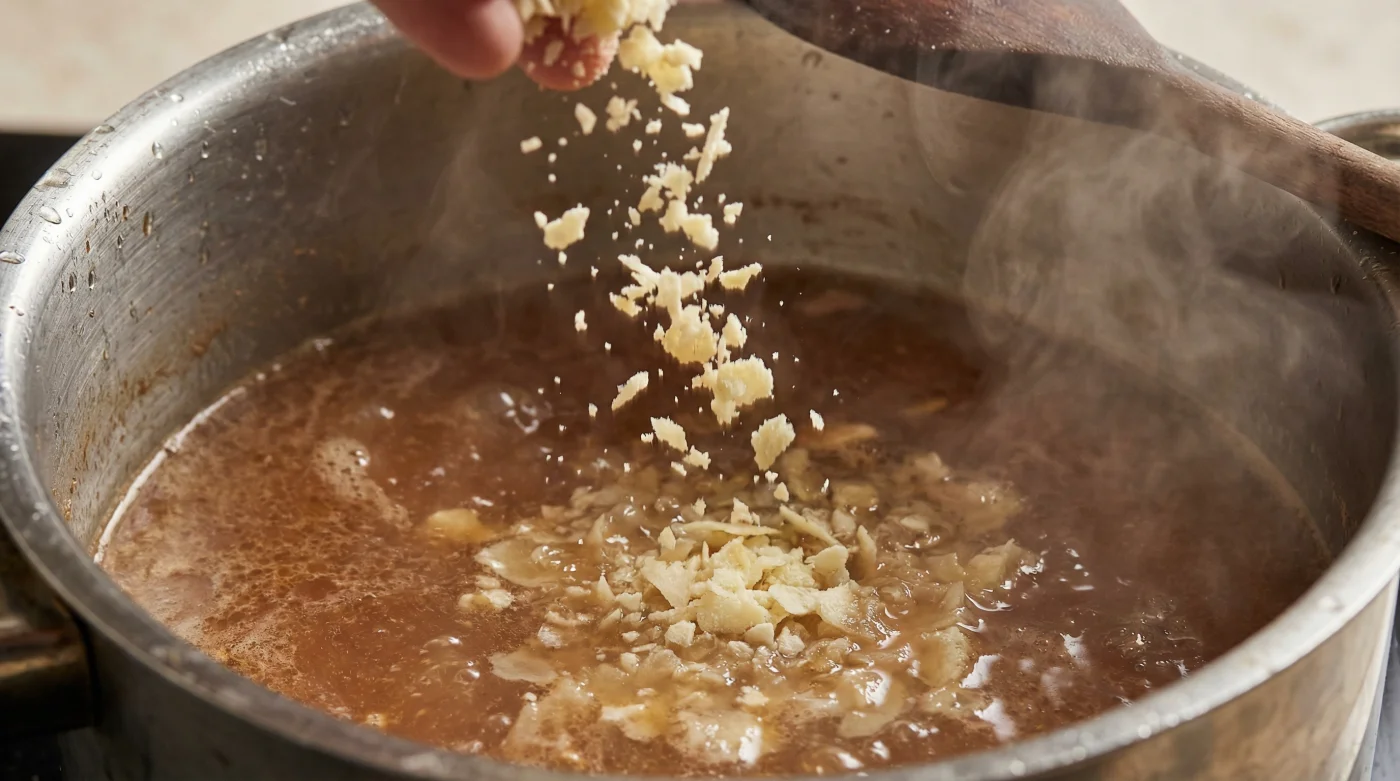
I learned the true secret to this dilemma from Marcus, a grizzled prep chef who ran the line at a notoriously busy Chicago diner. While I was furiously whisking a stubborn flour paste trying to salvage a broken chowder before the dinner rush, he casually bumped my shoulder. In his hand was a humble, generic cardboard box. It was a box of plain instant mashed potato flakes. He sprinkled a handful directly into the simmering pot, gave it two slow stirs, and walked away. Sixty seconds later, the broth transformed into a rich, velvety stew. No chalkiness. No gelatinous globs. Just pure, savory depth.
| Target Audience | Specific Kitchen Benefit |
|---|---|
| The Rushed Parent | Fixes a watery family dinner in under 60 seconds without dirtying another pan. |
| The Gluten-Free Eater | Provides a robust, wheat-free thickening agent that behaves better than tapioca starch. |
| The Budget Cook | Transforms cheap, thin broths into expensive-feeling, restaurant-quality bisques. |
Why does this work so flawlessly? It comes down to the mechanical logic of the potato flake itself. Unlike raw flour or raw cornstarch, instant potato flakes are already cooked. During their manufacturing process, the potatoes are boiled, mashed, and dried. This means their starch cells are fully open and waiting. The moment they hit hot liquid, they act like microscopic sponges. They do not need to be boiled out to remove a raw taste, because there is no raw taste left. They just grab the water and hold on tightly.
| Starch Type | Hydration Speed | Texture Result | Taste Impact |
|---|---|---|---|
| Cornstarch Slurry | Medium (requires boiling) | Glossy, sometimes gummy | Neutral, mutes flavors |
| Flour Roux | Slow (requires pre-cooking) | Opaque, prone to lumps | Can taste chalky if undercooked |
| Instant Potato Flakes | Instant (under 60 seconds) | Velvety, opaque, smooth | Adds savory, earthy depth |
Mindful Correction: The Physical Act of Fixing Your Soup
Applying this trick is a masterclass in culinary simplicity, but it requires a gentle touch. Ensure your pot is at a low simmer. You want movement in the liquid, but not a violent, rolling boil. Grab a quarter cup of dry potato flakes in your hand. Do not dump them in all at once. Instead, sprinkle them lightly over the surface of the broth, like fresh snow falling on a dark road.
Take your wooden spoon and stir gently in wide figure eights. You are not trying to beat the soup; you are simply folding the dry flakes into the hot liquid. Step back and give it sixty seconds. You will watch the magic happen right before your eyes. The liquid will tighten, turning from a loose broth into a luxurious, opaque stew. If it is still too thin, repeat the process with another small handful.
One crucial note: potatoes love salt. As they absorb the liquid, they will also absorb some of the seasoning in your pot. Once your soup has reached the perfect consistency, dip a clean spoon in and taste it. You may find you need to add a pinch of kosher salt or a splash of apple cider vinegar to brighten the flavors back up.
| The Quality Checklist | What to Look For | What to Avoid |
|---|---|---|
| Ingredient List | 100% dehydrated potatoes. | Artificial butter flavors, dairy powders, heavy preservatives. |
| Texture of Dry Flake | Light, airy, distinct flakes that crumble easily between your fingers. | Dense granules or powders (these can clump). |
| Aroma | Neutral, earthy, faint potato smell. | Rancid oil smells or overly salty, fake cheese scents. |
The Comfort of a Rescued Meal
Cooking at home shouldn’t be a high-wire act where one mistake ruins your evening. It is a daily rhythm, a physical dialogue between you and the ingredients. When you know you have an absolute failsafe sitting quietly in your pantry, the anxiety of cooking completely evaporates. You stop worrying about precise liquid measurements and start trusting your instincts. If a slow cooker roast releases too much juice, you do not panic. You reach for the box.
- Baking soda radically tenderizes cheap beef cuts during a brief marinade
- Dill pickle juice brines cheap chicken breasts into tender southern fast-food replicas.
- Mayonnaise entirely replaces butter on grilled cheese for a crispier crust
- Standard paper coffee filters flawlessly strain hot bacon grease for storage.
- Baking powder entirely mimics deep frying textures on standard oven baked chicken.
A good thickener shouldn’t announce itself; it should simply support the integrity of the ingredients that are already there.
Frequently Asked Questions
Will the potato flakes make my soup taste like mashed potatoes?
Not at all. When used in small quantities, they completely dissolve, adding a very subtle, savory earthiness that blends flawlessly into beef, chicken, or vegetable broths.
Do I need to mix the flakes with water before adding them?
No. That is the beauty of this method. Because they are pre-cooked and dehydrated, you sprinkle the dry flakes directly into the hot pot. They hydrate instantly without clumping.
Can I use this trick for gravies and pan sauces too?
Yes. It works wonderfully for gravies. Just be sure to whisk gently as you sprinkle them in, as pan sauces have less volume than soup and will thicken much faster.
What if I accidentally add too many flakes and the soup gets too thick?
Simply pour in a half cup of warm water or extra broth and stir. The soup will loosen right back up, giving you complete control over the final texture.
Are potato flakes safe for a gluten-free diet?
Yes, plain 100% dehydrated potato flakes are naturally gluten-free, making them an excellent thickening alternative for households with dietary restrictions. Always check the label to ensure no wheat-based additives were included.